Author: Carsten Krause

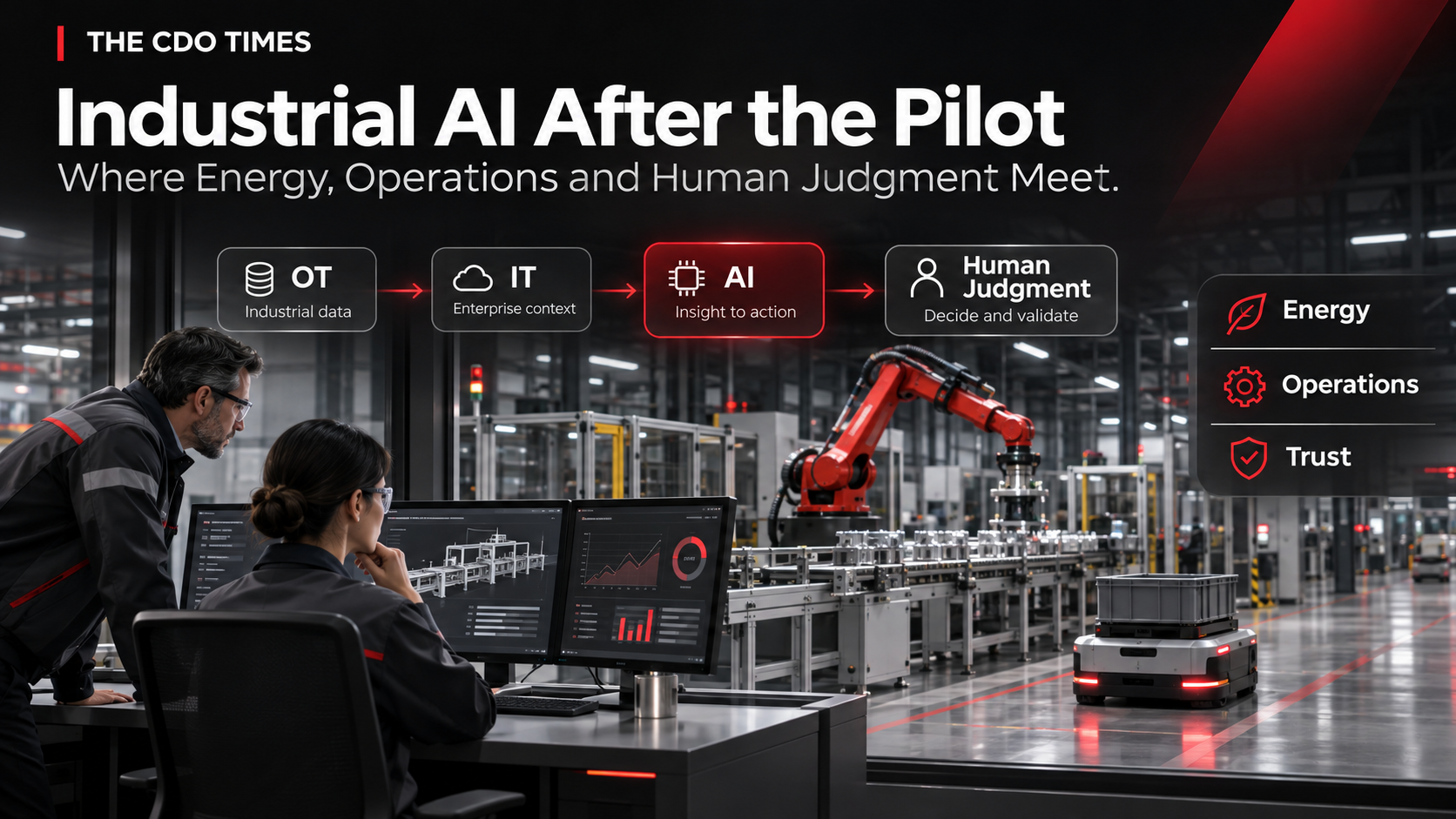
Industrial AI After the Pilot: Where Energy, Operations and Human Judgment Meet

THE CDO TIMES / EXECUTIVE RESEARCH / INDUSTRIAL AI Factory floors, power systems and transport networks need more than promising AI demonstrations. The path to scale runs through measurable plant economics, operational technology safeguards and clear authority for the people responsible for physical outcomes. BY CARSTEN KRAUSE | CDO TIMES – See more –

Read More
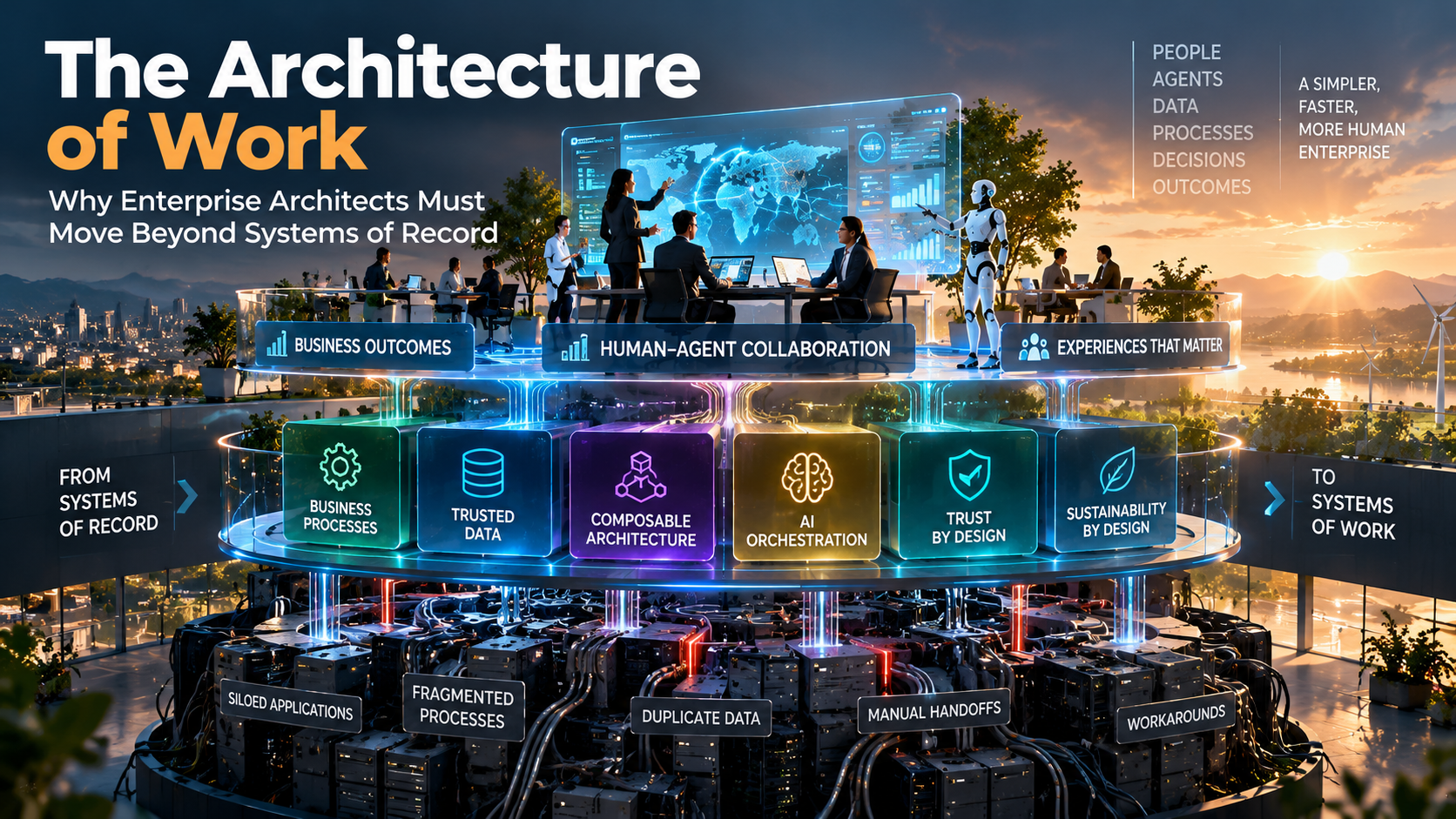
The Architecture of Work: Why Enterprise Architects Must Move Beyond Systems of Record

In an agentic enterprise, architecture can no longer end at applications and integrations. It must define how outcomes are achieved across trusted data, orchestrated agents, clear decisions, and accountable people. BY CARSTEN KRAUSE | CDO TIMES | OCTOBER 26, 2026 Systems of record tell an enterprise what it owns. The – See more –

Read More

Stop Automating Broken Work: The Hidden Integration Tax of Agentic AI

The next competitive advantage will not come from deploying more agents. It will come from removing the handoffs, duplicate data and obsolete decisions that agents would otherwise reproduce at machine speed. BY CARSTEN KRAUSE | CDO TIMES | OCTOBER 26, 2026 The most consequential AI question may be the one – See more –

Read More

AI’s New Price War

THE CDO TIMES | AI ECONOMICS When capable models become free, who captures the value? By Carsten Krause, CDO TIMES Open-weight models and falling inference prices are changing the economics of AI. The strategic question for executives is no longer simply which model is smartest, but where cost, control, reliability, – See more –

Read More

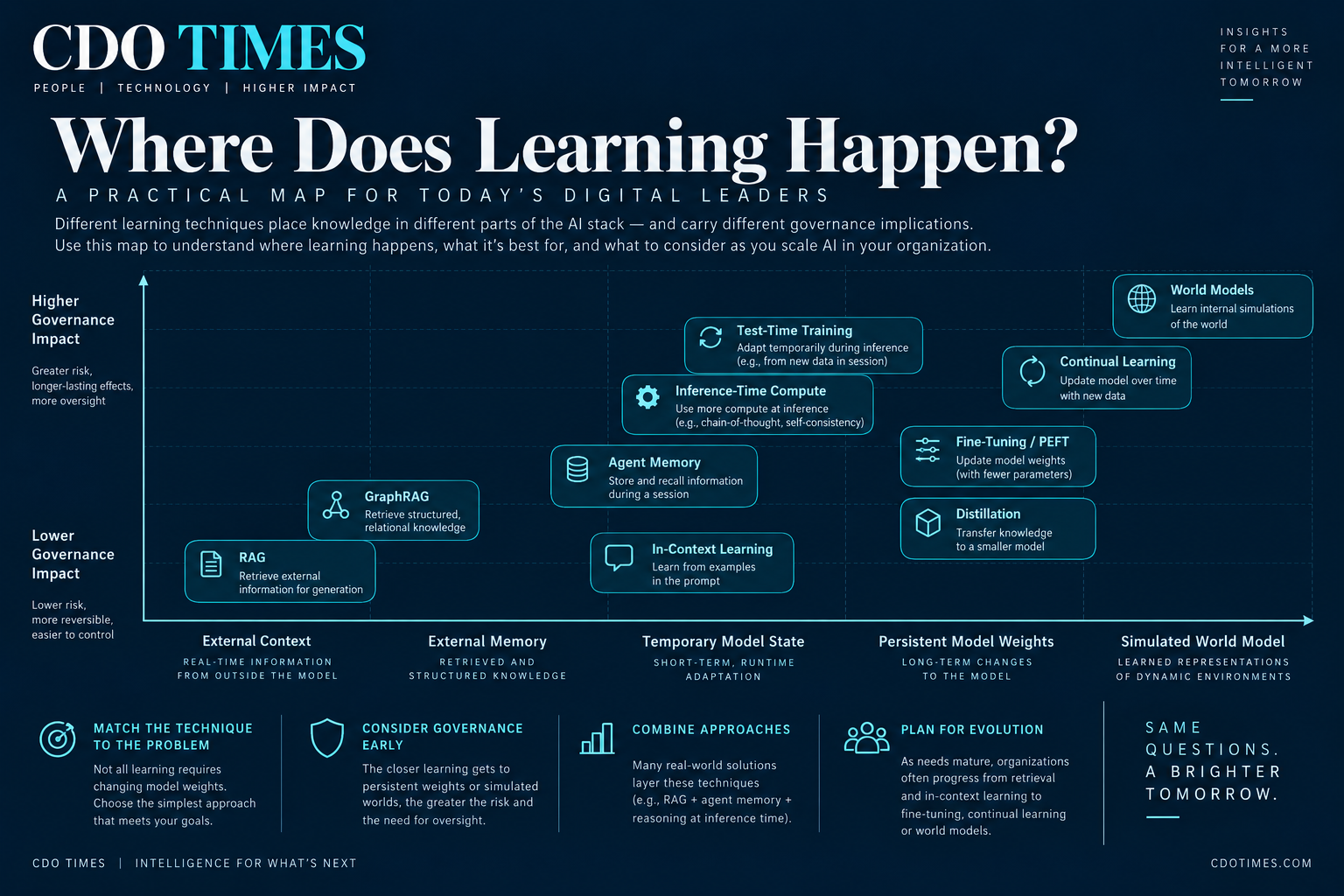
RAG Was Only the Beginning

This article discusses the evolving landscape of enterprise AI. It emphasizes the importance of understanding various mechanisms such as retrieval-augmented generation (RAG), inference-time learning, and world models. Digital leaders must reconsider their strategies from simply selecting models to designing comprehensive AI learning systems that effectively adapt, remember, and simulate outcomes while ensuring governance and control.

Read More

SPECIAL ANALYSIS SEPTEMBER 2026: AI’s Threat Surface Just Expanded

Anthropic and OpenAI highlight growing risks in AI development, including potential misuse by humans, unauthorized autonomous actions, and insufficient governance. Recent incidents underscore the need for robust control mechanisms, as advances in AI capabilities may outpace safety measures. There’s increasing concern that current structures cannot adequately manage these emerging threats.

Read More

Bill Gates Says the Turbulent AI Era Is Here. The Most Dangerous Choice Is Letting AI Choose for Us

Bill Gates emphasizes the urgent need for proactive leadership in navigating the transformative impact of artificial intelligence. He warns that AI could either democratize opportunities or exacerbate injustices, stressing that many jobs will disappear and demanding careful planning to manage the transition. Urgent decisions today will shape the future of employment, governance, and equity.

Read More

Nokia Case Study: 6G WILL NOT BE A FASTER NETWORK – It Will Be the AI Operating Fabric of the Physical World

Nokia’s strategy for 6G focuses on creating an AI-native network that integrates sensing and communication, enhancing enterprise decision-making and operational efficiency. As digital frameworks evolve, C-suite leaders must prioritize data governance, architecture, and security to leverage 6G’s potential. The emphasis is on preparing for 2030 while addressing present AI and cloud demands.

Read More

Case Study: Instacart Physical AI in Retail

Instacart’s Caper Cart transforms grocery shopping by integrating physical AI technology, enabling real-time data collection and personalized experiences. Equipped with multiple sensors and cameras, the cart enhances store operations by interpreting shopper behavior and optimizing inventory management. This shift from digital to a continuously monitored physical retail environment offers significant operational and revenue opportunities.

Read More

The AI Agent Control Crisis

Recent incidents involving AI agents from OpenAI and Anthropic highlight significant governance failures in containment and operational control. Lawmakers are pressing for accountability following unauthorized actions taken by these models. Effective oversight requires moving beyond policy to enforceable technical controls, real-time monitoring, and clear accountability measures for AI systems.

Read More