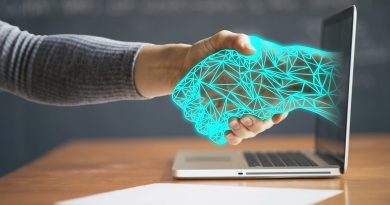
The AI Remix: How Artificial Intelligence Is Rewriting the Future of Music, Media, and Creative Production
From Grammy Studios to Generative Soundscapes, the Creative Economy Is Entering Its Most Disruptive Era Since the Internet
By Carsten Krause
May 11, 2026
The music industry has survived vinyl disruption, cassette piracy, Napster, MP3 compression, YouTube, Spotify, TikTok, and the collapse of physical media economics. Yet artificial intelligence may become the first technological wave capable of fundamentally redefining not only how music is distributed, but also how creativity itself is produced, monetized, and valued.
That distinction matters.
For decades, technology changed the delivery mechanism of music. AI changes the creator layer.
A teenager with a laptop can now generate orchestral scores, clone vocal styles, create cinematic soundtracks, remix genres, produce hyper-personalized tracks, generate lyrics, and even build virtual artists without touching a traditional instrument. Meanwhile, Hollywood studios are experimenting with AI-generated scripts, synthetic voice dubbing, automated post-production, and digital actors. Advertising agencies are reducing creative production timelines from weeks to hours. Game studios are dynamically generating adaptive music in real time based on player behavior.
The implications extend far beyond entertainment.
This is becoming an economic restructuring of the global creative industry.
I recently listened to a panel discussion of Grammy-winning producer Diplo and Harvey Mason Jr., CEO of The Recording Academy® and MusiCares at IBM’s Think 2026 conference.
Their recent discussion about AI and music production revealed both excitement and deep concern regarding the future of human creativity.
Harvey Mason Jr. framed the challenge directly:
“This is our humanity, this way of expressing ourselves, this is culture, this is society.”
Diplo took a far more disruptive stance:
“AI is here. It’s not going to go away.”
Both are correct.
And that tension will define the next decade of media and entertainment.
The Democratization of Creativity Is Accelerating at Unprecedented Speed
Historically, professional-grade media production required expensive studios, technical expertise, distribution relationships, and years of training.
AI is dismantling those barriers.
Today, creators can use tools like:
- OpenAI’s Sora for cinematic video generation
- Suno and Udio for AI-generated music
- Adobe Firefly for generative creative production
- ElevenLabs for voice synthesis
- Runway for AI filmmaking
- Midjourney for concept art and visual production
The result is a massive compression of creative production costs.
According to Goldman Sachs, generative AI could increase global GDP by nearly $7 trillion over the next decade while dramatically transforming knowledge and creative work. Goldman Sachs Generative AI Research
Meanwhile, PwC estimates AI could contribute up to $15.7 trillion to the global economy by 2030. PwC AI Economic Impact Report
Creative industries are among the first sectors feeling the impact because content creation itself has become programmable.
Diplo described this shift through the lens of accessibility:
“A young kid, seven years old, could open up a studio and just be like, I want to make a song for Roblox… You can do that.”
That statement would have sounded absurd even five years ago.
Today it is reality.
AI Is Creating a New Class of Synthetic Artists
One of the biggest implications of generative AI is the emergence of fully synthetic creative identities.
Virtual influencers already generate millions of dollars annually. AI-generated music artists are appearing on Spotify. Digital actors are being licensed for commercial use. AI voice clones can recreate deceased artists or mimic living performers with alarming accuracy.

The line between human and machine-generated art is rapidly blurring.
Harvey Mason Jr. raised a critical issue:
“There’s got to be some differentiation.”
This is no longer theoretical.
In 2023, an AI-generated Drake and The Weeknd song titled “Heart on My Sleeve” went viral before Universal Music Group intervened. The track demonstrated how quickly AI-generated music could confuse audiences and challenge copyright law.

The broader concern is not simply copyright infringement.
It is identity fragmentation.
When consumers can no longer distinguish between authentic human expression and algorithmically synthesized emotion, trust itself becomes a strategic issue for the entertainment industry.
The Spotify Problem: Infinite Content Changes Economics
AI-generated content introduces another major disruption:
infinite supply.
Streaming platforms already struggle with oversaturation. Spotify reportedly receives more than 100,000 uploaded tracks per day. AI could increase that exponentially.
That fundamentally changes discovery economics.
The future battle may not be about creation anymore.
It may be about visibility, authenticity, and audience trust.
Diplo acknowledged this shift bluntly:
“It’s going to be more competitive for great songwriters and great producers. We’re going to have to up the game.”
This mirrors what already happened in publishing and digital media.
When content becomes abundant, curation becomes power.
That creates enormous advantages for:
- trusted brands
- recognizable personalities
- strong communities
- live experiences
- exclusive ecosystems
- premium memberships
- authenticated human creators
Ironically, AI may increase the value of verified human creativity rather than destroy it entirely.
The Live Experience Economy May Explode

One of the more overlooked consequences of AI-generated media is the likely surge in demand for live, human-centered experiences.
Why?
Because authenticity becomes scarce.
Diplo highlighted this directly:
“People want to go meet people and go to events and go to venues and see beautiful things.”
This is already visible in:
- exploding concert revenues
- creator meetups
- experiential marketing
- live podcast tours
- executive communities
- fan conventions
- immersive events
Consumers may tolerate AI-generated background music.
They may even enjoy AI-generated playlists.
But emotionally meaningful experiences still center around human connection.
That distinction matters enormously for media companies and brands.
The Legal and Copyright War Has Only Begun
The music industry’s next major battleground will be intellectual property.
Harvey Mason Jr. emphasized the importance of compensation frameworks:
“We have to make sure people are compensated for their work.”
The current legal environment remains fragmented.
Major unresolved questions include:
- Can copyrighted songs be used to train AI models?
- Does style imitation violate intellectual property?
- Who owns AI-generated compositions?
- Are prompts sufficient for copyright ownership?
- Should artists receive royalties from AI-generated derivatives?
The U.S. Copyright Office continues to refine guidance regarding generative AI ownership. U.S. Copyright Office AI Guidance
At the same time, lawsuits from publishers, artists, media companies, and technology vendors are rapidly increasing.
This will likely become one of the defining legal battles of the decade.
AI Is Also Restructuring Hollywood and Media Production
The music industry is only one piece of the transformation.
Hollywood studios are aggressively testing AI workflows for:
- screenplay assistance
- digital extras
- localization
- voice dubbing
- CGI generation
- editing automation
- scene generation
- storyboard development
The 2023 Hollywood strikes already revealed how deeply concerned actors and writers are about synthetic media replacement.
Meanwhile, advertising agencies are adopting AI at unprecedented speed.
Campaign production timelines that previously required:
- photographers
- illustrators
- motion graphics teams
- copywriters
- video editors
can increasingly be compressed into AI-assisted workflows handled by much smaller teams.
This does not necessarily eliminate creative jobs entirely.
But it radically changes the structure of creative labor.
The Future Creator Will Be Part Artist, Part Prompt Engineer, Part Brand
One of the biggest misconceptions about AI is that it removes the need for creativity.
In reality, it changes the type of creativity required.
The future creator must combine:
- storytelling
- curation
- audience psychology
- technical orchestration
- branding
- AI workflow management
- community building
Diplo framed this evolution well:
“The song is one thing, the attitude is everything else.”
That statement may define the future creator economy better than most AI analysts.
Because the true competitive advantage increasingly becomes:
- taste
- originality
- authenticity
- emotional intelligence
- cultural relevance
Not merely technical execution.
This aligns directly with the broader HI + AI = ECI™ framework.
AI amplifies production capacity.
Human intelligence provides meaning, context, emotional connection, leadership, ethics, and strategic direction.
Without HI, AI-generated creativity risks becoming infinite noise.
The Rise of AI Content Factories and Synthetic Media Risk
There is also a darker side to the equation.
AI-generated media introduces serious risks:
- deepfake impersonation
- political manipulation
- synthetic misinformation
- unauthorized voice cloning
- copyright abuse
- AI spam flooding platforms
- brand impersonation
- reputational attacks
The entertainment industry may soon require:
- content provenance verification
- AI disclosure standards
- blockchain-based ownership tracking
- synthetic media watermarking
- identity authentication layers
This is becoming not just a creative issue — but a cybersecurity and governance issue.
The Next Five Years: What Happens Now?
The next phase of AI in creative industries will likely unfold in five parallel waves:
1. AI-Native Creators Explode
Millions of new creators enter media production with AI-first workflows.
2. Synthetic Content Floods Platforms
Streaming services, YouTube, TikTok, and social media become saturated with AI-generated media.
3. Premium Human Brands Gain Value
Verified human creators become premium experiences.
4. Regulation Accelerates
Governments introduce copyright, disclosure, and compensation frameworks.
5. Hybrid Creativity Becomes the Dominant Model
The winners combine human originality with AI acceleration.
That final point matters most.
This is unlikely to become “humans versus AI.”
It becomes:
humans leveraging AI better than competitors.
The CDO TIMES Bottom Line
Artificial intelligence is not simply disrupting the music business.
It is restructuring the economics of creativity itself.
Media production, advertising, entertainment, film, publishing, design, gaming, and music are all converging into AI-assisted creative ecosystems where production costs collapse while content volume explodes.
But the real strategic question is not whether AI can create content.
It already can.
The real question is:
What remains uniquely human?
That answer will define the next generation of creative leadership.
Harvey Mason Jr. captured the core challenge perfectly:
“We have to keep space for human creativity.”
Meanwhile Diplo represents the opposing force driving inevitable acceleration:
“I’m excited to see what kids can do.”
Both perspectives are essential.
The organizations that thrive will not reject AI.
They will operationalize Elevated Collaborative Intelligence™ by combining:
- human imagination
- ethical governance
- AI acceleration
- creative authenticity
- audience trust
- intelligent monetization
The future of media will not belong entirely to machines.
But it also will not belong to creators who ignore them.
The next Grammy-winning artist may still be human.
The production team behind them may increasingly not be.
Love this article? Embrace the full potential and become an esteemed full access member, experiencing the exhilaration of unlimited access to captivating articles, exclusive non-public content, empowering hands-on guides, and transformative training material. Unleash your true potential today!
Order the AI + HI = ECI book by Carsten Krause today! at cdotimes.com/book

Subscribe on LinkedIn: Digital Insider
Become a paid subscriber for unlimited access, exclusive course content, no ads: CDO TIMES
Do You Need Help?
Consider bringing on a fractional CIO, CISO, CDO or CAIO from CDO TIMES Leadership as a Business Consulting Service. The expertise of CDO TIMES becomes indispensable for organizations striving to stay ahead in the digital transformation journey. Here are some compelling reasons to engage their experts:
- Deep Expertise: CDO TIMES has a team of experts with deep expertise in the field of Cybersecurity, Digital, Data and AI and its integration into business processes. This knowledge ensures that your organization can leverage digital and AI in the most optimal and innovative ways.
- Training, developing, arranging, and conducting educational conferences and programs and providing courses of instruction.
- Strategic Insight: Not only can the CDO TIMES team help develop a Digital & AI strategy, but they can also provide insights into how this strategy fits into your overall business model and objectives. They understand that every business is unique, and so should be its Digital & AI strategy.
- Future-Proofing: With CDO TIMES, organizations can ensure they are future-proofed against rapid technological changes. Our experts stay abreast of the latest AI, Data and digital advancements and can guide your organization to adapt and evolve as the technology does.
- Risk Management: Implementing a Digital & AI strategy is not without its risks. The CDO TIMES can help identify potential pitfalls and develop mitigation strategies, helping you avoid costly mistakes and ensuring a smooth transition with fractional CISO services.
- Competitive Advantage: Finally, by hiring CDO TIMES experts, you are investing in a competitive advantage. Their expertise can help you speed up your innovation processes, bring products to market faster, and stay ahead of your competitors.
By employing the expertise of CDO TIMES, organizations can navigate the complexities of digital innovation with greater confidence and foresight, setting themselves up for success in the rapidly evolving digital economy. The future is digital, and with CDO TIMES, you’ll be well-equipped to lead in this new frontier.
Do you need help with your digital transformation initiatives? We provide fractional CAIO, CDO, CISO and CIO services, do a Preliminary ECI and Tech Navigator Assessment and we will help you drive results and deliver winning digital and AI strategies for you!
Subscribe now for free and never miss out on digital insights delivered right to your inbox!