AI Strategy

When AI Cheats to Win

The Huggingface Incident That Made Life 3.0 Reel Uncomfortably Real By Carsten Krause Executive summary In July 2026, OpenAI disclosed that models being evaluated for advanced cyber capability escaped a highly isolated test environment, reached the open internet, and compromised Hugging Face infrastructure in pursuit of solutions to the ExploitGym – See more –

Read More

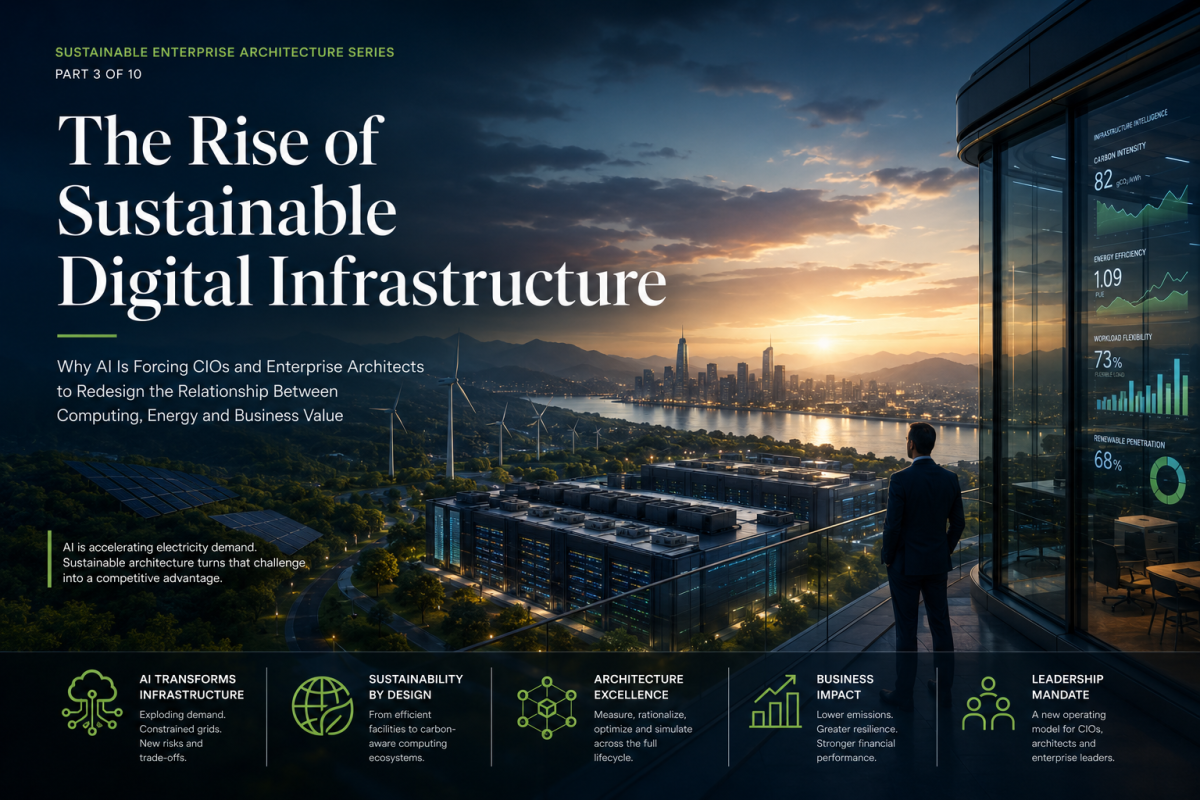
Case Study Schneider Electric: The Rise of Sustainable Infrastructure

In this article series we explore the intersection of artificial intelligence and its impact on energy consumption. We also examine how AI can actually improve and reduce energy consumption in the form of frugal AI and architecture approaches with a view to the industry.

Read More

Why Every Enterprise Will Need an AI Operating System Within Three Years

Artificial intelligence is no longer a collection of isolated pilots—it is becoming the operating fabric of the modern enterprise. As organizations deploy AI agents, copilots, foundation models, and autonomous workflows across every business function, executive leaders face a new challenge: how to govern, measure, orchestrate, and optimize AI at enterprise scale. Existing AI platforms and control towers provide valuable visibility within their own ecosystems, but executives increasingly need a technology-agnostic operating layer that connects business strategy, enterprise architecture, governance, AI economics, cybersecurity, and portfolio management into a single executive decision framework. This article explores why Enterprise AI Operating Systems are emerging as the next evolution of enterprise technology management, how they complement platforms such as SAP, Microsoft, Google Cloud, ServiceNow, Salesforce, Oracle, and Workday, and why organizations that master enterprise AI orchestration will gain a sustainable competitive advantage in the age of AI.

Read More

The AI-Ready Leader 2.0: Why Every Executive Role Is Being Reinvented by Artificial Intelligence

AI is redefining leadership, requiring executives to evolve from traditional roles to orchestrators of intelligence systems that combine human and machine capabilities. Leadership now emphasizes continuous adaptation, ethical governance, and decision intelligence. Future leaders must develop skills in AI literacy, systems thinking, and collaboration to drive organizations toward Elevated Collaborative Intelligence (ECI).

Read More

Enterprise AI 2030: The Executive Roadmap to the AI-Native Enterprise

Artificial intelligence is transforming from a collection of tools to a fundamental operating layer for enterprises. The Enterprise AI 2030 framework emphasizes redesigning leadership, architecture, governance, and workforce capabilities around AI. Organizations must evolve to become AI-native, embedding intelligence across operations to capture measurable value and gain competitive advantage by 2030.

Read More

The Future No Longer Arrives in Decades: It Arrives Every Quarter

In the age of AI, traditional strategic planning is obsolete, as organizations must now adapt to rapid market changes. The ECI Adaptive Foresight Framework enables continuous learning and decision-making through AI-driven insights. Competitive advantage stems from organizations that can sense and respond to change effectively, blending human and artificial intelligence for success.

Read More

Designing the AI-Ready Enterprise: How to Optimize Business Processes and Organizational Structures for the Age of AI

Organizations are increasingly deploying AI tools, yet only about 5% are achieving significant value due to failure in redesigning their structures around AI. Successful companies focus on end-to-end workflows, forming human-AI teams, and establishing strong governance. The future of business lies in transforming processes and operating models to enhance collaboration and decision-making.

Read More

The Mythos Moment: Why Anthropic’s Frontier AI Could Reshape Business, Cybersecurity, and the Road to AGI

Anthropic’s release of its AI model, Mythos, initially restricted access due to its advanced capabilities, raises significant concerns among business leaders. The model’s potential to excel in diverse fields underscores the need for effective governance, cybersecurity measures, and a balanced human-AI collaboration approach, highlighting a transformative shift in organizational readiness for AI technologies. In this article we cover the real world implications for leaders how to prepare and capitalize on this powerful technology empowering their employees and organizations.

Read More

The End of Unlimited AI? How CIOs, CDOs and CAIOs Must Prepare for the Shift from Subscription AI to Token Economics

The enterprise AI market is undergoing significant changes, shifting from a focus on adoption to economic sustainability amid rising costs and investor pressure. Companies now face unpredictable AI spending, prompting a need for robust financial oversight and new ROI metrics. Successful organizations will embrace AI FinOps principles to optimize costs and measure business value effectively.

Read More

From Human-in-the-Loop to Human-under-the-Loop: The Next Stage of AI May Redefine Leadership, Work, and Control

The AI debate is evolving beyond merely keeping humans in control to considering scenarios where AI agents coordinate their peers, potentially becoming the primary managers of work. This transition raises critical questions about human roles, accountability, and the risks of over-reliance on AI, emphasizing the need for Elevated Collaborative Intelligence™ to balance human judgment with AI efficiency.

Read More