Unlocking the Power of Generative AI: A Comprehensive AI Pilot Guide
How to Successfully Implement Your Own Generative AI Pilot
In today’s rapidly evolving business landscape, Generative AI stands at the forefront of technological innovation, promising to revolutionize industries across the board. As organizations grapple with the ever-growing volumes of data and the need for intelligent automation, Generative AI and Large Language Models (LLM) have emerged as a beacon of hope. In this section, we delve deeper into the world of Generative AI and present key findings that illuminate its significance.
The Rise of Generative AI
Generative AI represents a new era in artificial intelligence. Unlike traditional AI systems that rely on predefined rules and patterns, Generative AI possesses the remarkable ability to generate content, whether it be text, images, or even music, autonomously. This capability is made possible by neural networks, particularly models like OpenAI’s GPT-4, which can understand and generate human-like text with astonishing accuracy.
The Impact on Industries
Generative AI’s impact on industries cannot be overstated. It is poised to disrupt sectors ranging from healthcare to marketing, from finance to creative arts. The ability to generate human-like content at scale opens doors to unprecedented possibilities:
- Healthcare: Generative AI is transforming diagnostics by analyzing medical images and patient data, leading to faster and more accurate disease detection.
- Marketing: Personalized marketing campaigns powered by Generative AI are boosting conversion rates and customer engagement.
- Finance: Automated financial analysis and risk assessment are becoming more precise, enabling better investment decisions.
- Creative Arts: Writers, designers, and artists are leveraging Generative AI to enhance their creative processes, generating content that was once only imaginable by human minds.
Ethical Considerations
However, the ascent of Generative AI is not without its ethical challenges. The proliferation of AI-generated content raises questions about authenticity and accountability. Issues of bias in AI algorithms, privacy concerns, and the potential misuse of AI-generated deepfakes underscore the importance of responsible AI development and deployment.
Key Findings:
- AI Adoption Trends: According to Gartner, AI adoption is on the rise, with 78% of organizations recognizing AI’s significant impact on their industries (Source: Gartner). However, the same report warns that by 2022, 85% of AI projects may deliver erroneous results due to bias in data or algorithms. This underscores the urgency of addressing ethical considerations in AI implementation.
- ROI of AI: Harvard Business Review reports that organizations successfully integrating AI into their operations experience an average revenue increase of 19.2% (Source: Harvard Business Review). This statistic highlights the tangible benefits of AI adoption for businesses that navigate the ethical landscape effectively.
- McKinsey Global Survey on Generative AI: A recent McKinsey Global Survey revealed the rapid adoption of generative AI in business. One-third of respondents reported using generative AI in at least one business function. Interestingly, 40% of these organizations plan to increase their AI investment due to advancements in generative AI, indicating its growing importance (Source: McKinsey Global Survey).
In the pages that follow, we will explore the steps to pilot Generative AI successfully, understand its transformative potential, and make informed decisions in the ever-evolving AI landscape.
The journey begins with aligning Generative AI initiatives with your organization’s strategic goals and investing in high-quality data. By fostering a culture of innovation and collaboration, organizations can unlock the full potential of Generative AI while staying ethically responsible.
Recommendations
Before diving into the practical steps of piloting Generative AI, it’s essential to consider the following recommendations:
Recommendation 1: Align with Business Goals
Generative AI initiatives should align with your organization’s strategic goals. A study by Deloitte found that 64% of organizations that incorporated AI into their business strategies reported increased competitiveness (Source: Deloitte).
Recommendation 2: Invest in Data Quality
High-quality data is the lifeblood of Generative AI. The World Economic Forum estimates that data quality issues cost businesses an average of 12% of their annual revenue (Source: World Economic Forum).
Recommendation 3: Foster a Culture of Innovation
To successfully implement Generative AI, create a culture that embraces innovation. A survey by PwC found that 86% of CEOs believe fostering innovation is essential for their organization’s success (Source: PwC).
In the pages that follow, we will delve into the practical steps and strategies to harness the power of Generative AI, along with expert opinions and real-world case studies that shed light on its transformative potential.
Understand How Generative AI Can Transform the Organization
Transformational Potential of Generative AI
Generative AI is not just a technological advancement; it’s a paradigm shift that has the potential to redefine how organizations operate, innovate, and interact with their customers and stakeholders. This technology, harnessed correctly, can be a game-changer across various sectors. Let’s delve into how Generative AI can transform different aspects of an organization:
- Enhanced Customer Experience:
- Personalization: Generative AI can tailor experiences to individual customer preferences, revolutionizing marketing and customer service strategies. For example, AI can generate personalized product recommendations, tailor marketing messages, and even create personalized content in real-time.
Generative AI can personalize customer interactions, leading to improved customer satisfaction and loyalty. A case study from Netflix showcases how personalized recommendations have increased customer retention by 10%. - Customer Support: Using AI for automated, yet personalized customer support can significantly enhance customer satisfaction. Chatbots and virtual assistants, powered by Generative AI, can provide instant, relevant, and context-aware responses to customer queries.
- Personalization: Generative AI can tailor experiences to individual customer preferences, revolutionizing marketing and customer service strategies. For example, AI can generate personalized product recommendations, tailor marketing messages, and even create personalized content in real-time.
- Operational Efficiency:
- Automation of Routine Tasks: AI can automate mundane and repetitive tasks, freeing up human resources for more complex and creative tasks. This can range from automated report generation to complex data analysis. Optimizing processes through AI automation can result in significant cost savings. A study by McKinsey found that AI-driven automation can reduce operational costs by up to 30%.
- Supply Chain Optimization: Generative AI can predict supply chain disruptions and optimize logistics, leading to cost savings and increased efficiency.
- Innovation in Product and Service Development:
- Rapid Prototyping: Generative AI can help in quickly generating and iterating on new product designs, significantly reducing the time to market.
- Customization: AI can aid in creating highly customized products and services that cater to specific market segments or individual customer needs.
- Strategic Decision Making:
- Data-Driven Insights: Generative AI can analyze large volumes of data to uncover trends and patterns, aiding in strategic decision-making.
- Scenario Simulation: AI can simulate various business scenarios, helping leaders make informed decisions by understanding potential outcomes and risks.
- Human Resource Management:
- Talent Acquisition and Management: AI can streamline the recruitment process by identifying the best candidates, predicting employee success, and even assisting in employee development and training.
- Employee Experience: Generative AI can enhance the employee experience through personalized training programs and career development plans.
- Risk Management and Compliance:
- Predictive Analysis: AI can predict risks and help in proactive risk management, particularly in fields like finance and healthcare.
- Regulatory Compliance: Automating compliance-related tasks and staying updated with regulatory changes can be efficiently managed through AI.
Case Studies Highlighting Generative AI Transformation
- Retail Sector: Amazon’s use of AI for product recommendation and inventory management has not only increased sales but also improved customer experience.
- Banking and Finance: JP Morgan Chase uses AI for risk assessment and fraud detection, enhancing security and customer trust.
- Healthcare: IBM’s Watson Health demonstrates AI’s capability in aiding diagnosis and personalized treatment plans.
Challenges and Considerations
While the potential of Generative AI is immense, organizations need to navigate several challenges:
- Data Privacy and Security: Ensuring the security of data used by AI systems is crucial.
- Ethical Use of AI: Addressing ethical concerns such as bias and transparency in AI decision-making is vital.
- Talent and Skills Gap: Building a workforce skilled in AI and data science is a significant challenge for many organizations.
- Integration with Existing Systems: Integrating AI into existing IT infrastructure and business processes requires careful planning and execution.
The Generative AI Pilot Cycle of Innovation
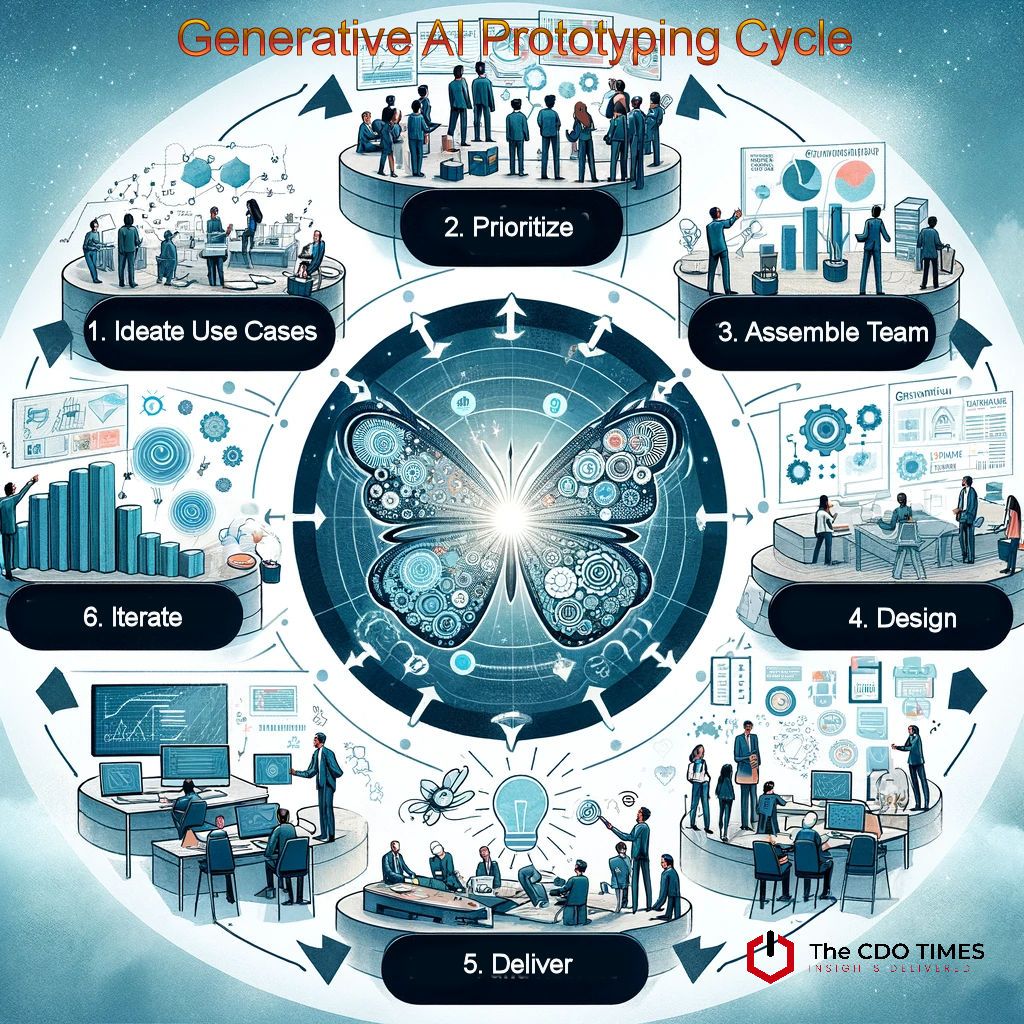
Step 1: Identify Transformative Use Cases With the Business

Exploring Use Cases of Generative AI
Generative AI, with its unique capabilities, is driving significant transformation across various industries. Identifying the right use cases is crucial for harnessing its full potential. Let’s delve deeper into some of these transformative use cases:
- Personalized Marketing:
- E-commerce: Amazon’s use of Generative AI for product recommendations exemplifies the power of personalized marketing. By analyzing customer data, AI algorithms can suggest products that align with individual preferences, leading to a substantial increase in sales and customer satisfaction.
- Content Creation: AI can also generate personalized content for email marketing campaigns, social media posts, and advertising, ensuring a more engaging and relevant experience for each customer.
- Real-Time Analytics: Generative AI can offer real-time insights into customer behavior and trends, enabling businesses to adjust their marketing strategies dynamically.
- Healthcare Diagnostics:
- Diagnostic Accuracy: IBM’s Watson for Health demonstrates how AI can significantly improve diagnostic accuracy, particularly for rare diseases. By analyzing vast amounts of medical data, AI can identify patterns and correlations that might be missed by human practitioners.
- Personalized Treatment Plans: Beyond diagnostics, AI can assist in developing personalized treatment plans based on a patient’s unique medical history and genetic makeup.
- Predictive Healthcare: Predictive analysis in healthcare can lead to early detection of diseases, improving patient outcomes and reducing healthcare costs.
Running Ideation Workshops
To effectively identify and prioritize these use cases, businesses should engage in ideation workshops. These workshops are crucial for:
- Cross-Functional Collaboration: Bringing together team members from different departments ensures a holistic view of potential use cases. It encourages the sharing of diverse perspectives and expertise.
- Creative Problem-Solving: Ideation workshops provide a platform for creative thinking, allowing teams to explore innovative ways Generative AI can be applied to solve business challenges.
- Prioritization of Ideas: Through these workshops, businesses can prioritize use cases based on factors such as feasibility, potential impact, and alignment with strategic goals.
Implementing Generative AI Use Cases
Once potential use cases are identified, the following steps can help in their implementation:
- Feasibility Study: Conduct a thorough analysis to understand the technical and resource requirements for each use case.
- Pilot Projects: Start with pilot projects to test and validate the use cases in a controlled environment.
- Stakeholder Engagement: Regularly engage with stakeholders to gather feedback and ensure the use cases align with user needs and expectations.
- Scalability and Integration: Plan for the scalability of the AI solutions and their integration into existing business processes and systems.
Step 2: Prioritize the Use Cases for Your Generative AI Pilot

Prioritizing the right use cases is a critical step in the successful implementation of Generative AI. This involves evaluating potential projects based on their impact and feasibility. Let’s expand on the key factors to consider:
Factor 1: Impact Potential
- Quantitative and Qualitative Benefits: Assess both the tangible (like revenue growth, cost reduction) and intangible benefits (like customer satisfaction, brand reputation). High-impact use cases often lead to significant improvements in these areas.
- Strategic Alignment: Ensure that the AI use case aligns with the organization’s strategic objectives. This alignment guarantees that the project contributes meaningfully to the company’s long-term goals.
- Competitive Advantage: Evaluate how the use case can provide a competitive edge in the market. Generative AI applications that offer unique capabilities or innovations can set a business apart from its competitors.
- Scalability and Long-Term Value: Consider the scalability of the use case and its potential to deliver sustained value over time. Projects that can be scaled and adapted to future needs are more likely to provide long-term benefits.
Factor 2: Data Availability
- Data Quality and Quantity: The availability of high-quality, relevant data is crucial. The accuracy and effectiveness of AI models heavily depend on the data they are trained on.
- Data Accessibility and Integration: Assess the ease of accessing and integrating data from various sources. Challenges in data integration can significantly delay or derail AI projects.
- Data Privacy and Compliance: Ensure that the use of data complies with privacy laws and ethical standards. Mismanagement of data can lead to legal and reputational risks.
- Data Infrastructure: Consider the existing data infrastructure’s capacity to support AI initiatives. Adequate storage, processing power, and data governance mechanisms are necessary for the smooth operation of AI systems.
Additional Considerations
- Stakeholder Buy-In: Gaining support from key stakeholders is essential for the successful implementation and adoption of AI solutions.
- Technical Feasibility: Evaluate the technical requirements and the organization’s capability to develop or integrate the AI solution.
- Resource Allocation: Consider the resources (human, financial, technological) required and ensure that they are available for the project.
Steps to Prioritize Use Cases
- Create a Scoring System: Develop criteria based on impact potential, data availability, and other relevant factors. Assign scores to each potential use case.
- Rank the Use Cases: Use the scoring system to rank the use cases in order of priority.
- Pilot Project Selection: Select the top-ranking use cases for pilot projects. These should be the ones with high impact potential and feasible data availability.
- Continuous Evaluation: Regularly reassess and reprioritize use cases as new data, technologies, and business needs emerge.
CIO Perspectives on Generative AI:
- According to a report by MIT Technology Review, generative AI is unlocking new business values by making previously inaccessible unstructured and buried data usable. This shift is significant as it allows organizations to leverage a wider range of data for AI initiatives.
- The report also emphasizes the need for flexible, scalable, and efficient data infrastructure to support generative AI, with many organizations moving towards advanced approaches like data lakehouses. (source: CIO Perspectives on Generative AI).
Step 3: Assemble a Small but Diverse Team

The Importance of a Diverse and Interdisciplinary Team
Building an effective team is a critical factor in the success of any Generative AI initiative. The composition of this team should reflect a diversity of perspectives, skills, and backgrounds. Let’s delve into why diversity and interdisciplinary collaboration are so crucial:
- Expert Opinion on Diversity:
- Diversity in Problem-Solving: Diverse teams bring a range of experiences and viewpoints that enhance problem-solving abilities. According to Harvard Business Review, such teams outperform their non-diverse counterparts by 35%. This is because diverse teams are better at identifying and addressing a wide range of issues, leading to more innovative solutions.
- Cultural and Cognitive Diversity: Beyond just demographic diversity, cognitive and cultural diversity are equally important. They ensure that different thinking styles and problem-solving approaches are represented, leading to more creative and effective outcomes.
- Expert Opinion on Interdisciplinary Collaboration:
- Importance of Varied Expertise: Andrew Ng, a renowned AI expert, highlights the value of interdisciplinary collaboration in AI projects. Bringing together experts from various fields such as data science, engineering, business, and ethics can lead to a more holistic approach to AI development.
- Enhanced Creativity and Innovation: Interdisciplinary teams can draw upon a broader range of knowledge, allowing for more creative and innovative approaches to AI challenges.
Building the Team: Key Roles and Considerations
| Role | Responsibilities and Expertise |
|---|---|
| Data Scientists and AI Experts | Responsible for developing AI models and algorithms. Expertise in machine learning, statistics, and computer science. |
| Data Engineers | Manage data infrastructure. Ensure effective collection, storage, and processing of data, crucial for AI projects. |
| Business Analysts and Strategists | Bridge the gap between technical and business perspectives. Identify business opportunities for AI and translate AI capabilities into business value. |
| Ethics and Compliance Experts | Address ethical and legal issues raised by AI technology. Essential for responsible AI development. |
| Project Managers | Oversee project execution. Ensure alignment with objectives, timeline, and budget. |
| User Experience Designers | Ensure AI solutions are user-friendly and designed with the end-user in mind. |
| Subject Matter Experts | Provide industry-specific knowledge. Crucial for ensuring the AI solution is relevant and effective. |
Strategies for Team Assembly
- Focus on Soft Skills: Alongside technical expertise, prioritize soft skills like adaptability, communication, and teamwork.
- Promote a Culture of Learning: Encourage continuous learning and knowledge sharing within the team.
- Ensure Inclusive Leadership: Leaders should foster an inclusive environment where all team members feel valued and can contribute fully.
Step 4: Design and Plan the Pilot for Generative AI

Proper planning and strategic design are key to the success of a Generative AI pilot. This stage involves selecting the right methodologies, embedding ethical considerations, and establishing clear metrics for success.
Strategy 1: Agile Development
- Adapting to Change: Agile methodologies prioritize flexibility and responsiveness to change. This approach is particularly beneficial in AI projects, where requirements and goals can evolve rapidly.
- Incremental Progress: Agile development emphasizes iterative progress through sprints, allowing for regular evaluation and adjustment. This helps in quickly identifying and addressing issues.
- Collaboration and Feedback: Regular collaboration and feedback sessions with stakeholders ensure that the project remains aligned with user needs and business objectives.
- Evidence of Success: According to Agile Alliance, 84% of organizations using agile practices reported improved project success rates, underscoring the effectiveness of this approach in managing complex AI projects.
Strategy 2: Ethical AI
- Ethical Guidelines: Incorporating ethical principles from the outset is crucial. The IEEE Global Initiative on Ethics of Autonomous and Intelligent Systems provides a framework for ethical AI development, ensuring that AI solutions are fair, transparent, and respect user privacy.
- Bias Mitigation: Actively work to identify and mitigate biases in AI models. This involves diverse data sets and continuous monitoring for biased outcomes.
- Accountability and Transparency: Ensure that AI decisions are explainable and that there is accountability for AI actions, fostering trust among users and stakeholders.
Determining Pilot Objectives and KPIs
- Setting Clear Objectives: Define what the pilot aims to achieve. Objectives should be specific, measurable, achievable, relevant, and time-bound (SMART).
Key Performance Indicators (KPIs):- Accuracy: Measure the accuracy of AI models in generating desired outputs. This is vital to ensure that the AI is performing as intended.
- Efficiency: Assess the impact of AI on operational efficiency. This includes evaluating time savings, cost reduction, and resource optimization resulting from AI automation.
- Customer Satisfaction: Monitor how AI-driven changes affect customer experiences. Gather and analyze customer feedback to gauge satisfaction levels.
- Innovation and Learning: Track the pilot’s contribution to innovation within the organization. This includes the development of new capabilities and the acquisition of new insights and knowledge.
- Scalability and Integration: Evaluate the ease of scaling the AI solution and integrating it with existing systems and processes.
Step 5: Deliver and Iterate in Generative AI Pilot

The execution phase of a Generative AI pilot is critical. It involves bringing the project to life and refining it through continuous improvement. Here’s how to approach this phase effectively:
Approach 1: Continuous Monitoring
- Real-Time Analysis: Implement systems to monitor AI performance in real-time. This includes tracking the accuracy of outputs, the efficiency of processes, and the overall impact of AI applications.
- Feedback Loops: Establish feedback loops with stakeholders, including end-users, project team members, and business leaders. Regular feedback helps in quickly identifying and addressing any issues or opportunities for improvement.
- Data-Driven Adjustments: Use data gathered from monitoring to make informed adjustments. This could involve tweaking AI algorithms, updating data sets, or modifying implementation strategies.
- Risk Management: Continuously monitor for potential risks, such as data breaches, ethical concerns, or operational disruptions. Effective risk management ensures the stability and integrity of AI systems.
- Success Metrics: Track progress against predefined KPIs. According to Accenture, effective monitoring of AI deployments significantly increases the likelihood of project success, making it 60% more probable.
Approach 2: Collaborative Learning
- Knowledge Sharing: Establish channels for sharing insights and learnings across the organization. This could involve regular meetings, workshops, or digital collaboration platforms.
- Cross-Functional Teams: Encourage collaboration between different departments and teams. This interdisciplinary approach can lead to more innovative solutions and a more comprehensive understanding of AI’s impact.
- Learning from Failures: Create an environment where it’s safe to experiment and learn from failures. This approach fosters innovation and continuous improvement.
- Training and Development: Invest in training programs to upskill team members in relevant AI and data science areas. The World Economic Forum highlights the importance of continuous learning in adapting to AI-driven changes.
- Iterative Development: Embrace an iterative development approach, where the AI system is continuously refined and improved based on new learnings and feedback.
When to Stop or Continue with an AI Pilot

Knowing when to stop or continue with your AI pilot is essential. Consider the following factors:
- Achievement of Objectives: If the pilot achieves its predefined objectives, it’s a signal to continue and scale.
- Cost-Benefit Analysis: Continuation should align with the cost-effectiveness and ROI.
- Feedback and Learning: Incorporate feedback and learning from the pilot into future AI initiatives.
Economic Impact of Generative AI:
The McKinsey Global Institute estimates that generative AI could add $2.6 to $4.4 trillion annually to the global economy. This advancement is expected to accelerate the automation of work, potentially a decade earlier than previous forecasts (source: Economic Impact of Generative AI).
The CDO TIMES Bottom Line Summary
In summary, Generative AI holds immense potential for organizations willing to embrace innovation. This comprehensive guide has provided insights into its transformational power, practical steps for piloting, and key considerations for success. To unlock the full potential of Generative AI, align with business goals, prioritize use cases, build diverse teams, and continuously learn and adapt. Success in Generative AI is not just a possibility; it’s a reality for organizations that dare to explore its capabilities.
Recommendations for Next Steps
As you embark on your Generative AI journey, consider the following next steps:
- Assessment: Assess your organization’s readiness and capabilities for Generative AI adoption.
- Pilot Planning: Begin the process of planning your Generative AI pilot, considering the transformational areas, use cases, and key roles discussed in this guide.
- Data Strategy: Invest in data quality and data governance to ensure you have the right data foundations for your AI initiatives.
- Team Building: Assemble a diverse team with expertise in data science, engineering, and business analysis. Encourage collaboration and innovation within the team.
- Ethical Considerations: Incorporate ethical AI principles into your AI design and development processes to ensure responsible AI implementation.
- Continuous Learning: Foster a culture of continuous learning and adaptation to stay at the forefront of AI innovation.
- Monitoring and Evaluation: Develop robust monitoring and evaluation mechanisms to track the progress and impact of your AI pilot.
Remember that Generative AI is a dynamic field, and staying updated with the latest advancements and best practices is essential. The journey may have its challenges, but the rewards of successful Generative AI implementation are well worth the effort.
As you proceed, keep the CDO TIMES community engaged with your progress, share case studies, and encourage knowledge sharing. The possibilities with Generative AI are vast, and your organization has the opportunity to lead in this transformative era.
We hope this guide has provided valuable insights and guidance for your Generative AI journey. Stay innovative, stay agile, and unlock the power of Generative AI for your organization’s success.