Technology

The Golden Era of 1st Party Data: Navigating Regulatory Changes and Harvesting Customer Insights

The digital marketing landscape is shifting from third-party cookies to 1st party data. Stringent regulations are phasing out third-party cookies, prompting businesses to rely on 1st party data for personalized marketing. This data, collected directly from customers, offers enhanced privacy compliance, data quality, personalization, and long-term relationships. Businesses are advised to invest in technology and prioritize transparent, privacy-compliant data practices.

Read More

Case Study: Cargill’s Journey in Embracing the Digital Economy

In today’s digital economy, organizations are shifting to agile principles and product management to enhance competitiveness and innovation. Cargill’s agile transformation demonstrates improved collaboration, responsiveness, and continuous value delivery. Moreover, the integration of IoT and data analytics has optimized aquaculture operations, driving increased productivity and cost-efficiency. The adoption of AI and IoT in agriculture reflects significant market growth and transformative potential, driving innovation and sustainability.

Read More

OpenAI Case Study: The Rise to the Top of AI Companies

By Carsten Krause | May 29, 2024 OpenAI: Pioneering Artificial Intelligence In the high-stakes chess game of artificial intelligence, OpenAI has emerged as the grandmaster. Founded in December 2015 by a dream team of tech visionaries—Elon Musk, Sam Altman, Greg Brockman, Ilya Sutskever, John Schulman, and Wojciech Zaremba—OpenAI has maneuvered – See more –

Read More

Mastering the AI Frontier: Advanced Data Pipelines and Integration Hubs as Catalysts for Transformation

The rapid advancement of Artificial Intelligence (AI) has transformed various industries, but organizations face challenges in data architecture. McKinsey emphasizes the crucial role of flexible and efficient data architectures for unlocking AI’s potential. Integration hubs and scalable data pipelines are essential for ensuring data quality, governance, and real-time processing. Generative AI is revolutionizing creativity and industry processes, and its architecture comprises five layers and four pillars for effective implementation. A comprehensive AI workflow covers data collection to model monitoring, emphasizing the importance of each stage. The future landscape of AI includes integration with IoT and blockchain, promising unprecedented automation and efficiency. To lead AI transformation, companies should audit and upgrade data infrastructure, invest in advanced AI training, pilot AI projects, scale AI implementations, and stay informed on AI trends. Ultimately, breaking through data architecture gridlock enables organizations to achieve new levels of efficiency, agility, and innovation, setting the stage for future success in an increasingly digital world.

Read More

AI Deepfakes and Misinformation in the 2024 U.S. Election: A Historical and Contemporary Analysis

The use of AI-generated deepfakes poses a significant threat to democratic processes, as seen in the 2024 U.S. election. Accessibility of deepfake technology allows for widespread dissemination of misleading content, urging the need for improved detection and regulatory measures. Voter vigilance, public education, and organizational action are pivotal in combating AI-driven misinformation.

Read More

AI-Powered Search Engines: Is OpenAI joining the field?

AI-powered search engines are revolutionizing online information access. Traditional keyword-based methods are evolving into intuitive, contextual searches. Advances include multimodal inputs, real-time data processing, and AI integration. OpenAI’s potential entry into the search engine arena signals a transformation in search methodologies, with personalized, context-aware experiences changing the landscape significantly.

Read More

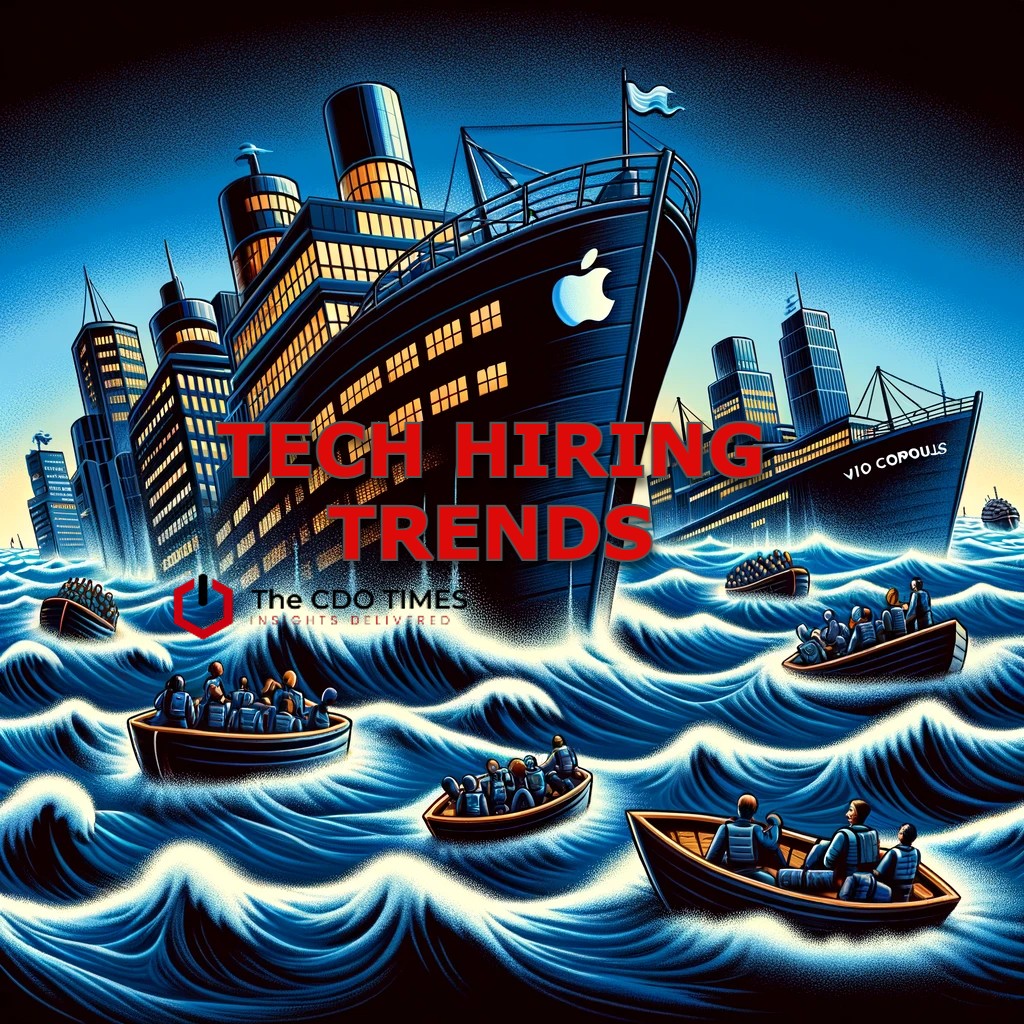
Market Trends for Technology Executive Search Amid Recent Layoffs

The tech industry has experienced significant layoffs due to post-pandemic adjustments, economic pressures, and a shift towards AI and automation. Major companies like Apple, Google, Amazon, and Microsoft have restructured, impacting the job market. To thrive in this rapidly changing environment, executives must develop essential skills, employ effective job search strategies, and leverage AI tools for optimal outcomes. Learn more about specific strategies to position yourself in this tumultuous market.

Read More

Data Mesh & Composable Data: Navigating the New Frontier in Enterprise Data

The evolution of organizational data ecosystems has shifted towards agility and distributed accountability, with paradigms like Data Mesh, Data Fabric, and Composable Data Architecture fundamentally reshaping data’s role within enterprises. Businesses are now actively participating in digital ecosystems, reshaping value chains, and leveraging digital capabilities for growth and new value creation. The World Bank emphasizes the importance of comprehensive data governance, envisioning integrated national data ecosystems that foster data sharing and contribute to prosperity and global competitiveness. The digital economy era has enhanced data processing capabilities, underscoring data as an essential resource for decision-making and innovation. Data strategies have evolved from database management systems to cloud computing, data science, and the integration of AI. The recent focus is on ethical AI, data privacy regulations, and decentralized and flexible data management strategies. Data Mesh empowers domains to take full ownership of their data, fostering tailored, responsive, and effective data practices. It requires significant technical and cultural shifts, governance structures, and a strategic approach for implementation. Composable Data Architecture focuses on modularity and flexibility, allowing organizations to adapt quickly to changing needs. It emphasizes agility, cost efficiency, and enhanced data governance. Implementing these architectures requires a robust framework, culture and training emphasis, and iterative development. The future of data strategy involves deeper integration of AI and machine learning in business processes and the potential impact of quantum computing on data processing capabilities. These advancements necessitate proactive technology adoption, a strong emphasis on ethics, and data governance. The integration of Data Mesh and Composable Data Architecture into business strategies, along with the forthcoming advances in AI, machine learning, and quantum computing, highlights a transformative era in data management. These frameworks, coupled with the forthcoming advances in AI, machine learning, and quantum computing, underscore a period of significant evolution for C-level executives to navigate. The strategic synergy of Data Mesh and Composable Data Architecture offers enhanced decision-making and operational agility, and when combined with advanced AI applications and quantum computing, defines the next generation of data strategy. For CDOs and business leaders, the challenge will be not only to implement these technologies but to foster a culture that can thrive amid these profound changes.

Read More

CDO TIMES Digital Earth Week 2024

Harnessing the Power of Digital Technology to Monitor and Accelerate Progress Towards Net-Zero Emissions and the Paris Climate Agreement Goals: As we face the urgent challenges of climate change, it has never been more crucial to monitor and assess global progress towards net-zero emissions and the Paris Climate Agreement goals. In this ever-changing landscape, digital technology is the key to unlocking our potential for driving impactful change. From artificial intelligence to advanced data analytics, digital tools have become indispensable in tracking, evaluating, and reporting on climate actions around the world. Join us as we explore the vital role of digital technology in shaping our path towards a sustainable future.

Read More

Harnessing the Power of Big Data in Retail: Trends and Forecasts for 2024-2028

Big data analytics is revolutionizing the retail sector, driving innovation through enhanced customer experiences, optimized pricing, efficient supply chain management, effective marketing strategies, and fraud prevention. The integration of unstructured data, technological advancements, and customer-centric strategies is reshaping retail operations, setting the stage for continuous growth and competitiveness. We take a deep dive on these trends and where the industry is heading.

Read More