

Case Study: Cargill’s Journey in Embracing the Digital Economy
By Carsten Krause, June 6th, 2024
In today’s fast-paced digital economy, organizations are increasingly adopting agile principles and shifting from traditional project management to product management to stay competitive and innovative. This transformation is critical in enabling organizations to deliver technology-based services and solutions, even in traditional industries. Cargill, a global leader in food and agriculture, provides a compelling case study of how a traditional business can leverage agile methodologies and IoT technologies to optimize operations and drive innovation.
Cargill’s Transformation Journey
The Need for Change
Cargill recognized the limitations of the traditional project-centric approach, which often led to operational silos, inefficiencies, and missed opportunities for continuous improvement. To address these challenges, Cargill embarked on a transformation journey, shifting its focus from managing projects to managing products. This change was driven by the need to enhance collaboration, improve responsiveness to market changes, and continuously deliver value to customers.
Implementing Agile Principles
Cargill adopted agile methodologies, including Scrum and Kanban, to drive this transformation. Agile principles such as collaboration, flexibility, and customer-centricity became central to Cargill’s operations. The adoption of agile methodologies enabled Cargill to:
- Enhance Collaboration: Cross-functional teams were established, breaking down silos and fostering collaboration across the organization. These teams worked together iteratively, ensuring all stakeholders were aligned and engaged in delivering value.
- Improve Responsiveness: Agile methodologies allowed Cargill to be more responsive to market changes and customer needs. Continuous feedback loops and iterative development cycles enabled quick adjustments and improvements.
- Deliver Continuous Value: By focusing on products rather than projects, Cargill could continuously deliver value. This approach ensured that improvements and innovations were ongoing rather than one-off initiatives.
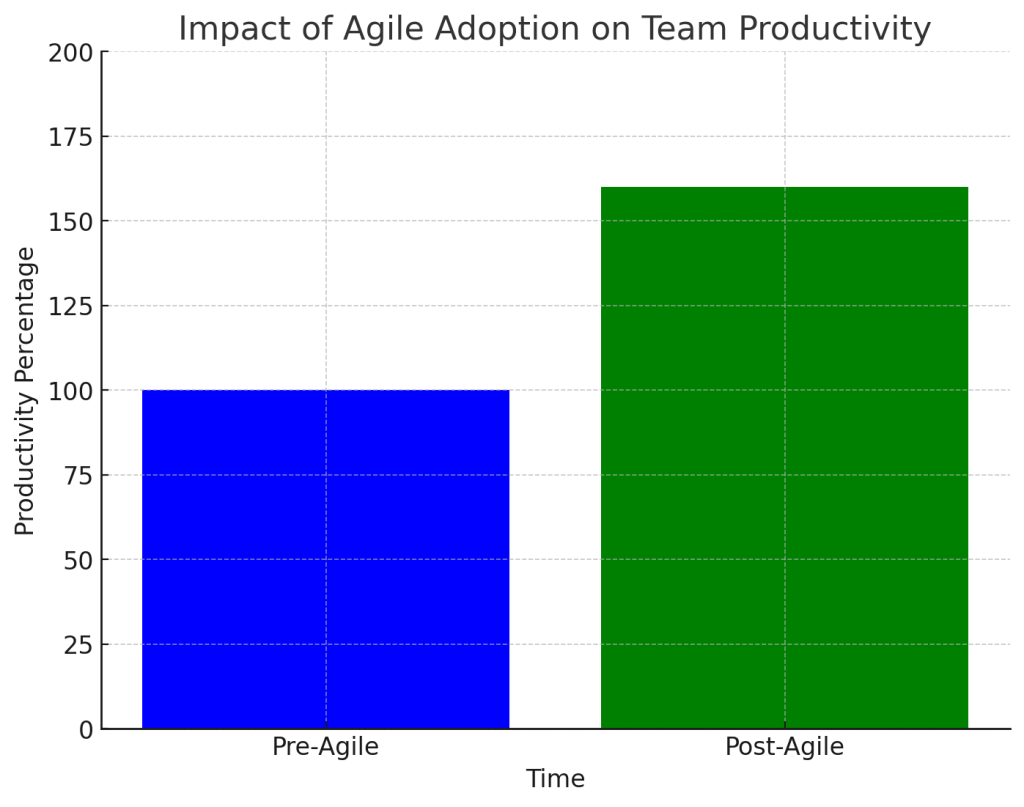
The chart showing the impact of agile adoption on team productivity highlights a significant 60% increase in productivity post-adoption. This data, sourced from Forrester Research, underscores the transformative effect of agile methodologies on organizational efficiency.
Agile practices such as Scrum and Kanban facilitate better collaboration, faster decision-making, and more responsive project management. By breaking work into smaller, manageable increments and incorporating continuous feedback, teams can adapt quickly to changes and deliver higher-quality outputs.
This productivity boost is critical in today’s fast-paced business environment, where the ability to pivot and innovate can define success.
AI is coming to Agriculture with a vengeance

The AI adoption in agriculture chart from Grand View Research illustrates a significant upward trend, with market value expected to grow from $1.0 billion in 2018 to $3.1 billion by 2023. AI technologies, including machine learning and predictive analytics, are transforming agricultural practices by enabling smarter, data-driven decisions. For instance, AI can predict crop yields, detect pests and diseases early, and optimize irrigation and fertilization schedules. These capabilities help farmers increase productivity, reduce costs, and improve sustainability. As AI technology advances, its integration into agriculture will likely become even more sophisticated, further enhancing its impact on the industry.
Leveraging IoT and Data Analytics – with Real Results
One of the most significant areas where Cargill applied agile principles was in its aquaculture operations. Cargill used sensors and IoT technologies to optimize shrimp farming, a critical part of its business. The implementation of IoT and data analytics transformed shrimp farming from a traditional, labor-intensive process to a highly efficient, data-driven operation.

The IoT in agriculture market growth chart, based on data from Markets and Markets, shows a steady increase from $5.6 billion in 2016 to $13.2 billion in 2021.
This growth reflects the rising adoption of IoT technologies in agriculture, driven by the need for greater efficiency, sustainability, and productivity. IoT devices such as sensors, drones, and automated machinery enable farmers to monitor crop health, soil conditions, and weather patterns in real-time. This data-driven approach allows for precise interventions, reducing waste and optimizing resource use. As the agricultural sector continues to face challenges such as climate change and population growth, IoT will play a crucial role in ensuring food security and sustainable practices.
Cargill’s Key Initiatives and Timeline:
- 2016: Cargill begins exploring IoT technologies for aquaculture.
- 2017: Pilot projects are launched in shrimp farms to test the effectiveness of sensors and data analytics.
- 2018: Cargill rolls out IoT solutions across its shrimp farms, enabling real-time monitoring of water quality, feed levels, and shrimp health.
- 2019: Data analytics platforms are integrated to analyze data from sensors, providing insights that help optimize feed usage, improve shrimp growth rates, and reduce mortality.
- 2020: Automated feeding systems are introduced, further enhancing efficiency and yield.
- 2021: Continuous improvements and refinements based on data insights lead to a 15% increase in shrimp yield and a 20% reduction in feed costs.

This chart of Cargill’s shrimp yield improvement shows a steady increase in yield from 2018 to 2021. This improvement is a testament to Cargill’s successful implementation of IoT and data analytics in their aquaculture operations.
By deploying sensors to monitor water quality, feed levels, and shrimp health, Cargill can make real-time adjustments that optimize conditions for shrimp growth. Additionally, data analytics provide insights that help refine feeding strategies and reduce mortality rates.
This approach not only boosts productivity but also enhances sustainability by minimizing resource use and waste.

The feed cost reduction chart, also from Cargill’s public reports, highlights a substantial decrease in feed costs from 2018 to 2021. This reduction is primarily due to the use of automated feeding systems and data-driven optimization of feed usage.
By accurately monitoring and adjusting feed quantities based on real-time data, Cargill can ensure that shrimp are fed efficiently, reducing overfeeding and waste. These cost savings contribute to higher profitability and demonstrate the economic benefits of adopting IoT and data analytics in aquaculture.
This example serves as a model for other agricultural sectors looking to improve efficiency and reduce costs through technology.
Enabling Self-Service and AI Platforms
Cargill also invested in self-service business platforms and AI technologies to empower its teams and drive innovation. These platforms provided employees with the tools and data needed to make informed decisions and develop new solutions. Key initiatives included:
- Self-Service Data Platforms: Cargill developed self-service platforms that allowed employees to access and analyze data without needing extensive technical expertise. This democratization of data enabled quicker decision-making and innovation.
- AI-Driven Insights: AI and machine learning algorithms were employed to analyze vast amounts of data from various sources. These insights helped predict trends, optimize operations, and identify new opportunities for growth.
The Role of CIOs and Chief Architects Enabling the Digital Economy
CIOs and Chief Architects are pivotal in steering traditional businesses through their digital transformation journeys. Their strategic leadership and technical expertise are essential in adopting agile methodologies, implementing IoT technologies, and integrating AI solutions. In the case of Cargill’s transformation, the roles of these key leaders were instrumental in driving success and innovation.
Strategic Vision and Leadership
Setting the Strategic Direction: CIOs and Chief Architects are responsible for setting the strategic vision for digital transformation. This involves understanding market trends, identifying opportunities for innovation, and aligning technology initiatives with the organization’s broader business goals. At Cargill, the leadership team recognized the potential of IoT and AI to revolutionize their shrimp farming operations. They set a clear vision to transition from traditional methods to a more modern, data-driven approach.
Championing Agile Methodologies: Transitioning from a project-centric to a product-centric approach requires a cultural shift within the organization. CIOs and Chief Architects champion agile methodologies, fostering an environment that encourages collaboration, flexibility, and continuous improvement. By promoting the adoption of agile frameworks like Scrum and Kanban, they ensure that teams are better equipped to handle complex projects and respond quickly to market changes.
Technology Integration and Innovation
Overseeing Technology Integration: Implementing new technologies such as IoT and AI requires careful planning and execution. CIOs and Chief Architects oversee the integration of these technologies into existing systems and processes. They ensure that the infrastructure is robust and scalable to support new initiatives. In Cargill’s case, this meant deploying sensors and automated systems in shrimp farms and integrating data analytics platforms to provide actionable insights.
Driving Innovation: CIOs and Chief Architects are at the forefront of driving innovation within the organization. They explore emerging technologies, pilot new solutions, and assess their potential impact. By fostering a culture of experimentation and innovation, they enable the organization to stay ahead of the competition. For Cargill, this involved experimenting with IoT technologies to monitor water quality and shrimp health, and using AI to optimize feeding schedules and improve yield.
Change Management and Continuous Improvement
Leading Change Management Efforts: Transitioning to new methodologies and technologies often meets with resistance. CIOs and Chief Architects lead change management efforts to ensure a smooth transition. This includes communicating the benefits of the changes, providing training and support, and addressing any concerns from stakeholders. At Cargill, this involved educating staff on the benefits of agile methodologies and new technologies, and providing the necessary resources to facilitate the transition.
Promoting Continuous Improvement: Digital transformation is an ongoing process. CIOs and Chief Architects promote a culture of continuous improvement, encouraging teams to regularly review and refine their processes. They use data and feedback to identify areas for improvement and drive incremental changes. In Cargill’s case, continuous monitoring and analysis of data from IoT sensors allowed for ongoing optimizations in shrimp farming operations, leading to sustained improvements in yield and efficiency.
Enhancing Collaboration and Decision-Making
Facilitating Collaboration: Agile methodologies emphasize collaboration across cross-functional teams. CIOs and Chief Architects facilitate this collaboration by breaking down silos and promoting teamwork. They ensure that all stakeholders, including IT, operations, and business units, are aligned and working towards common goals. This collaborative approach was crucial in Cargill’s transformation, as it required coordination between technology experts and aquaculture specialists.
Empowering Data-Driven Decision Making: With the implementation of IoT and AI technologies, organizations generate vast amounts of data. CIOs and Chief Architects empower teams to make data-driven decisions by providing them with the tools and platforms needed to analyze this data. At Cargill, the use of data analytics platforms enabled real-time monitoring and decision-making, allowing the company to optimize operations and improve outcomes.
According to Forrester, “Organizations that adopt agile methodologies see a 60% increase in team productivity and a 40% improvement in time to market” (https://go.forrester.com/blogs/). This aligns with Cargill’s experience, where the implementation of agile principles and IoT technologies led to significant operational improvements.
Jennifer Hartsock, Cargill’s Chief Information and Digital Officer, regarding their digital transformation journey: “Implementing IoT and AI technologies has transformed our operations, from optimizing shrimp farming to enhancing our supply chain management. These tools provide the insights we need to make data-driven decisions that improve efficiency and sustainability.”
The CDO TIMES Bottom Line
Cargill’s journey from projects to products demonstrates the power of agile methodologies and advanced technologies in transforming traditional businesses. By adopting agile principles, leveraging IoT and data analytics, and enabling self-service and AI platforms, Cargill optimized its operations, increased efficiency, and drove continuous innovation. This case study highlights the critical role of CIOs and Chief Architects in leading digital transformation and showcases the significant benefits that can be achieved by embracing agile in the digital economy.
Cargill’s transformation from a traditional project-centric approach to a product management and agile methodology framework offers valuable lessons for organizations across various industries. The charts provided highlight several key benefits and trends that are driving this shift and showcase the tangible improvements that can be achieved.
1. Agile Adoption Enhances Productivity
The chart on the impact of agile adoption on team productivity clearly demonstrates the significant gains that can be achieved. With a 60% increase in productivity post-adoption, organizations can expect more efficient workflows, faster delivery times, and higher-quality outputs. This is essential for staying competitive in today’s fast-paced business environment. Agile methodologies, through their iterative processes and continuous feedback loops, help teams to quickly adapt to changes and improve collaboration across departments.
2. IoT Drives Market Growth in Agriculture
The steady growth in the IoT agriculture market from $5.6 billion in 2016 to $13.2 billion in 2021 underscores the increasing importance of technology in enhancing agricultural practices. IoT devices provide real-time data that enable farmers to make informed decisions, thereby improving efficiency and sustainability. As global challenges such as climate change and food security continue to mount, IoT’s role in agriculture will become even more critical, driving further innovation and investment in this sector.
3. AI Adoption is Transforming Agriculture
AI’s rapid adoption in agriculture, growing from $1.0 billion in 2018 to an expected $3.1 billion by 2023, highlights the transformative potential of this technology. AI applications, from predictive analytics to machine learning, enable smarter farming practices that optimize resource use, increase yields, and reduce costs. The integration of AI into agriculture not only boosts productivity but also promotes more sustainable practices, helping to address some of the sector’s most pressing challenges.
4. Data-Driven Improvements at Cargill
Cargill’s implementation of IoT and data analytics has led to a notable increase in shrimp yield, as shown by the chart from 2018 to 2021. This data-driven approach allows for precise monitoring and adjustment of farming conditions, resulting in higher productivity and reduced waste. By leveraging real-time data, Cargill can continuously improve its operations, demonstrating the significant advantages of integrating advanced technologies into traditional farming practices.
5. Cost Efficiency through Automation
The reduction in feed costs in Cargill’s shrimp farms, highlighted in the chart, illustrates the economic benefits of automation and data analytics. Automated feeding systems and data-driven optimization help to minimize waste and reduce costs, leading to higher profitability. This example showcases how technology can drive cost efficiency and improve operational margins, providing a strong business case for other agricultural sectors to adopt similar approaches.
6. Growing Adoption of Agile Methodologies
The increasing adoption of agile methodologies among enterprises, from 37% in 2016 to 61% in 2021, reflects a broader shift towards more flexible and responsive project management practices. Agile’s emphasis on continuous improvement, stakeholder collaboration, and adaptability makes it an ideal approach for navigating the complexities of the modern business landscape. As more organizations embrace digital transformation, agile methodologies will play a crucial role in enabling them to innovate and compete effectively.
In conclusion, Cargill’s journey and the broader trends in agile adoption, IoT, and AI highlight the significant benefits that can be achieved through the integration of advanced technologies and methodologies. CIOs and Chief Architects are at the forefront of these transformations, guiding their organizations to leverage these tools for improved efficiency, productivity, and sustainability. The CDO TIMES emphasizes that embracing these changes is not just an option but a necessity for organizations aiming to thrive in the digital economy.
Love this article? Embrace the full potential and become an esteemed full access member, experiencing the exhilaration of unlimited access to captivating articles, exclusive non-public content, empowering hands-on guides, and transformative training material. Unleash your true potential today!
Order the AI + HI = ECI book by Carsten Krause today! at cdotimes.com/book

Subscribe on LinkedIn: Digital Insider
Become a paid subscriber for unlimited access, exclusive course content, no ads: CDO TIMES
Do You Need Help?
Consider bringing on a fractional CIO, CISO, CDO or CAIO from CDO TIMES Leadership as a Business Consulting Service. The expertise of CDO TIMES becomes indispensable for organizations striving to stay ahead in the digital transformation journey. Here are some compelling reasons to engage their experts:
- Deep Expertise: CDO TIMES has a team of experts with deep expertise in the field of Cybersecurity, Digital, Data and AI and its integration into business processes. This knowledge ensures that your organization can leverage digital and AI in the most optimal and innovative ways.
- Training, developing, arranging, and conducting educational conferences and programs and providing courses of instruction.
- Strategic Insight: Not only can the CDO TIMES team help develop a Digital & AI strategy, but they can also provide insights into how this strategy fits into your overall business model and objectives. They understand that every business is unique, and so should be its Digital & AI strategy.
- Future-Proofing: With CDO TIMES, organizations can ensure they are future-proofed against rapid technological changes. Our experts stay abreast of the latest AI, Data and digital advancements and can guide your organization to adapt and evolve as the technology does.
- Risk Management: Implementing a Digital & AI strategy is not without its risks. The CDO TIMES can help identify potential pitfalls and develop mitigation strategies, helping you avoid costly mistakes and ensuring a smooth transition with fractional CISO services.
- Competitive Advantage: Finally, by hiring CDO TIMES experts, you are investing in a competitive advantage. Their expertise can help you speed up your innovation processes, bring products to market faster, and stay ahead of your competitors.
By employing the expertise of CDO TIMES, organizations can navigate the complexities of digital innovation with greater confidence and foresight, setting themselves up for success in the rapidly evolving digital economy. The future is digital, and with CDO TIMES, you’ll be well-equipped to lead in this new frontier.
Do you need help with your digital transformation initiatives? We provide fractional CAIO, CDO, CISO and CIO services, do a Preliminary ECI and Tech Navigator Assessment and we will help you drive results and deliver winning digital and AI strategies for you!
Subscribe now for free and never miss out on digital insights delivered right to your inbox!




You must be logged in to post a comment.