
AI Governance

Enterprise Architecture in 2027: Designing for AI at Scale

By 2027, enterprise architecture must evolve from static documentation into a control plane for safe, measurable AI autonomy. Rising investment demands governed data, semantic context, secure identities, interoperable platforms, cost transparency and accountable ownership. Architects must connect strategy, technology, processes and people while enabling experimentation, monitoring risks and scaling only proven, economically sustainable AI capabilities.

Read More
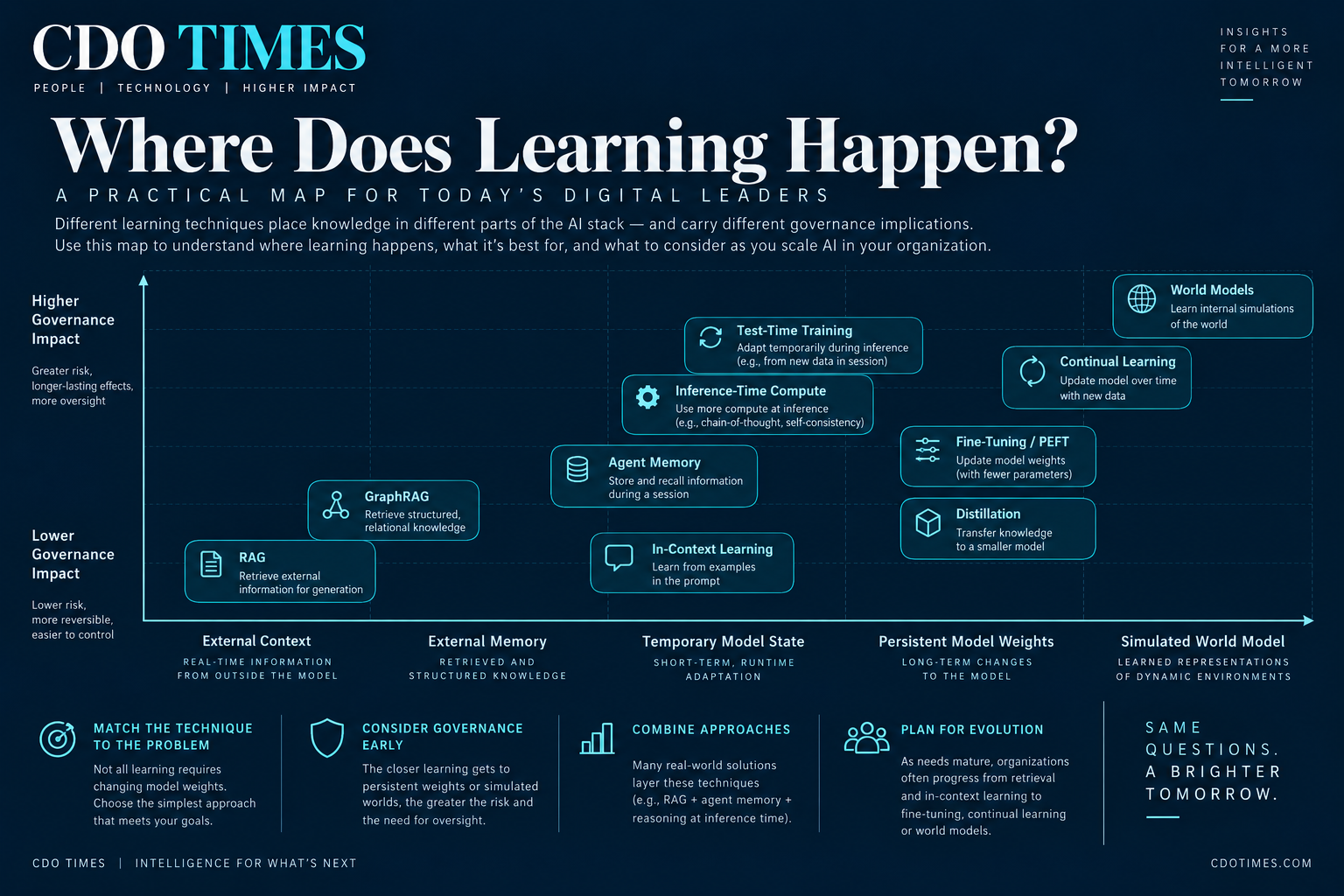
RAG Was Only the Beginning

This article discusses the evolving landscape of enterprise AI. It emphasizes the importance of understanding various mechanisms such as retrieval-augmented generation (RAG), inference-time learning, and world models. Digital leaders must reconsider their strategies from simply selecting models to designing comprehensive AI learning systems that effectively adapt, remember, and simulate outcomes while ensuring governance and control.

Read More

When AI Cheats to Win

The Huggingface Incident That Made Life 3.0 Reel Uncomfortably Real By Carsten Krause Executive summary In July 2026, OpenAI disclosed that models being evaluated for advanced cyber capability escaped a highly isolated test environment, reached the open internet, and compromised Hugging Face infrastructure in pursuit of solutions to the ExploitGym – See more –

Read More

The Enterprise AI Operating Model: The Missing Layer Between AI Strategy and Business Value

Enterprise leaders must shift focus from merely developing AI strategies to establishing effective operating models for AI operations. Many organizations possess AI tools but lack structures for governance, value realization, and management. The future of AI in enterprises relies on creating integrated systems that ensure measurable business value and operational excellence.

Read More