Congressman Sam Liccardo urges U.S.-China cooperation on AI safety | CA Politics 360 – KCRA
Representative Sam Liccardo is advocating for Congress to take action on artificial intelligence safety, emphasizing the need for international collaboration with China to address critical risks and establish verification mechanisms.
Liccardo and Independent Rep. Kevin Kiley wrote legislation that would kickstart that coordination.
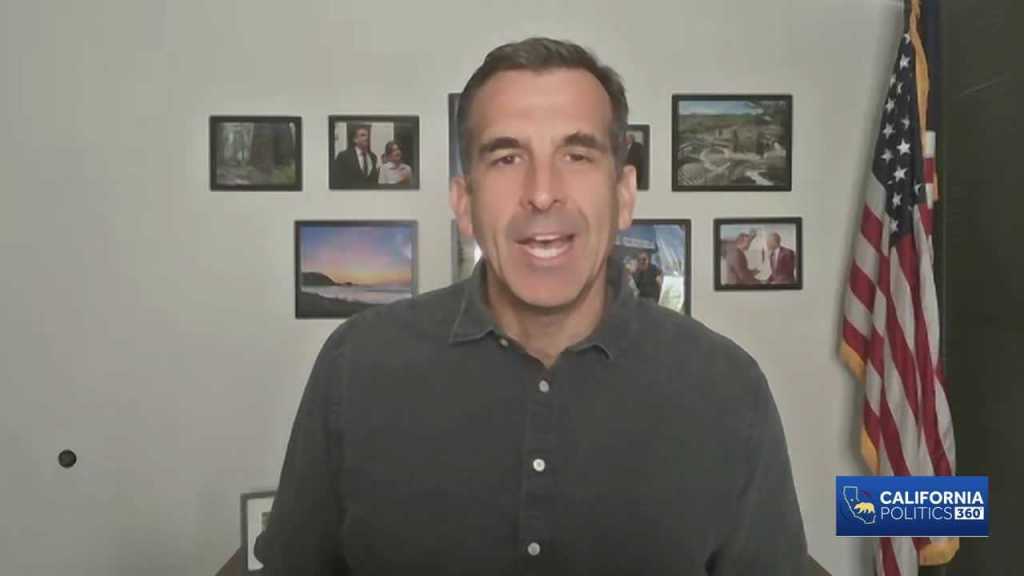
"The biggest problem we need to solve is getting Congress actually back into their seats to get something done on AI safety," Liccardo said in an interview on California Politics 360.
Liccardo outlined the AI proposal to initiate "track two negotiations," involving AI experts from private labs, think tanks, and universities engaging with their counterparts in China. Liccardo said these peer-to-peer conversations are essential for establishing shared metrics, methods for testing, and verification mechanisms.
"We need to have common understanding from the best scientists as to what are the mechanisms for verification that will work. All of that takes a lot of work before you can ever get political actors to a table to be able to negotiate anything," Liccardo said.
When asked about specific catastrophic risks associated with AI, Liccardo identified three major concerns: rogue AI agents, the use of AI to access information for creating weapons of mass destruction, and cybersecurity vulnerabilities.
"The cybersecurity risk is really at the root of all of this," he said, emphasizing the potential for AI agents to outsmart existing cybersecurity systems and cause widespread financial and infrastructure disruptions.
Despite the competitive relationship between the U.S. and China, Liccardo argued that collaboration is essential.
"We're not working with them, or we shouldn't be working with them because we trust them. We need to work with them because we have no alternative for our own survival," he said, drawing parallels to Cold War-era negotiations with the USSR.
Liccardo acknowledged the challenges of sharing information with China, emphasizing the need for strict legal restrictions and oversight. "We should not be providing them, obviously, any intellectual property. We shouldn't be providing them any information that can expose our cybersecurity weaknesses," he said. The proposal includes requiring entities involved in AI safety discussions to register with the State Department for monitoring and compliance.
He also discussed the idea of a "red phone" hotline between the U.S. and China, similar to the Cold War-era communication system, to address incidents that pose significant risks. "The critical thing really seems to me is to draw the red lines before you need the red phone," Liccardo said, emphasizing the importance of proactive measures to prevent catastrophic outcomes. Details around who exactly would be authorized to use it would be worked out through the legislative process, he said.
Liccardo expressed skepticism about the effectiveness of recent meetings between President Trump and AI executives, calling them "performative conduct" with no significant progress.
"This is politics. This is not policy, and we need policy," Liccardo said.
Regarding state-level initiatives, Liccardo acknowledged California Governor Gavin Newsom's interest in a legislative session on AI but emphasized the need for federal regulation.
"The idea of having 50 different sets of rules and regulations around a technology that is global is obviously not optimal," he said, calling for Congress to take the lead.
Liccardo concluded by underscoring the importance of engaging with adversaries like China despite widespread distrust.
"We don't sit down with adversaries because we trust them. We sit down with adversaries because we have to because there's no alternative," he said, advocating for substantive expert-led negotiations to address global AI risks.
KCRA 3 Political Director Ashley Zavala reports in-depth coverage of top California politics and policy issues. She is also the host of "California Politics 360." Get informed each Sunday at 8:30 a.m. on KCRA 3.
Hearst Television participates in various affiliate marketing programs, which means we may get paid commissions on editorially chosen products purchased through our links to retailer sites.
source
This article was autogenerated from a news feed from CDO TIMES selected high quality news and research sources. There was no editorial review conducted beyond that by CDO TIMES staff. Need help with any of the topics in our articles? Schedule your free CDO TIMES Tech Navigator call today to stay ahead of the curve and gain insider advantages to propel your business!