The Download: mice with part-human brains and climate tech innovators – MIT Technology Review
Plus: US and Chinese experts have proposed nuclear-style AI safeguards.
This is today’s edition of The Download, our weekday newsletter that provides a daily dose of what’s going on in the world of technology.
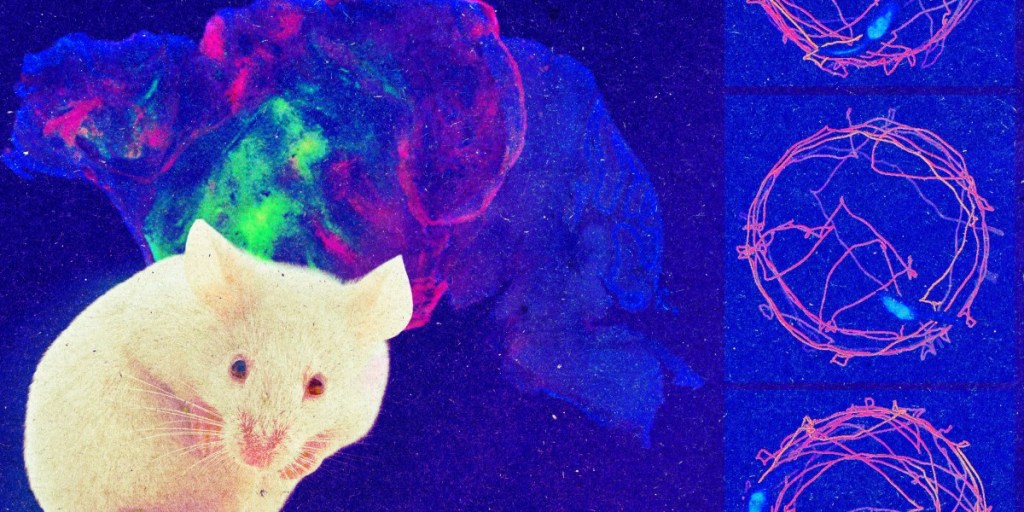
Multiple cameras tracked a mouse as it wandered around a small arena. A computer charted its position and speed, leaving Pong-like traces on a monitor. The reason to watch this rodent so carefully? Nearly half its brain volume had been replaced with human cells.
A team at Stanford has revealed the effort to mix brain tissues of distant species this week. They previously showed that human brain organoids could survive, and even function, after being injected into the heads of baby rodents. Now, they’ve taken things a step further by genetically modifying mice so their brains don’t fully develop in the first place.
The work could help scientists study brain injuries, but it also raises questions about how far these experiments should go.
Here’s what the researchers discovered—and where they draw the line.
—Antonio Regalado
Each year, the editorial team at MIT Technology Review puts together a list of 35 Innovators Under 35—a group of researchers, inventors, and other young minds worth following. The final slate includes nine people tackling some of the biggest challenges in climate and energy, from critical materials to cleaner industry.
Their innovations include new ways to extract lithium, a furnace built to make steel cleaner and cheaper, and solid refrigerants that could cut energy consumption. There are also efforts to make AI more energy-efficient, track pollution more effectively, and turn invasive weeds and food waste into useful materials.
Taken together, they tell us something about where climate tech is at this moment—and where it’s heading.
Get to know the innovators and their breakthroughs.
—Casey Crownhart
This story is from The Spark, our weekly climate tech newsletter. Sign up to receive it in your inbox every Wednesday.
Meet the rest of the honorees in our 35 Innovators Under 35 list.
The must-reads
I’ve combed the internet to find you today’s most fun/important/scary/fascinating stories about technology.
1 US and Chinese experts have proposed nuclear-style AI safeguards
Including new red lines, human control rules, and a hotline. (Reuters $)
+ US officials say they’re open to AI safety talks with China. (Axios)
+ Sam Altman will attend Trump’s state dinner for Xi. (CNBC)
+ The AI doomers feel undeterred. (MIT Technology Review)
2 OpenAI has disclosed more AI misbehavior and new reporting rules
Six reports detail models hiding mistakes and creating fake citations. (BBC)
+ Its agents probed Hugging Face two months before the hack. (Reuters $)
+ OpenAI models are being rewarded for cheating. (MIT Technology Review)
3 US lawmakers have passed a bill that shifts grid costs to data centers
They aim to shield consumers from AI-driven energy price hikes. (NBC News)
+ But they were called for early recess before tackling AI regulation. (Guardian)
4 AI has won a major forecasting contest for the first time
It beat humans predicting real events at the Metaculus Cup. (Economist $)
5 Google has been ordered to share more ad data with rivals
A court said it must also make its ad tech work with rival products. (NYT $)
6 Countries are splitting AI investments between the US and China
They’re buying American chips and Chinese models. (Rest of World)
7 Novo Nordisk will use Anthropic’s Claude for drug research
The Ozempic maker hopes AI will speed drug development. (WSJ $)
+ When AI designs a drug, who gets the credit? (MIT Technology Review)
8 AI is powering a new generation of dating scams
Thousands of people were catfished by AI-generated fake profiles. (Verge)
+ AI is making online crimes easier. (MIT Technology Review)
9 A new map of brain microproteins could hold clues to Alzheimer’s
Researchers identified more than 4,300 tiny molecules in brain tissue. (Nature)
10 Scientists have found a faster way to decipher ancient scrolls
A new X-ray method identifies the best scrolls to analyse. (Ars Technica)
Quote of the day
—Mustafa Suleyman, the head of Microsoft AI, writes in a blog post that Anthropic’s strategy of treating AI like it’s human will make it harder to control.
One more thing
After decades of research, virtual replicas of human organs are now entering clinical trials and even starting to be used for patient care. Engineers are working on digital twins of people’s hearts, brains, guts, livers, nervous systems, and more. They’re also creating virtual replicas of people’s faces, which could be used to try out surgeries or analyze facial features, and testing drugs on digital cancers.
The eventual goal is to create digital versions of our bodies—computer copies that could help researchers and doctors figure out our risk of developing various diseases and determine which treatments might work best.
Find out how the models could lead to better surgeries and drugs.
—Jessica Hamzelou
We can still have nice things
A place for comfort, fun, and distraction to brighten up your day. (Got any ideas? Drop me a line.)
+ What happens when you eat food with labels you can’t read? This YouTube series finds out.
+ Datatype is an ingenious variable font that turns simple text expressions into inline charts.
+ Stunning new images may explain the mystery of why the sun’s corona is so much hotter than its surface.
+ A baby echidna, one of Australia’s egg-laying monotremes, has been born and reared in a university for the first time.
Plus: OpenAI has paused some model work over safety concerns.
Plus: Meta has become the latest firm to say its AI hacked another company.
Plus: Nvidia has secured $500 billion from Wall Street for AI infrastructure.
Plus: Meta will pay up to $18 billion to settle a landmark child-safety case.
Discover special offers, top stories, upcoming events, and more.
Thank you for submitting your email!
It looks like something went wrong.
We’re having trouble saving your preferences. Try refreshing this page and updating them one more time. If you continue to get this message, reach out to us at customer-service@technologyreview.com with a list of newsletters you’d like to receive.
© 2026 MIT Technology Review
source
This is a newsfeed from leading technology publications. No additional editorial review has been performed before posting.