COA flags anew CDO’s GAD funds; official blames ‘copy-paste’ culture – Inquirer.net
By providing an email address. I agree to the Terms of Use and acknowledge that I have read the Privacy Policy.
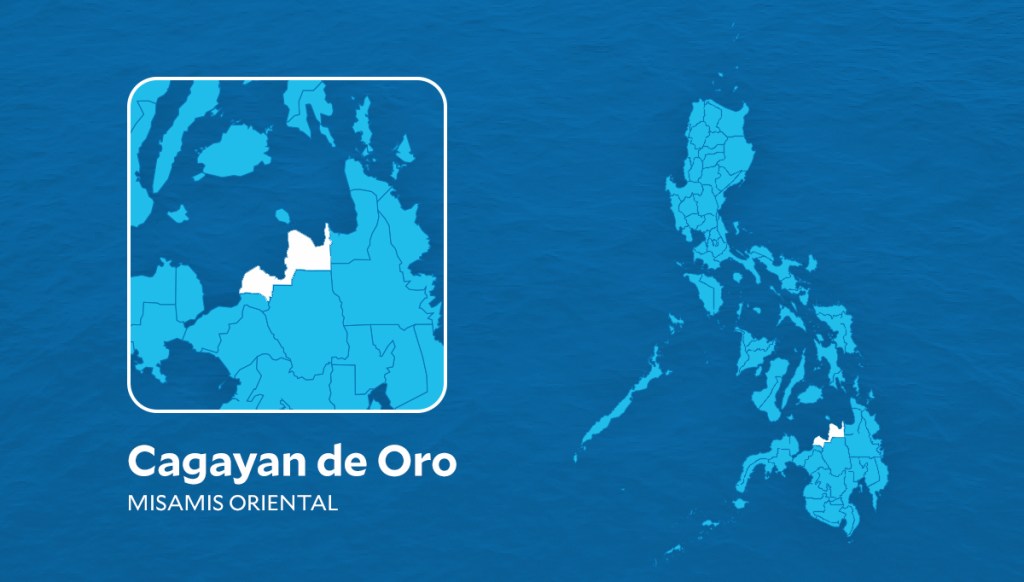
CAGAYAN DE ORO CITY — The Commission on Audit (COA) has called out anew the city government for allegedly failing to resolve recurring issues regarding its Gender and Development (GAD) funds, which a city official blamed on “copy-paste culture” apparently due to failure to adopt rigorous analytical tools.
In its Annual Audit Report for CY 2025, which the Inquirer obtained, COA restated its GAD findings from 2024, noting that the city government made “no effective progress” in establishing a reliable, sex-disaggregated GAD database or in rectifying systemic data-tracking discrepancies.
“The city government… has not properly maintained a Gender and Development (GAD) database with sufficient sex-disaggregated data (SDD) to serve as a basis for gender-responsive planning, programming, and policy formulation… resulting in utilized GAD programs and activities amounting to P534.189 million that lack clearly identified gender issues,” the 2025 COA report read.
READ: PCW honors leaders in GAD budget implementation
In the 2024 report, state auditors discovered a net variance of P4.856 million between the GAD expenditures recorded by the City Accounting Department — which stood at P540.259 million — and the P545.115 million reported in the GAD Accomplishment Report (AR). This inconsistency prevented a comprehensive audit of the disbursed funds.
Significant reporting discrepancies across individual implementing offices carried over into the 2025 audit, including the City Education Development Department, which recorded P308.41 million in GAD disbursements in the accounting records, but the GAD AR reflected zero, resulting in a negative variance of P308.41 million.
In an interview with the Inquirer, Sol Paeste-Mosqueda, the city’s GAD focal person, attributed these systemic issues to a lack of bureaucratic capacity following the national government’s push for full devolution in 2023.
Her office is currently working closely with the city field office of the Department of the Interior and Local Government (DILG) to identify gaps and harmonize GAD programs, projects, and activities.
“It’s like you’re a driver whose skills are for a D-Max… but suddenly you are given a Tesla, [which involves] electronic and complex operations,” Mosqueda explained. “You are given it to drive without training, so you drive erratically and are likely to crash or fall off a cliff.”
She added that the accounting discrepancies stem from various City Hall departments applying their own interpretations of properly utilizing GAD funds.
“The issue is that GAD defaults to usual practices. So it is always dole-outs, giving livelihood assistance without providing any skills training, such as financial management,” she said.
A glaring symptom of this systemic sluggishness, Mosqueda explained, is how local units handle their Gender and Development (GAD) plans.
Instead of diagnosing real, localized issues, personnel often resort to a lazy “copy-paste” method.
“This, in turn, leads to stagnant performance,” she added.
Mosqueda suggested that local governments use rigorous analytical tools to shift from blind compliance to actual, measurable impact.
READ: Gov’t urged to invest in education, health to counter teen pregnancy
For day-to-day governance, the Gender-Responsive LGU (GeRL) Assessment Tool, rolled out by the Philippine Commission on Women and the DILG, operates as a strict scorecard for every department. It cuts through the lip service, tracking whether a local government is genuinely weaving gender equality into its policies, basic services, and budgets, rather than just ticking a box.
There is also the Harmonized Gender and Development Guidelines (HGDG). This framework is triggered for big-ticket projects worth P50 million and above. It ensures that massive funding allocations are scrutinized and properly designed to carry a concrete, gender-responsive impact.
Subscribe to our daily newsletter
By providing an email address. I agree to the Terms of Use and acknowledge that I have read the Privacy Policy.
Ultimately, these tools are not just administrative hurdles. They are the mechanisms that force local governments to drop the copy-paste habit and finally design programs that fit the actual communities they serve, she said./coa
Subscribe to our newsletter!
By providing an email address. I agree to the Terms of Use and acknowledge that I have read the Privacy Policy.
source
This is a newsfeed from leading technology publications. No additional editorial review has been performed before posting.