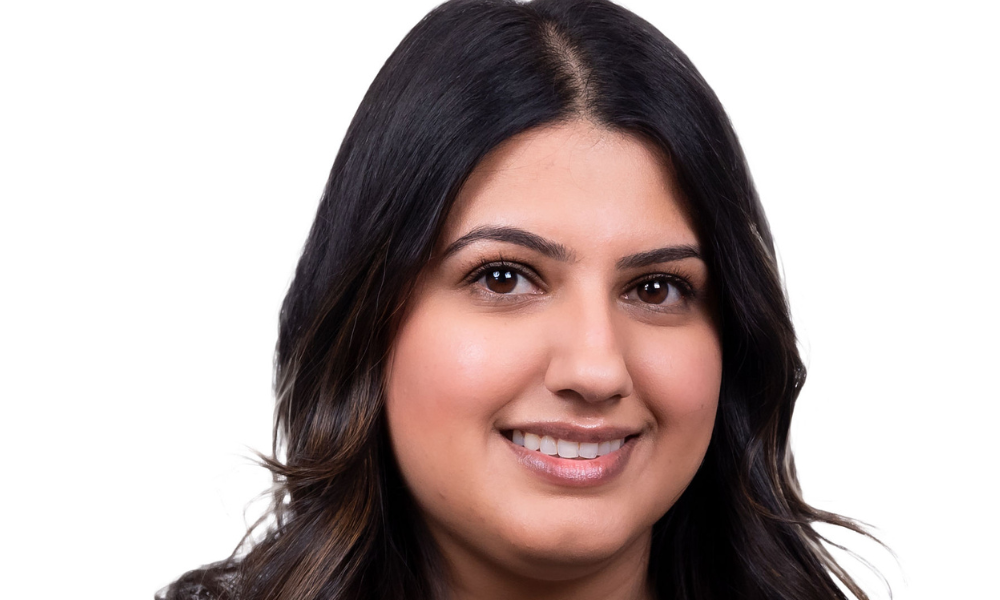
Leading change at Crown – for both the organization and HR’s role – hcamag.com
Vice President of HR shares how she built Crown Property Management’s strategic HR function from a single generalist role
When Rainu Singh arrived at Crown Property Management in 2019, there was no HR roadmap waiting for her. The Toronto-based commercial real estate company had never employed a dedicated human resources (HR) professional, according to Singh – her predecessor was an office manager who had absorbed HR responsibilities over the years. Singh took stock of what existed – a legacy payroll system, a basic benefits plan, a blank slate – and got to work.
Seven years later, Singh is now Vice President of Human Resources at Crown, overseeing a team that has helped grow Crown's workforce from roughly 85 employees to more than 200. She says the function she built now spans technology, learning and development, workforce planning, and people strategy – a path that offers a practical model for HR professionals building programs inside organizations where the core business is anything but people management.
“The great thing about the role was that it was kind of what I made of it – what was I looking to do for the organization and what was I really trying to strive for?” says Singh. “I've been in this VP role for about two years, and that's when my role really shifted and I started to work much more closely with the partners of the organization in workforce planning.”
Singh's first instinct wasn’t to launch culture programs or redesign the org chart. It was to fix the administration.
"The first thing I did was to look at how am I going to make my role more efficient today so that I can do a lot more strategic initiatives in the future," she says.
That meant replacing an outdated desktop-bound payroll system that could only be accessed from a single computer at a time. She built a business case to scrap it – even after the company had already committed to an upgrade – and proposed migrating to a platform that integrated payroll, human resources information systems (HRIS), performance management, benefits, and recruitment in one place.
The rollout was deliberately phased, according to Singh. Crown launched one or two new modules per year rather than deploying everything at once. Seven years on, the final module – a compensation tool designed to connect performance ratings with bonus and salary decisions – is on track to go live by year's end, she says.
"Once we aligned with what the employees were looking for, we got buy-in very easily to the platform," says Singh.
One of the most significant changes Singh led this year came from a structured review of Crown's property management division. Working alongside the company's two new managing partners – co-CEOs who took over after the previous CEO retired – she mapped how roles and responsibilities moved across departments throughout the employee lifecycle.
What she found was a structural mismatch, particularly around accounts payable and receivable work and customer-facing tenant responsibilities, she says.
"We had both of our administrative roles in property management doing both and we weren't finding the right people for the roles because those skill sets just didn't match each other," says Singh.
The fix was to separate the functions. Accounting-focused tasks were consolidated into one role; customer service responsibilities became another. The restructure rolled out company-wide in January 2025 – and no one was laid off. Instead, the team assessed where each employee's strengths lay and placed people accordingly, according to Singh.
"We found where the strong suits were and we sat them in those roles. And now that we're going to recruit for those roles from a talent perspective, we're actually able to find the right skill set with people who are much happier in what they're doing," Singh says.
The outcome is cleaner hiring criteria and a workforce better matched to the work, she says.
As Crown approaches what Singh describes as exponential growth – with planned expansion into Vancouver and Calgary over the next few years – she has leaned heavily on change management to keep the organization stable through rapid transformation.
She says she earned a change management practitioner certification last year, but her philosophy begins long before any formal methodology applies.
"[Change management] starts a lot earlier than the actual change itself, and that's around relationship building," she says. "People have to have that trust in the person who's leading a change and managing a change for the organization, for their department, for their own team, however small or bit it might be – If that trust doesn't exist, typically they're not going to trust in the change automatically."
Crown runs quarterly town halls – a practice introduced during the COVID-19 pandemic to keep remote workers connected – and HR has its own dedicated section in each session, says Singh. That visibility matters, as she says her team is positioned not as administrators delivering announcements, but as co-presenters shaping the organizational narrative alongside senior partners.
She’s also candid that not every change initiative succeeds, and acknowledging this openly is part of effective leadership.
"Change isn’t going to happen very easily for any organization, so you have to be okay with some hits and misses and giving that space and comfort to know it's okay,” she says. “It didn't work out this time and we'll step back, but it doesn't mean we don't stop changing. It just means that specific change didn't work."
Singh's team is currently developing an internal HR bot designed to answer routine policy questions – how much vacation an employee has accrued, what a specific entitlement covers – without requiring a member of HR to respond by email. She says the goal isn’t efficiency for its own sake, but rather time.
"What AI can't do is that human interaction – you're never going to have AI build that relationship with an employee where they can trust you and come to you with any issues they might be having," she says. “But it does give us opportunity to travel more because we could actually go out and see employees as opposed to sitting behind our desk constantly answering emails about policies and procedures and entitlements all day.”
Singh adds that Crown has more than 60 properties, so having that extra time frees her and her team to visit more of them as opposed to just the main offices, which provides more face-to-face connections with employees.
The guardrails on the bot are clearly defined, says Singh. It will draw only from written policy, offer no subjective interpretations, and – critically – will redirect any query related to health and safety, workplace violence, or harassment directly to a member of the HR team.
Singh is equally clear about the risks of AI adoption more broadly. Employees who rely on AI-generated content without critically evaluating it – including, as she has seen, referencing legislation from the wrong jurisdiction – represent a real organizational risk. Crown is building training programs to help staff use AI effectively without eroding the critical thinking that underpins quality work, she says.
For an HR leader who started with a blank slate and a desktop payroll system, navigating transformation is familiar ground. The work, says Singh, is never truly finished – it just keeps evolving.
source
This is a newsfeed from leading technology publications. No additional editorial review has been performed before posting.