How a Formula 1 IT director balances innovation and stability at 200 mph – cio.com
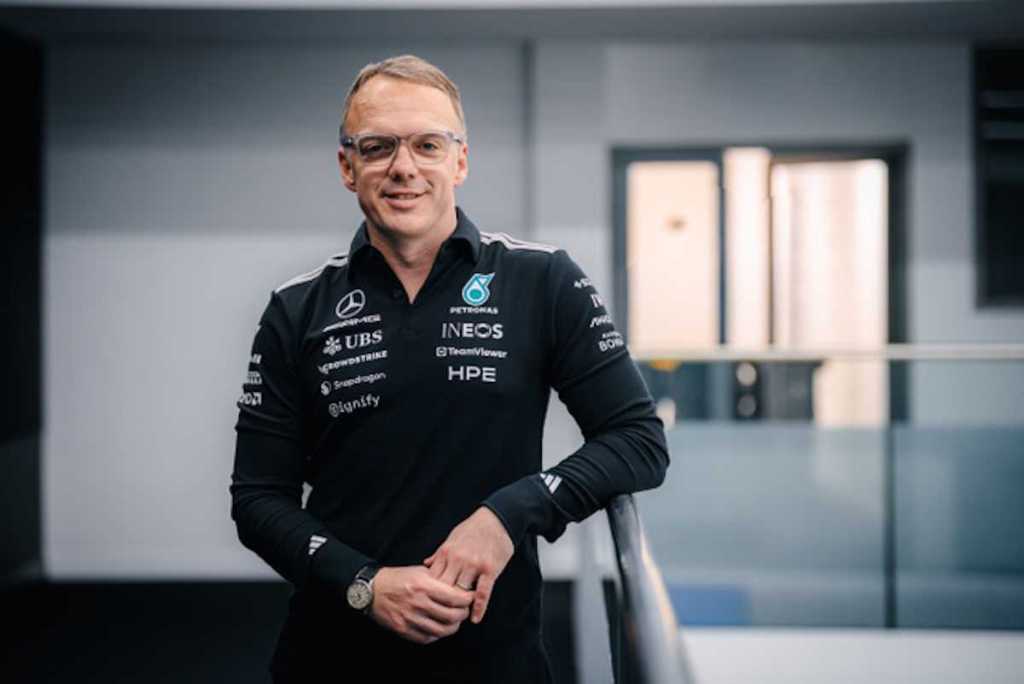
Michael Taylor has spent 25 seasons with the Mercedes-AMG Petronas F1 team, working every IT role from trackside support to engineering systems to business transformation. Today, as IT director, he leads an 18-person team responsible for one of the most data-intensive operations in the world.
When a car rolls out of the garage, it carries 300 sensors. When it’s running, it generates more than a million data points per second. Every component, system, and lap produces telemetry that engineers use to find fractions of a second — the difference between winning and losing.
“Formula One has been data-centric for many years,” Taylor says. “The key metric in our sport is the stopwatch, and that’s been true since the World Championship began in the 1950s. But now we instrument everything. If you measure it, you can improve it.”
The challenge isn’t collecting data — Formula One has been streaming live telemetry since the 1980s. It’s making decisions at speed while maintaining the governance that keeps a complex, high-stakes operation running.
For CIOs navigating the pressure to move fast on AI while managing risk, security, and data quality, Taylor’s hard-won lessons from the pit lane offer a useful framework: how to balance speed and control, when to keep humans in the loop, and why “good enough” governance beats perfect governance that never ships.
In most enterprises, the tension between innovation and control plays out over quarters or years. In F1, it happens weekly.
“It’s really tough,” Taylor admits. “And something we don’t always get right. This is where we rely on people. Industry experience is really important when making decisions around change.”
The team operates in two distinct modes. Between races, they’re at the factory in Brackley, UK. The site, which is headquarters for the design, manufacturing, and operation of their championship-winning Formula One cars, includes a 60,000-square-meter technology campus. It’s all project and program management, with room for experimentation. But as race weekend approaches, everything shifts to execution.
“We have that kind of normal mode when we’re not racing. We’re back at the factory designing and building and improving,” Taylor explains. “But as we get closer to race weekend, we switch to executing that in the most effective way. We have to not make changes that will impact engineers.”
This duality shapes every technology decision. The same agility that drives innovation during the week must yield to stability when results are on the line. Taylor calls it a “constant battle.”
Mercedes-AMG Petronas had run SAP since 1999. The platform underpins the team’s entire design-to-track process — from design release through planning, procurement, manufacturing, testing, and development, all the way to reassembling the car trackside.
“All of those steps are core processes,” Taylor says.
So, when it came time to modernize, the team approached it like a pit stop: planned to the second, executed with precision. They chose RISE with SAP — the vendor’s bundled cloud ERP and migration package — agreeing to the journey in December 2024 and targeting a go-live in August 2025, aligned with the sport’s mandatory two-week shutdown.
“It’s the perfect window to make changes,” Taylor says. “We have to plan everything to perfection so it goes smoothly when we start racing again.”
They finished eight weeks ahead of schedule.
“We are control freaks because of the sport and its time-bound nature,” Taylor says. His team prefers to own and manage systems in-house rather than rely on large systems integrators who “dip their toes in and disappear,” Taylor says. With just 18 people on the IT team, they tap SAP’s expertise for specific problems, then take back the reins. “Once done, we continue to own and manage,” Taylor explains, “and SAP does what they do best.”
Intellectual property in F1 racing has a short shelf life. Once a new component is on the car and photographed in the pit lane, competitors can see it. But that doesn’t diminish the value of what’s behind it.
“The real advantage is not just the part,” Taylor says. “It’s the thinking, the modeling, the simulation, the failure modes, the trade-offs, and the development direction behind it.”
Protecting that requires an offensive security posture. Taylor’s head of information security reports directly to him, and the team actively probes its own defenses.
“Act like, think like, work like a hacker,” Taylor says. “We’re thinking about how we can counter threats without impact on end-users.”
In an engineering-permissive culture where people are empowered to move fast, heavy-handed security backfires. Taylor learned early that perfection is the enemy of progress.
“If security gets in the way of the business, the business will find ways to work around it,” he says. “The job is not to slow the organization down; it’s to make the secure path the easiest path.”
With AI evolving weekly, Taylor’s team is running pilots across the organization: machine learning for simulation, agentic workflows in production planning, copilots helping developers write code. But he’s resisting the urge to rush.
“We’re still finding our way,” he says. “There’s no one-size-fits-all. We’re playing with everything available, but in six to ten months we’ll make decisions about what to scale.”
Despite the hype around autonomous AI, Taylor remains committed to human oversight.
“I’m still very much ‘humans should be in the loop,’” he says. “When our workforce is harmonized with AI, that’s where we’ll see real benefit — where it complements our people.”
AI has also raised the bar for data governance. “Good enough now includes stronger visibility, cleaner permissions, and clearer ownership,” Taylor says. “You have to be more deliberate about what data AI is allowed to access.”
Taylor’s advice to CIOs in other industries wrestling with similar questions is deceptively simple: “Start with consequence, not technology.”
In financial services, it might be customer harm or a regulatory breach. In healthcare, patient safety or loss of public trust. In F1, the consequence of a security failure is loss of competitive advantage.
“Once you understand the consequence, you can decide what needs the strongest control, what needs monitoring, what needs retention, and what simply needs better hygiene,” Taylor says.
It’s a lesson learned over 25 seasons at the edge of what’s technically possible — where decisions happen in milliseconds, and the margin between success and failure is measured in fractions of a second.
Stephanie Overby is a regular contributor to CIO.com.
Sponsored Links
source
This is a newsfeed from leading technology publications. No additional editorial review has been performed before posting.