Degrees, AI anchors, and the future of journalism: Why skills and ethics must lead the way, By Akintunde Babatunde – Premium Times Nigeria
So, who qualifies to be a journalist? It depends on who you ask — and the context. But bear in mind: What makes journalism distinct is not degrees or titles, but ethics, public service, and the courage to hold power accountable. Whether you hold one degree or several, if your work lacks these principles, you may be doing something else.
Two important issues have dominated Nigeria’s media landscape in the last two weeks. One is a controversy on who is qualified to be a journalist — is it someone who has practiced the profession or someone who studied it in school? The other is the controversy surrounding TVC’s release of Nigeria’s first AI anchors and concerns about editorial integrity.
Both are valid issues and I have enjoyed reading from all sides, and I must say, it feels so good to learn about the diverse points of view.
Journalism qualifications: Who Decides?
Before I even delve into the real issues, I keep thinking about Flutterwave, Moniepoint, Paystack, and other remarkable fintech innovations in Nigeria today. I wonder whether traditional bankers and accountants dismissed these tech bros as amateurs years ago when they disrupted the industry.
That’s how innovation works — it reinvents what exists and brings it forward in new formats. When the printing press replaced wireless telegraphy, it launched a new wave. Cable reshaped television. Streaming is now doing the same. Life is like that.
So, who qualifies to be a journalist? It depends on who you ask — and the context. But bear in mind: What makes journalism distinct is not degrees or titles, but ethics, public service, and the courage to hold power accountable. Whether you hold one degree or several, if your work lacks these principles, you may be doing something else.
If you examine top media organisations globally, you will notice that the skill and character required to do the job outweigh the formal degrees. In Nigeria, if you hold a bachelor’s in Educational Management/Mathematics, like I do, you might never qualify to pursue a Master’s in media locally. But I was funded by the UK government to study Media and Development at the world’s leading development studies school. Why? Because in systems that value competence, experience and readiness to learn outweigh paper certificates.
Support journalism driven by facts, created by Nigerians for Nigerians. Our thorough, researched reporting relies on the support of readers like you.
Help us maintain free and accessible news for all with a small donation.
Every contribution guarantees that we can keep delivering important stories —no paywalls, just quality journalism.
I sometimes teach undergraduates at a top American university, some of my students major in finance, biology, and political science, yet many minor in media. The world has moved. Serious media organisations now deliberately hire trained accountants, medical doctors, and other professionals as journalists to cover niche sectors. If you report on complex issues, you must do so from a knowledgeable standpoint. Those who classify journalism and media as interdisciplinary know exactly what they are doing.
The relationship between journalism of the past and what it is today has changed. Many former news consumers are now news producers. News organisations rely on social media influencers to amplify stories and use big tech for audience analytics.
While all of this is changing, we cannot waste energy on debates that no longer matter. Instead, we must come together to explore how best to benefit from the ongoing digital transformation.
AI in Nigerian Newsrooms: A Sign of Progress, Not Peril
In the early days of civilisation, when society was just forming and thinkers like John Dewey were reflecting on the relationship between the state and the people, one idea kept recurring: the state and the public are equal partners, searching together for a common purpose to govern themselves effectively. Dewey argued that for democracy to flourish, people must stay informed. That responsibility falls on the shoulders of the news media.
Over time, society has evolved, and so has the way information is exchanged. Dewey foresaw that democracy deteriorates to the extent that the voice of the public is weakened, and he predicted a future where technological advancement would reshape the public sphere and power dynamics.
This context is essential when we examine the state of media today. The role of journalism is changing — not in purpose, but in form and practice.
This brings me to the TVC AI anchors debate.
Rather than condemnation, TVC deserves commendation. TVC should be applauded for leading the pack and doing something extraordinary, especially in an industry that often reports on others’ innovations but rarely on its own. TVC has demonstrated that Nigeria is ready, not just to observe the AI revolution, but to participate actively.
At the Centre for Journalism Innovation and Development, we introduced Nigeria’s first indigenous fact-checking platform, West Africa’s first AI audio disinformation tracking tool, and have funded the largest body of investigative journalism in West Africa over the past decade. One of our constant challenges has been moving journalism forward while many remain anchored to the past, especially when engaging with those who have been in the profession for many years.
The reality is this: AI in journalism is no longer a question of if but how. Those who resist will be left behind.
Of course, I understand why some fear that AI might replace jobs, but history shows that while some roles evolve or fade, new opportunities always emerge for those willing to adapt.
If you doubt this, remember the typewriter. While typists still exist, only those who adapted when word processors emerged remain relevant today.
We can, and must, discuss the ethical, safe, and responsible use of AI in journalism. But that is very different from demonising an organisation for embracing innovation and leading the charge.
What we must all remember is, change will come, with or without our permission. The only choice we have is whether to shape it or be shaped by it.
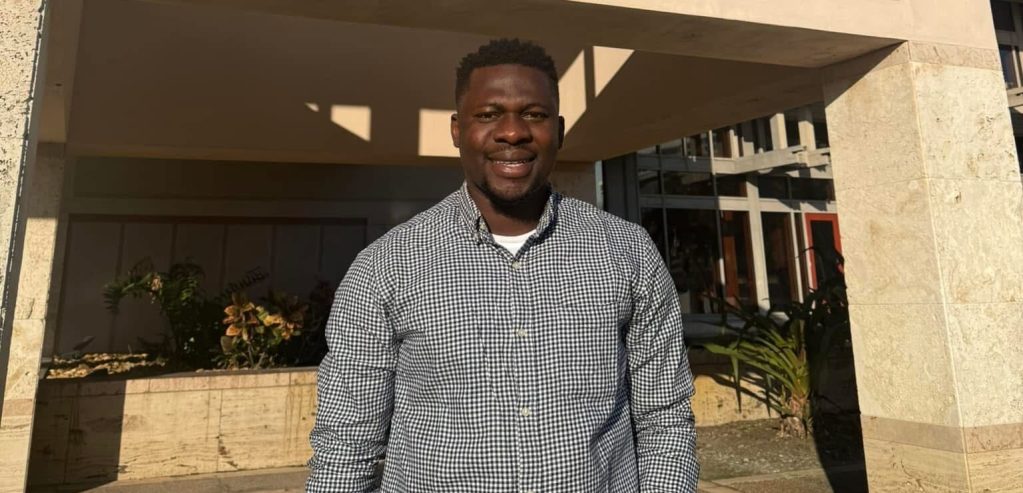
Akintunde Babatunde is a media executive and researcher specialising in journalism innovation, platform governance, and AI ethics. He is executive director at the Centre for Journalism Innovation and Development (CJID),a leading pan-African media development think tank. His work sits at the intersection of platform governance, information integrity, and digital rights in the Global South.
At Premium Times, we firmly believe in the importance of high-quality journalism. Recognizing that not everyone can afford costly news subscriptions, we are dedicated to delivering meticulously researched, fact-checked news that remains freely accessible to all.
Whether you turn to Premium Times for daily updates, in-depth investigations into pressing national issues, or entertaining trending stories, we value your readership.
It’s essential to acknowledge that news production incurs expenses, and we take pride in never placing our stories behind a prohibitive paywall.
Would you consider supporting us with a modest contribution on a monthly basis to help maintain our commitment to free, accessible news?
TEXT AD: Call Willie – +2348098788999


Akintunde Babatunde is a media innovation strategist and Executive Director of the Centre for Journalism Innovation and Development (CJID), where he leads work on digital platform governance, AI accountability, and civic technology across 13 African countries. His thought leadership explores how platforms shape public discourse, democracy, and civic rights in the Global South. A recognized voice on technology, media, and governance, his commentary has been featured by the BBC, Reuters, Impact Alpha, Premium Times, and other outlets. He has delivered keynotes and spoken at global platforms including the European Parliament, the New York Times Climate Hub, and leading conferences such as Global Fact, the African Investigative Journalism Conference (AIJC), and TPRC. Akintunde is a Mandela Washington Fellow, a Chevening Scholar, a UNESCO MIL Ambassador, and a Media Transformation Fellow at the Poynter Institute.
All content is Copyrighted © 2025 The Premium Times, Nigeria
Login to your account below
Please enter your username or email address to reset your password.
All content is Copyrighted © 2025 The Premium Times, Nigeria
source
This article was autogenerated from a news feed from CDO TIMES selected high quality news and research sources. There was no editorial review conducted beyond that by CDO TIMES staff. Need help with any of the topics in our articles? Schedule your free CDO TIMES Tech Navigator call today to stay ahead of the curve and gain insider advantages to propel your business!
Two important issues have dominated Nigeria’s media landscape in the last two weeks. One is a controversy on who is qualified to be a journalist — is it someone who has practiced the profession or someone who studied it in school? The other is the controversy surrounding TVC’s release of Nigeria’s first AI anchors and concerns about editorial integrity.
Both are valid issues and I have enjoyed reading from all sides, and I must say, it feels so good to learn about the diverse points of view.
Journalism qualifications: Who Decides?
Before I even delve into the real issues, I keep thinking about Flutterwave, Moniepoint, Paystack, and other remarkable fintech innovations in Nigeria today. I wonder whether traditional bankers and accountants dismissed these tech bros as amateurs years ago when they disrupted the industry.
That’s how innovation works — it reinvents what exists and brings it forward in new formats. When the printing press replaced wireless telegraphy, it launched a new wave. Cable reshaped television. Streaming is now doing the same. Life is like that.
So, who qualifies to be a journalist? It depends on who you ask — and the context. But bear in mind: What makes journalism distinct is not degrees or titles, but ethics, public service, and the courage to hold power accountable. Whether you hold one degree or several, if your work lacks these principles, you may be doing something else.
If you examine top media organisations globally, you will notice that the skill and character required to do the job outweigh the formal degrees. In Nigeria, if you hold a bachelor’s in Educational Management/Mathematics, like I do, you might never qualify to pursue a Master’s in media locally. But I was funded by the UK government to study Media and Development at the world’s leading development studies school. Why? Because in systems that value competence, experience and readiness to learn outweigh paper certificates.
Support journalism driven by facts, created by Nigerians for Nigerians. Our thorough, researched reporting relies on the support of readers like you.
Help us maintain free and accessible news for all with a small donation.
Every contribution guarantees that we can keep delivering important stories —no paywalls, just quality journalism.
I sometimes teach undergraduates at a top American university, some of my students major in finance, biology, and political science, yet many minor in media. The world has moved. Serious media organisations now deliberately hire trained accountants, medical doctors, and other professionals as journalists to cover niche sectors. If you report on complex issues, you must do so from a knowledgeable standpoint. Those who classify journalism and media as interdisciplinary know exactly what they are doing.
The relationship between journalism of the past and what it is today has changed. Many former news consumers are now news producers. News organisations rely on social media influencers to amplify stories and use big tech for audience analytics.
While all of this is changing, we cannot waste energy on debates that no longer matter. Instead, we must come together to explore how best to benefit from the ongoing digital transformation.
AI in Nigerian Newsrooms: A Sign of Progress, Not Peril
In the early days of civilisation, when society was just forming and thinkers like John Dewey were reflecting on the relationship between the state and the people, one idea kept recurring: the state and the public are equal partners, searching together for a common purpose to govern themselves effectively. Dewey argued that for democracy to flourish, people must stay informed. That responsibility falls on the shoulders of the news media.
Over time, society has evolved, and so has the way information is exchanged. Dewey foresaw that democracy deteriorates to the extent that the voice of the public is weakened, and he predicted a future where technological advancement would reshape the public sphere and power dynamics.
This context is essential when we examine the state of media today. The role of journalism is changing — not in purpose, but in form and practice.
This brings me to the TVC AI anchors debate.
Rather than condemnation, TVC deserves commendation. TVC should be applauded for leading the pack and doing something extraordinary, especially in an industry that often reports on others’ innovations but rarely on its own. TVC has demonstrated that Nigeria is ready, not just to observe the AI revolution, but to participate actively.
At the Centre for Journalism Innovation and Development, we introduced Nigeria’s first indigenous fact-checking platform, West Africa’s first AI audio disinformation tracking tool, and have funded the largest body of investigative journalism in West Africa over the past decade. One of our constant challenges has been moving journalism forward while many remain anchored to the past, especially when engaging with those who have been in the profession for many years.
The reality is this: AI in journalism is no longer a question of if but how. Those who resist will be left behind.
Of course, I understand why some fear that AI might replace jobs, but history shows that while some roles evolve or fade, new opportunities always emerge for those willing to adapt.
If you doubt this, remember the typewriter. While typists still exist, only those who adapted when word processors emerged remain relevant today.
We can, and must, discuss the ethical, safe, and responsible use of AI in journalism. But that is very different from demonising an organisation for embracing innovation and leading the charge.
What we must all remember is, change will come, with or without our permission. The only choice we have is whether to shape it or be shaped by it.
Akintunde Babatunde is a media executive and researcher specialising in journalism innovation, platform governance, and AI ethics. He is executive director at the Centre for Journalism Innovation and Development (CJID),a leading pan-African media development think tank. His work sits at the intersection of platform governance, information integrity, and digital rights in the Global South.
Support PREMIUM TIMES’ journalism of integrity and credibility
At Premium Times, we firmly believe in the importance of high-quality journalism. Recognizing that not everyone can afford costly news subscriptions, we are dedicated to delivering meticulously researched, fact-checked news that remains freely accessible to all.
Whether you turn to Premium Times for daily updates, in-depth investigations into pressing national issues, or entertaining trending stories, we value your readership.
It’s essential to acknowledge that news production incurs expenses, and we take pride in never placing our stories behind a prohibitive paywall.
Would you consider supporting us with a modest contribution on a monthly basis to help maintain our commitment to free, accessible news?
TEXT AD: Call Willie – +2348098788999
Akintunde Babatunde is a media innovation strategist and Executive Director of the Centre for Journalism Innovation and Development (CJID), where he leads work on digital platform governance, AI accountability, and civic technology across 13 African countries. His thought leadership explores how platforms shape public discourse, democracy, and civic rights in the Global South. A recognized voice on technology, media, and governance, his commentary has been featured by the BBC, Reuters, Impact Alpha, Premium Times, and other outlets. He has delivered keynotes and spoken at global platforms including the European Parliament, the New York Times Climate Hub, and leading conferences such as Global Fact, the African Investigative Journalism Conference (AIJC), and TPRC. Akintunde is a Mandela Washington Fellow, a Chevening Scholar, a UNESCO MIL Ambassador, and a Media Transformation Fellow at the Poynter Institute.
All content is Copyrighted © 2025 The Premium Times, Nigeria
Login to your account below
Please enter your username or email address to reset your password.
All content is Copyrighted © 2025 The Premium Times, Nigeria
source
This article was autogenerated from a news feed from CDO TIMES selected high quality news and research sources. There was no editorial review conducted beyond that by CDO TIMES staff. Need help with any of the topics in our articles? Schedule your free CDO TIMES Tech Navigator call today to stay ahead of the curve and gain insider advantages to propel your business!