Neema Raphael's Data Strategy As Goldman Sachs Goes All in on AI – Business Insider
In Neema Raphael’s 20-year career, arguably no time has been more important than the present.
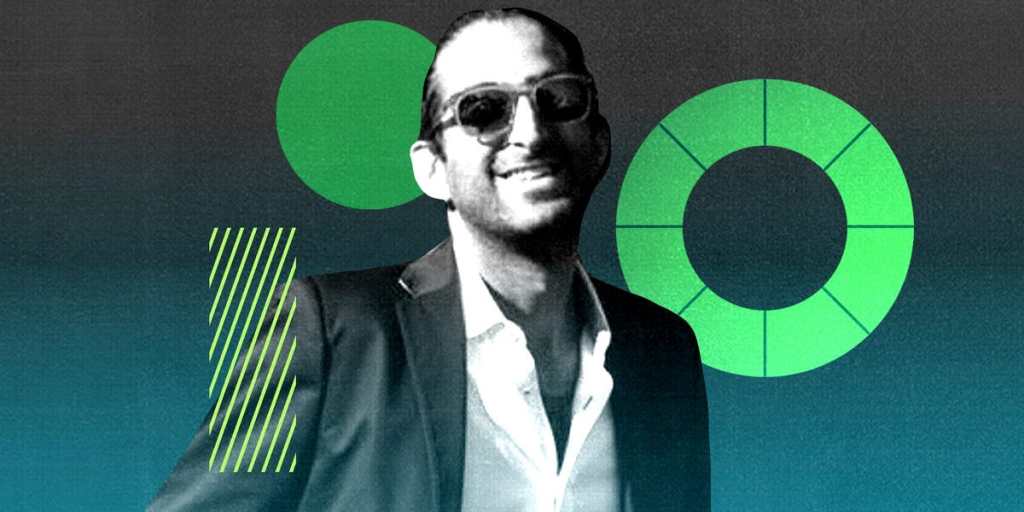
Raphael is responsible for wrangling Goldman Sachs’ mountains of data — and his behind-the-scenes world of digital information is coming to the forefront thanks to the excitement over AI.
“There is no AI strategy without a data strategy. We always use this code: garbage in, garbage out,” Raphael, a chief data officer and Goldman partner, told Business Insider, adding that if “you don’t understand it, you have it all over the place, your AI strategy is going nowhere.”
For a bank like Goldman Sachs, data sits at the base of practically everything, from simplifying complex trades for buy-side clients to helping investment bankers identify mergers and acquisitions that result in billion-dollar transactions. In recent years, Goldman has launched a data-streaming business for the bank’s hedge-fund and asset-management clients.
For decades banks led the way in data collection, amassing tons of information about trades, transactions, companies, loans, and more. But not as much thought was given to how that data would be retrieved or used with information in other parts of the firm.
As the chief data officer, Raphael aims to organize Goldman’s data and make it easy to find and use. Doing so is paramount in creating effective AI models. As Goldman goes all in on AI, Raphael is emerging as a key player in the bank’s future.
He gave BI an in-depth look at how he organizes his roughly 500-person team to get the most out of its data and how the data division melds with the rest of the bank. As the top data executive in charge of both strategy and engineering, Raphael faces a high-stakes juncture in his career — and Goldman’s future.
Though Raphael’s days can vary greatly, they start the same. A relatively new father, he wakes up at 6:30 and hangs out with his 2-year-old for half an hour before coming to work. Once he’s at 200 West Street, his day jumps between a few focuses.
One is the data-platform team, which oversees the entire data stack, including infrastructure and access. The team is responsible for organizing, standardizing, and cleaning the data — for example, ensuring the abbreviation for “management” is consistently “MGT,” not “MGMT.”
Cleaning up this data helps the firm experiment with AI. Goldman uses AI to summarize and extract information from documents related to things like loans, mortgages, and derivatives. Though Goldman created a machine learning and AI team in 2018, the bank has used recent advancements in generative AI to help its engineers parse others’ code and help non-tech workers get more out of their software.
Wall Street firms are eager to harness AI to gain an edge in back-office efficiencies, investing, and trading. The AI frenzy has reignited the coals of a cooling talent market, with some banks hiring hundreds of technologists to carry out their AI agendas. Meanwhile, others on Wall Street, like JPMorgan, have launched divisions spearheading data, analytics, and AI.
Related stories
Despite the nonstop chatter about AI on Wall Street, Raphael said he sees AI as just another “tool on top of data, just like business intelligence was five years ago” and data science was before that. “All of these things are built on this foundational layer that we’re creating,” he told BI over Zoom, wearing a blue plaid shirt with his hair pulled back in a bun.
Raphael has worn many hats at Goldman. After graduating from the University of California, Berkeley, he began his career at the bank in 2003 as an analyst in the technology division. He worked his way up the ranks, leading various engineering teams including the engineering SWAT team that works directly with the chief technology officer on special projects. He was also part of the team that built SecDB, one of Wall Street’s first firmwide securities-pricing and risk-management systems. He was named a managing director in 2013 and became a partner in 2020. Four years ago, he was tapped to be Goldman’s sole data chief and head of data engineering.
Inspired by his work with SecDB, Raphael launched the data design and curation team, made up of analytics whizzes who straddle tech, data, and finance to help other teams with thorny data problems and build bespoke data solutions. He said the team’s day-to-day work is constantly changing to solve business problems.
“One day we’re talking to asset management about, ‘Hey, what are we going to do about our private-funds data? We want some more to enrich that,'” Raphael said. Another day, he added, they could suggest novel ways to analyze 10-Q filings with alternative data to help sales and trading generate insights for clients to do better trades.
In late 2020, Raphael incorporated parts of Goldman’s alternative-data process under his umbrella to help trading desks get exclusive data faster.
So-called alt data involves nontraditional information, such as what retail traders are saying on Reddit, used to make decisions and investments. This information is part of some trading desks’ secret sauce.
Raphael said that while Goldman has a centralized data-sourcing team that acts as the “gatekeeper” and signs vendor contracts, the separate teams commissioning the data were previously in charge of ensuring its quality and properly entering it in the database. He added that with his team handling the data engineering, trading desks get their data quicker, and Goldman can connect the dots between alt data to curate insights for trading desks.
“They love the speed, and they love the sort of light curation we do on top of that,” he said. “That’s been super powerful for them.”
The chief data officer also helps ensure the bank stays on top of vital governance functions and oversees important information streams used across the firm, including real-time market data from exchanges and historical market data.
Raphael ends the day much as he starts it: by spending time with his 2-year-old.
Raphael offered two pieces of advice for young data engineers looking to work their way up Wall Street. First, understand the data and how it connects to the world and your domain as a problem solver. Then, understand the business.
“Honing in on the domain and marrying that with the data, with your data expertise, is going to be the thing that takes you to the sort of unicorn status of being a data person,” he said.
Read next
Jump to
This article was autogenerated from a news feed from CDO TIMES selected high quality news and research sources. There was no editorial review conducted beyond that by CDO TIMES staff. Need help with any of the topics in our articles? Schedule your free CDO TIMES Tech Navigator call today to stay ahead of the curve and gain insider advantages to propel your business!