Key OpenAI Executive Played a Pivotal Role in Sam Altman's Ouster – The New York Times
Artificial Intelligence
Advertisement
Supported by
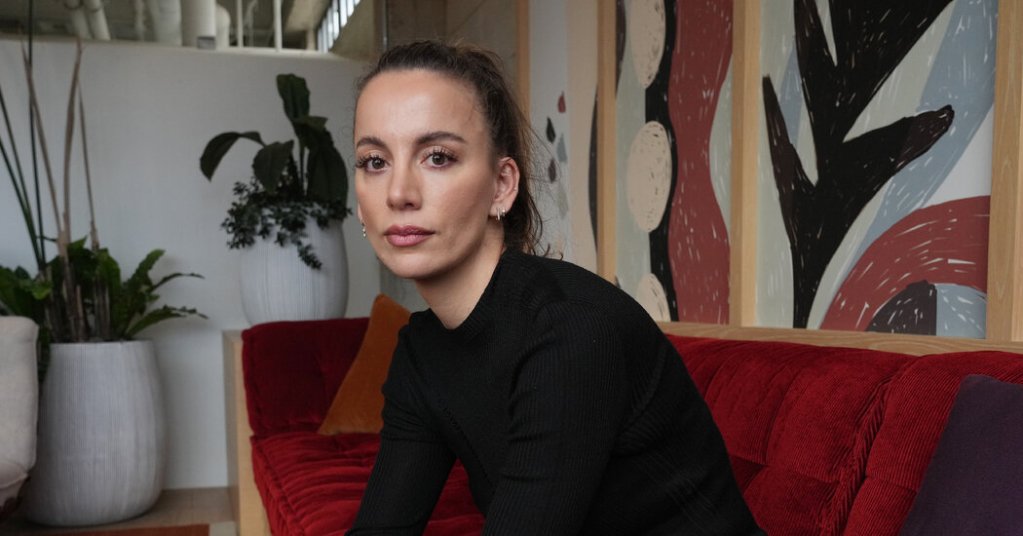
Mira Murati, OpenAI’s chief technology officer, brought questions about Mr. Altman’s management to the board last year before he was briefly ousted from the company, people familiar with the matter said.
Mike Isaac, Tripp Mickle and
Reporting from San Francisco
More than three months after OpenAI’s board of directors briefly ousted Sam Altman, the chief executive of the high-profile artificial intelligence company, questions remain about exactly what led the board to make such a dramatic move.
A report from an outside law firm, which is expected in the coming days, could shed more light on the board’s decision as well as the chaotic five days before Mr. Altman returned to the company.
But as anticipation for the report grows, previously unreported details are emerging about the role that Mira Murati, OpenAI’s chief technology officer, played in the ouster of Mr. Altman.
Ms. Murati wrote a private memo to Mr. Altman raising questions about his management and also shared her concerns with the board. That move helped to propel the board’s decision to force him out, according to people with knowledge of the board’s discussions who asked for anonymity because of the sensitive nature of a personnel issue.
Around the same time, Ilya Sutskever, a co-founder and chief scientist of OpenAI, expressed similar worries, citing what he characterized as Mr. Altman’s history of manipulative behavior, the people said. Both executives described a hot-and-cold relationship with Mr. Altman. Though it was not clear whether they offered specific examples, the executives said he sometimes created a toxic work environment by freezing out executives who did not support his decisions, the people said.
Ms. Murati’s interactions with the board offer insight into problems festering at the senior levels of OpenAI, though both executives publicly backed Mr. Altman’s return to the company.
WilmerHale, the law firm conducting the investigation, is expected to wrap up the process imminently. The company is expected to announce a new board of directors at the same time, some of the people said. Several directors left the board after Mr. Altman returned to the company in November.
Hannah Wong, a spokeswoman for OpenAI, said in a statement that the company’s senior leadership team, led by Ms. Murati during her time as interim chief executive, unanimously asked for Mr. Altman’s return, as did an open letter signed by 95 percent of OpenAI’s employees.
“The strong support from his team underscores that he is an effective C.E.O. who is open to different points of view, willing to solve complex challenges, and who demonstrates care for his team,” Ms. Wong said. “We look forward to findings from the independent review versus unsubstantiated claims.”
Mr. Altman declined to comment. Mr. Sutskever’s lawyer, Alex Weingarten, said claims that he had approached the board were “categorically false.”
Marc H. Axelbaum, a lawyer for Ms. Murati, said in a statement: “The claims that she approached the board in an effort to get Mr. Altman fired last year or supported the board’s actions are flat wrong. She was perplexed at the board’s decision then, but is not surprised that some former board members are now attempting to shift the blame to her.”
In a message to OpenAI employees after publication of this article, Ms. Murati said she and Mr. Altman “have a strong and productive partnership and I have not been shy about sharing feedback with him directly.”
She added that she did not reach out to the board but “when individual board members reached out directly to me for feedback about Sam, I provided it — all feedback Sam already knew,” and that did not mean she was “responsible for or supported the old board’s actions.”
(The New York Times sued OpenAI and Microsoft in December for copyright infringement of news content related to A.I. systems.)
Since November, OpenAI and its investors have scrambled to contain the fallout from the incident, which threatened to upend one of the tech industry’s most important start-ups. OpenAI was valued at more than $80 billion in its last financing round.
Much of the remaining 700-plus employees at OpenAI — many of whom threatened to quit when Mr. Altman was fired — hope to put the events in November behind them. (Some employees refer to that period as “The Blip.”)
But there are others who are hopeful that the WilmerHale investigation will provide a thorough accounting of the events surrounding Mr. Altman’s dismissal. It is not clear if the full report or a synopsis of it will be released to the public.
At the time of Mr. Altman’s firing, OpenAI’s six-person board included Dr. Sutskever; Helen Toner, an A.I. researcher who works at a Georgetown University think tank; Adam D’Angelo, a former Facebook executive; Greg Brockman, a co-founder and president of the company; Tasha McCauley, an adjunct senior management scientist at the RAND Corporation; and Mr. Altman.
As a condition of Mr. Altman’s reinstatement, executives agreed to shuffle OpenAI’s board to include a more diverse and independent set of directors. OpenAI’s six-person board was whittled down to an interim board of three: Bret Taylor, a former Salesforce and Facebook executive, joined as a board chairman helping to appoint a new set of directors. Lawrence H. Summers, the former Treasury Secretary, also joined. Mr. D’Angelo remains on the board.
In October, Ms. Murati approached some members of the board and expressed concerns about Mr. Altman’s leadership, the people said.
She described what some considered to be Mr. Altman’s playbook, which included manipulating executives to get what he wanted. First, Ms. Murati said Mr. Altman would tell people what they wanted to hear to charm them and support his decisions. If they did not go along with his plans or if it took too long for them to make a decision, he would then try to undermine the credibility of people who challenged him, the people said.
Ms. Murati told the board she had previously sent a private memo to Mr. Altman outlining some of her concerns with his behavior and shared some details of the memo with the board, the people said.
Around the same time in October, Dr. Sutskever approached members of the board and expressed similar issues about Mr. Altman, the people said.
Some members of the board were concerned that Ms. Murati and Dr. Sutskever would leave the company if Mr. Altman’s behavior was not addressed. They also grew concerned the company would see an exodus of talent if top lieutenants left.
There were other factors that went into the decision. Some members were concerned about the creation of the OpenAI Startup Fund, a venture fund started by Mr. Altman. Unlike a typical company investment fund, which is a legal extension of the corporation, Mr. Altman held legal ownership for the OpenAI fund and raised money from outside limited partners. OpenAI said that the structure was temporary, and that Mr. Altman would not receive financial benefit from it.
The OpenAI fund used that money to invest in other artificial intelligence start-ups. Some members of the board grew concerned that Mr. Altman used the fund to skirt accountability from OpenAI’s nonprofit governance structure. They confronted Mr. Altman about his legal ownership and operational control over the fund last year.
Axios has previously reported on Mr. Altman’s control of the OpenAI fund.
Members of the board began discussing their next steps after they were approached by Ms. Murati and Dr. Sutskever. By mid-November, the board planned to name Ms. Murati as interim chief executive while conducting a search for a new C.E.O., the people said. The board ousted Mr. Altman on Nov. 17.
In the days after, Mr. Altman waged a public fight to regain his position, using a mix of public pressure and powerful allies in Silicon Valley to push for his reinstatement. Most of OpenAI’s 770 employees threatened to quit if he were not reinstalled as chief executive. Ms. Murati and Dr. Sutskever quickly — and publicly — said they supported Mr. Altman’s return to the company. Dr. Sutskever has not returned to his regular duties at the company, some of the people said.
After five days of public back and forth, Mr. Altman returned to his job.
An earlier version of this article incorrectly stated that Mira Murati, the OpenAI executive, did not respond to a request for comment. Ms. Murati said that two incorrect phone numbers had been used in an attempt to contact her and that she had not received the initial request. The article has been updated with her remarks.
Mike Isaac is a technology correspondent for The Times based in San Francisco. He regularly covers Facebook and Silicon Valley. More about Mike Isaac
Tripp Mickle reports on Apple and Silicon Valley for The Times and is based in San Francisco. His focus on Apple includes product launches, manufacturing issues and political challenges. He also writes about trends across the tech industry, including layoffs, generative A.I. and robot taxis. More about Tripp Mickle
Cade Metz writes about artificial intelligence, driverless cars, robotics, virtual reality and other emerging areas of technology. More about Cade Metz
News and Analysis
Gov. Bill Lee of Tennessee signed a bill to prevent the use of A.I. to copy a performer’s voice. It is the first such measure in the United States.
French regulators said Google failed to notify news publishers that it was using their articles to train its A.I. algorithms, part of a wider ruling against the company for its negotiating practices with media outlets.
Apple is in discussions with Google about using Google’s generative A.I. model called Gemini for its next iPhone.
The Age of A.I.
The Caribbean island Anguilla made $32 million last year, more than 10 percent of its G.D.P., from companies registering web addresses that end in .ai.
When it comes to the A.I. that powers chatbots like ChatGPT, China lags behind the United States. But when it comes to producing the scientists behind a new generation of humanoid technologies, China is pulling ahead.
By interacting with data about genes and cells, A.I. models have made some surprising discoveries and are learning what it means to be alive. What could they teach us someday?
Covariant, a robotics start-up, is using the technology behind chatbots to build robots that learn skills much like ChatGPT does.
Advertisement
This article was autogenerated from a news feed from CDO TIMES selected high quality news and research sources. There was no editorial review conducted beyond that by CDO TIMES staff. Need help with any of the topics in our articles? Schedule your free CDO TIMES Tech Navigator call today to stay ahead of the curve and gain insider advantages to propel your business!
Advertisement
Supported by
Mira Murati, OpenAI’s chief technology officer, brought questions about Mr. Altman’s management to the board last year before he was briefly ousted from the company, people familiar with the matter said.
Mike Isaac, Tripp Mickle and
Reporting from San Francisco
More than three months after OpenAI’s board of directors briefly ousted Sam Altman, the chief executive of the high-profile artificial intelligence company, questions remain about exactly what led the board to make such a dramatic move.
A report from an outside law firm, which is expected in the coming days, could shed more light on the board’s decision as well as the chaotic five days before Mr. Altman returned to the company.
But as anticipation for the report grows, previously unreported details are emerging about the role that Mira Murati, OpenAI’s chief technology officer, played in the ouster of Mr. Altman.
Ms. Murati wrote a private memo to Mr. Altman raising questions about his management and also shared her concerns with the board. That move helped to propel the board’s decision to force him out, according to people with knowledge of the board’s discussions who asked for anonymity because of the sensitive nature of a personnel issue.
Around the same time, Ilya Sutskever, a co-founder and chief scientist of OpenAI, expressed similar worries, citing what he characterized as Mr. Altman’s history of manipulative behavior, the people said. Both executives described a hot-and-cold relationship with Mr. Altman. Though it was not clear whether they offered specific examples, the executives said he sometimes created a toxic work environment by freezing out executives who did not support his decisions, the people said.
Ms. Murati’s interactions with the board offer insight into problems festering at the senior levels of OpenAI, though both executives publicly backed Mr. Altman’s return to the company.
WilmerHale, the law firm conducting the investigation, is expected to wrap up the process imminently. The company is expected to announce a new board of directors at the same time, some of the people said. Several directors left the board after Mr. Altman returned to the company in November.
Hannah Wong, a spokeswoman for OpenAI, said in a statement that the company’s senior leadership team, led by Ms. Murati during her time as interim chief executive, unanimously asked for Mr. Altman’s return, as did an open letter signed by 95 percent of OpenAI’s employees.
“The strong support from his team underscores that he is an effective C.E.O. who is open to different points of view, willing to solve complex challenges, and who demonstrates care for his team,” Ms. Wong said. “We look forward to findings from the independent review versus unsubstantiated claims.”
Mr. Altman declined to comment. Mr. Sutskever’s lawyer, Alex Weingarten, said claims that he had approached the board were “categorically false.”
Marc H. Axelbaum, a lawyer for Ms. Murati, said in a statement: “The claims that she approached the board in an effort to get Mr. Altman fired last year or supported the board’s actions are flat wrong. She was perplexed at the board’s decision then, but is not surprised that some former board members are now attempting to shift the blame to her.”
In a message to OpenAI employees after publication of this article, Ms. Murati said she and Mr. Altman “have a strong and productive partnership and I have not been shy about sharing feedback with him directly.”
She added that she did not reach out to the board but “when individual board members reached out directly to me for feedback about Sam, I provided it — all feedback Sam already knew,” and that did not mean she was “responsible for or supported the old board’s actions.”
(The New York Times sued OpenAI and Microsoft in December for copyright infringement of news content related to A.I. systems.)
Since November, OpenAI and its investors have scrambled to contain the fallout from the incident, which threatened to upend one of the tech industry’s most important start-ups. OpenAI was valued at more than $80 billion in its last financing round.
Much of the remaining 700-plus employees at OpenAI — many of whom threatened to quit when Mr. Altman was fired — hope to put the events in November behind them. (Some employees refer to that period as “The Blip.”)
But there are others who are hopeful that the WilmerHale investigation will provide a thorough accounting of the events surrounding Mr. Altman’s dismissal. It is not clear if the full report or a synopsis of it will be released to the public.
At the time of Mr. Altman’s firing, OpenAI’s six-person board included Dr. Sutskever; Helen Toner, an A.I. researcher who works at a Georgetown University think tank; Adam D’Angelo, a former Facebook executive; Greg Brockman, a co-founder and president of the company; Tasha McCauley, an adjunct senior management scientist at the RAND Corporation; and Mr. Altman.
As a condition of Mr. Altman’s reinstatement, executives agreed to shuffle OpenAI’s board to include a more diverse and independent set of directors. OpenAI’s six-person board was whittled down to an interim board of three: Bret Taylor, a former Salesforce and Facebook executive, joined as a board chairman helping to appoint a new set of directors. Lawrence H. Summers, the former Treasury Secretary, also joined. Mr. D’Angelo remains on the board.
In October, Ms. Murati approached some members of the board and expressed concerns about Mr. Altman’s leadership, the people said.
She described what some considered to be Mr. Altman’s playbook, which included manipulating executives to get what he wanted. First, Ms. Murati said Mr. Altman would tell people what they wanted to hear to charm them and support his decisions. If they did not go along with his plans or if it took too long for them to make a decision, he would then try to undermine the credibility of people who challenged him, the people said.
Ms. Murati told the board she had previously sent a private memo to Mr. Altman outlining some of her concerns with his behavior and shared some details of the memo with the board, the people said.
Around the same time in October, Dr. Sutskever approached members of the board and expressed similar issues about Mr. Altman, the people said.
Some members of the board were concerned that Ms. Murati and Dr. Sutskever would leave the company if Mr. Altman’s behavior was not addressed. They also grew concerned the company would see an exodus of talent if top lieutenants left.
There were other factors that went into the decision. Some members were concerned about the creation of the OpenAI Startup Fund, a venture fund started by Mr. Altman. Unlike a typical company investment fund, which is a legal extension of the corporation, Mr. Altman held legal ownership for the OpenAI fund and raised money from outside limited partners. OpenAI said that the structure was temporary, and that Mr. Altman would not receive financial benefit from it.
The OpenAI fund used that money to invest in other artificial intelligence start-ups. Some members of the board grew concerned that Mr. Altman used the fund to skirt accountability from OpenAI’s nonprofit governance structure. They confronted Mr. Altman about his legal ownership and operational control over the fund last year.
Axios has previously reported on Mr. Altman’s control of the OpenAI fund.
Members of the board began discussing their next steps after they were approached by Ms. Murati and Dr. Sutskever. By mid-November, the board planned to name Ms. Murati as interim chief executive while conducting a search for a new C.E.O., the people said. The board ousted Mr. Altman on Nov. 17.
In the days after, Mr. Altman waged a public fight to regain his position, using a mix of public pressure and powerful allies in Silicon Valley to push for his reinstatement. Most of OpenAI’s 770 employees threatened to quit if he were not reinstalled as chief executive. Ms. Murati and Dr. Sutskever quickly — and publicly — said they supported Mr. Altman’s return to the company. Dr. Sutskever has not returned to his regular duties at the company, some of the people said.
After five days of public back and forth, Mr. Altman returned to his job.
An earlier version of this article incorrectly stated that Mira Murati, the OpenAI executive, did not respond to a request for comment. Ms. Murati said that two incorrect phone numbers had been used in an attempt to contact her and that she had not received the initial request. The article has been updated with her remarks.
Mike Isaac is a technology correspondent for The Times based in San Francisco. He regularly covers Facebook and Silicon Valley. More about Mike Isaac
Tripp Mickle reports on Apple and Silicon Valley for The Times and is based in San Francisco. His focus on Apple includes product launches, manufacturing issues and political challenges. He also writes about trends across the tech industry, including layoffs, generative A.I. and robot taxis. More about Tripp Mickle
Cade Metz writes about artificial intelligence, driverless cars, robotics, virtual reality and other emerging areas of technology. More about Cade Metz
News and Analysis
Gov. Bill Lee of Tennessee signed a bill to prevent the use of A.I. to copy a performer’s voice. It is the first such measure in the United States.
French regulators said Google failed to notify news publishers that it was using their articles to train its A.I. algorithms, part of a wider ruling against the company for its negotiating practices with media outlets.
Apple is in discussions with Google about using Google’s generative A.I. model called Gemini for its next iPhone.
The Age of A.I.
The Caribbean island Anguilla made $32 million last year, more than 10 percent of its G.D.P., from companies registering web addresses that end in .ai.
When it comes to the A.I. that powers chatbots like ChatGPT, China lags behind the United States. But when it comes to producing the scientists behind a new generation of humanoid technologies, China is pulling ahead.
By interacting with data about genes and cells, A.I. models have made some surprising discoveries and are learning what it means to be alive. What could they teach us someday?
Covariant, a robotics start-up, is using the technology behind chatbots to build robots that learn skills much like ChatGPT does.
Advertisement
This article was autogenerated from a news feed from CDO TIMES selected high quality news and research sources. There was no editorial review conducted beyond that by CDO TIMES staff. Need help with any of the topics in our articles? Schedule your free CDO TIMES Tech Navigator call today to stay ahead of the curve and gain insider advantages to propel your business!