EU Digital Strategy 2030 – Setting goals for the digital age – MoreThanDigital English
 MoreThanDigital – Informationen zu Digital Transformation & Digital Business für KMUs
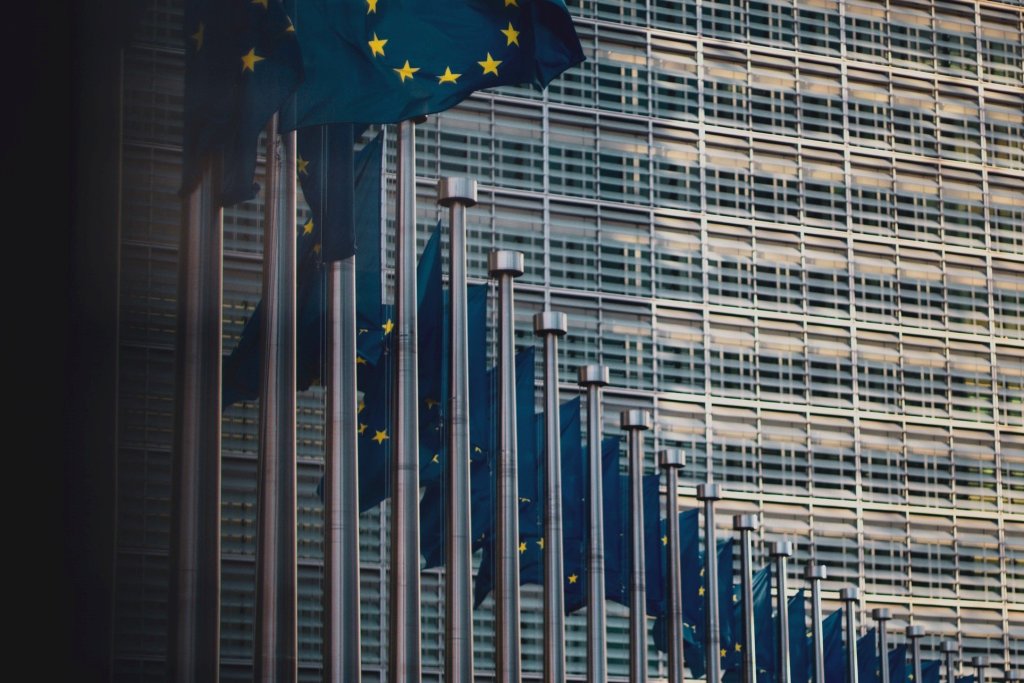
 On 9 March 2021, the EU Commission presented the objectives for the digital age until 2030. The core points of the digital strategy are competence building, the digital transformation in companies, the creation of secure and sustainable digital infrastructures as well as the digitalisation of public services.
The EU’s ambitions are to be divided into main stages and accompanied by a traffic light monitoring system. In addition, transnational projects are planned to close gaps in critical EU capacities. The focus on “digital citizenship” to strengthen the rights and principles of EU citizens is interesting. This means that the preservation of European values should continue in the digital space.
The EU Digital Strategy 2030 should pursue the following principles:
The EU is thus setting the building block for the next steps to create uniform norms and standards to regulate digital supply chains.
In the next stage, the objectives of EU citizens are to be collected by means of a consultation procedure. A digital policy programme should then be drawn up by the end of summer 2021. The inter-institutional declaration on digital principles should lead to initial progress by the end of 2021.
Index
The EU has recognised that data is immensely important in international competition and that Europe as a market carries great weight in the digital economy. The handling of the data of EU citizens can be decisive for the future prosperity of the EU. In order for the European economy to actually benefit from it, the Digital Data Strategy should create a significant competitive advantage by creating a single market. The aim is to share data across industries within the EU and to reorganise data access. Another goal is to join forces to create European cloud capacities. With EU-wide data management, for example, sensor data can be collected and identified to improve the efficiency of operations, real-time navigation and notification can be enabled, or industrial as well as business data can be used to optimise business processes.
At the end of 2020, the EU published a proposal for a regulation on digital markets. This is to follow the concept of the EU single market and encourage “large platforms”, called gatekeepers (more than 10% of the EU population is reached), to support a fair business environment. This means that the Digital Markets Act helps protect dependent commercial users and customers from unfair business practices. For example, gatekeepers will not be allowed to constantly rank their products in front of third parties or prevent customers from contacting third parties outside the platform. Thus, it will no longer be allowed that, for example, pre-installed software on smartphones cannot be uninstalled.
How does the EU intend to ensure this? With fines (up to 10% of the company’s annual worldwide turnover), periodic penalty payments (up to 5% of the average daily turnover) and in serious cases it may even go so far as to require business units to be divested. The aim of the Digital Markets Act, apart from consumer protection, is also to support smaller online platforms in the EU and to provide a uniform set of rules within the EU.
More explanation on the Digital Markets Act (DMA).
The EU has been working for years on approaches to regulate AI developments for manufacturers, operators and users. Trustworthy and robust AI is a prerequisite for sustainable AI use (White Paper on Artificial Intelligence). The EU even wants to invest up to 20 billion annually in this sector in the future.
What happens if an AI malfunctions? Who should be liable if people are injured as a result? Where there are opportunities, there are often risks. Especially in the development of AI, there is a risk of privacy violations or discrimination. In order to reduce such disadvantages, the EU plans to create a legal framework that will deal with these case constellations, for example civil liability. In addition, there are plans to regulate how the use of AI in the judiciary (Internal Affairs Committee AI in Criminal Law) can be handled. It is worth keeping an eye on developments here, as not only the manufacturers of an AI are affected, but also those companies as operators that use an AI. Especially high-risk applications in the field of HR, education (e.g. performance assessment of pupils), medical procedures, criminal law and justice in general, autonomous driving, the energy industry, holding elections, military systems or granting loans are considered important and should be regulated more closely in the future. 3.
Since prejudices established in society are transferred when software is produced, the value system in programming (software ethics) plays a major role. The European concept for excellence and trust of AI applications creates ethical standards with its own legislative initiative. This is intended to define ethical principles under which the development and operation of AIs are placed. Values such as transparency, protection against discrimination, social responsibility, respect for privacy and data protection, accountability and security play a major role. This is intended to put people at the centre and make “AI made in EU” a special seal of approval for safety and sustainability.
Read more: Digital ethics in theory and practice
It is precisely such developments as those promoted by the EU that strengthen the motivation of many companies to take a closer look at their own digital corporate values. A sustainable digital economy allows users to use products and services with confidence. To achieve this goal, organisations are striving to question their own value compass with regard to data use. Digital Corporate Responsibility (CDR) creates processes and frameworks to build trust with customers and break down barriers to use. On the one hand, this strengthens the reputation, on the other hand, it creates a solid starting point for the product or service to be accepted by the end customer in the first place. If there are doubts (lack of transparency) or mistrust (misuse of data, violations of ethical principles), an offer will not be taken up in the first place and, in the worst case, the previous investments will be lost. With CDR, organisations across Europe are now working out principles and principles for the future of the digital economy: a people- and value-oriented design of digitalisation.
The EU Digital Strategy 2030 shows many comprehensive concepts for the future use of data in the European economic area. Hardly any company will not have the topic of digital sustainability or digital corporate responsibility on its agenda for the next few years. To ensure that everyone benefits from progress, ethical principles will have to be taken into account in the design, development, implementation and operation of new technologies.
The sooner companies address the new regulations in the EU project pipeline in a timely manner, the sooner they will be able to offer added value in the market and ensure that their customers rely on a sustainable quality feature in the long term.
Prev Post
Tackle and accelerate digital transformation (finally)
Next Post
Data-Driven Employer Branding Explained
PEPPOL E-Invoicing Network explained – The Upcoming Standard for International…
Entrepreneurship – How do I start my own business
7 tips to create good presentation slides
Management of organizations in the era of great transformation
Digitization is changing SMEs and their opportunities
Briefing an Agency – Stop Wasting Money, Better Invest in Your Brand
Comments are closed.
Online marketing: 5 practical tips to help small businesses…
The future of artificial intelligence (AI) in 2024 and…
Fear of AI – why no progress is being made
Why publish with MoreThanDigital?
1 Article plants 1 Tree
Our Memberships
Become Member as …
– Expert
– Corporate / Company
– Organization
– Start-Up
Become a Partner or Event-Partner
Pay with crypto
Article Guidelines & Login
General
Support
Press Contact
MoreThanDigital in the Media
Company – morethandigital.org
About MoreThanDigital
#bethechange
Experts & Authors
Member companies&organizations
Jobs & #bethechange Careers
Imprint
Gender Disclaimer
GTCs
Privacy Policy
Sitemap
This website uses cookies to improve your experience. We’ll assume you’re ok with this, but you can opt-out if you wish. Accept Read More
This article was autogenerated from a news feed from CDO TIMES selected high quality news and research sources. There was no editorial review conducted beyond that by CDO TIMES staff. Need help with any of the topics in our articles? Schedule your free CDO TIMES Tech Navigator call today to stay ahead of the curve and gain insider advantages to propel your business!