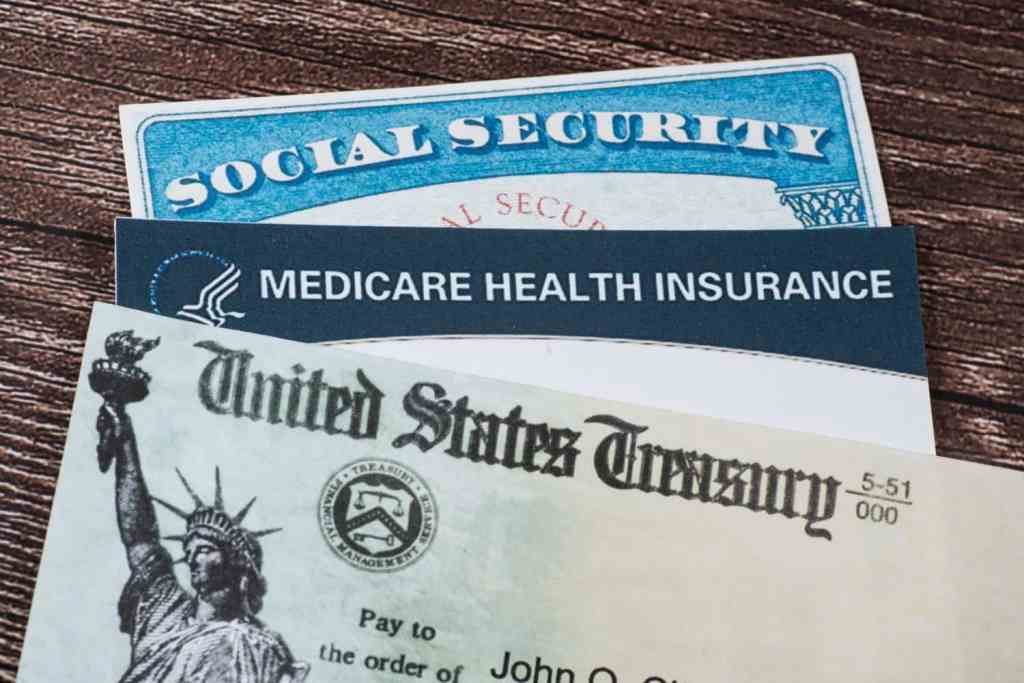
Medicare's Premium Goes Up in January and Her Social Security Check Won't Go Down a Penny. A Decades-Old Rule Says It Can't, and Whether It Protects You Comes Down to One Comparison – 24/7 Wall St.
A federal rule dating back decades quietly protects millions of Social Security recipients when Medicare premiums spike, but whether it shields your check or leaves you absorbing the full cost comes down to a single comparison most retirees never think…
Life After Work desk. Editor: David Beren.
Building a portfolio and living off one are two completely different skills, and almost nobody teaches the second. This problem is what The Definitive Guide to Retirement Income helps, and it is free today. Read more here. (Sponsor)
This post may contain links from our sponsors and affiliates, and Flywheel Publishing may receive compensation for actions taken through them.
Every January, Social Security shows two changes: the cost-of-living adjustment (COLA, the annual inflation raise) and a new Medicare Part B premium. Part B covers doctor and outpatient care, and its premium usually comes from the check. When the premium rises more than the raise, one figure can’t drop for millions of retirees: the net dollar amount paid. That’s the Medicare hold harmless provision. Whether it covers you depends on one comparison.
If your Part B premium is deducted from Social Security, a higher premium can’t reduce that payment amount year over year. When the premium increase exceeds your COLA in dollars, your premium rises only as far as the COLA covers. The rule protects your check size.
The legal basis is Section 1839(f) of the Social Security Act (42 U.S.C. 1395r). Federal Register notices call it the “hold-harmless” provision.
The rule matters only when the premium’s dollar increase exceeds your COLA’s dollar increase. In 2026, benefits rose 2.8%, while the standard premium went up $17.90, from $185 to $202.90. A $3,000 monthly benefit increased by about $84, easily covering the higher premium. In 2022, it applied to only 1.5% of Part B enrollees. A near-zero COLA extends the rule’s reach: heading into 2017, about 70% of enrollees were expected to be protected.
Neither 2027 figure has been published. The COLA comes out October 14, 2026, when September inflation data is released. The 2027 Part B premium hasn’t been announced either, though Medicare trustees have projected a $6.60 increase to $209.50. Last year, the Centers for Medicare & Medicaid Services released the 2026 premium on November 14, 2025.
The standard premium covers 25% of expected Part B costs, with federal general revenues covering the rest. In years when the rule protects a large share of enrollees, those left out subsidize the increasing cost through higher premium increases.
The protection is temporary: once COLAs grow faster than Medicare costs, protected enrollees make up the difference with additional Medicare premium boosts until they reach the standard amount.
Social Security’s annual COLA notice shows your gross benefit, Medicare deduction, and net payment, posted in your my Social Security account. Compare this year’s net payment with last year’s. If it dropped and none of the exceptions apply, contact Social Security. If you get an IRMAA determination, the agency’s letter with your premium amount(s) and the reason explains how to appeal (IRMAA is one of several Medicare costs that catch retirees off guard, and we covered the rest in a free guide to Medicare’s hidden bills).
When the COLA and 2027 premium are both out, write down two numbers: your COLA’s dollar increase and the Part B premium’s dollar increase. If the premium increase is bigger and no exceptions apply, hold harmless caps your premium so your check doesn’t decrease. If the COLA increase is bigger, the rule does nothing for you this year.
Contact [email protected] for any questions or corrections.
David Beren has been a Flywheel Publishing contributor since 2022. Writing for 24/7 Wall St. since 2023, David loves to write about topics of all shapes and sizes. As a technology expert, David focuses heavily on consumer electronics brands, automobiles, and general technology. He has previously written for LifeWire, formerly About.com. As a part-time freelance writer, David’s “day job” has been working on and leading social media for multiple Fortune 100 brands. David loves the flexibility of this field and its ability to reach customers exactly where they like to spend their time. Additionally, David previously published his own blog, TmoNews.com, which reached 3 million readers in its first year. In addition to freelance and social media work, David loves to spend time with his family and children and relive the glory days of video game consoles by playing any retro game console he can get his hands on.
The 2026 Social Security cost-of-living adjustment landed at 2.8%, which added roughly $56 a month, or about $672 a year, to the average retired worker’s benefit. But Medicare deducts the Part B premium before…
Social Security announces its raise in October, Medicare reveals its cut in November, and retirees spend two months doing math that still leaves out the number that actually counts.
A projected Social Security raise sounds like good news until Medicare starts making its claims first. Before you adjust your 2027 budget, find out how much of that increase actually survives the deductions.
Picture a retired teacher in Ohio, living mostly on Social Security, who opens her benefit verification letter in late October and feels her shoulders drop. The headline number sounds fine: a 2.8% cost-of-living adjustment…
In 2026, retirees who collect Social Security received a 2.8% cost-of-living adjustment, adding roughly $56 per month to the average retirement benefit of $2,071. But the standard Medicare Part B premium jumped from $185.00…
Most retirees on Medicare are paying $202.90 a month for Part B coverage in 2026. A smaller group pays $689.90. That gap of nearly $487 a month stems from IRMAA (Income-Related Monthly Adjustment Amount),…
Most federal retirees assume the hold-harmless rule will protect their Social Security check from rising Medicare premiums, but a seven-figure TSP balance carries a hidden expiration date on that protection.
A projected raise sounds like good news until you account for what Medicare quietly subtracts, what the tax code silently captures, and why the formula itself may not measure what retirees actually spend money…
Two letters can land in a retiree's mailbox within weeks of each other, and they pull in opposite directions. One promises a bigger Social Security check for 2027, while the other reaches back into…
This post may contain links from our sponsors and affiliates, and Flywheel Publishing may receive compensation for actions taken through them. © 2026 24/7 Wall St.
source
This article was autogenerated from a news feed from CDO TIMES selected high quality news and research sources. There was no editorial review conducted beyond that by CDO TIMES staff. Need help with any of the topics in our articles? Schedule your free CDO TIMES Tech Navigator call today to stay ahead of the curve and gain insider advantages to propel your business!
Life After Work desk. Editor: David Beren.
Building a portfolio and living off one are two completely different skills, and almost nobody teaches the second. This problem is what The Definitive Guide to Retirement Income helps, and it is free today. Read more here. (Sponsor)
This post may contain links from our sponsors and affiliates, and Flywheel Publishing may receive compensation for actions taken through them.
Every January, Social Security shows two changes: the cost-of-living adjustment (COLA, the annual inflation raise) and a new Medicare Part B premium. Part B covers doctor and outpatient care, and its premium usually comes from the check. When the premium rises more than the raise, one figure can’t drop for millions of retirees: the net dollar amount paid. That’s the Medicare hold harmless provision. Whether it covers you depends on one comparison.
If your Part B premium is deducted from Social Security, a higher premium can’t reduce that payment amount year over year. When the premium increase exceeds your COLA in dollars, your premium rises only as far as the COLA covers. The rule protects your check size.
The legal basis is Section 1839(f) of the Social Security Act (42 U.S.C. 1395r). Federal Register notices call it the “hold-harmless” provision.
The rule matters only when the premium’s dollar increase exceeds your COLA’s dollar increase. In 2026, benefits rose 2.8%, while the standard premium went up $17.90, from $185 to $202.90. A $3,000 monthly benefit increased by about $84, easily covering the higher premium. In 2022, it applied to only 1.5% of Part B enrollees. A near-zero COLA extends the rule’s reach: heading into 2017, about 70% of enrollees were expected to be protected.
Neither 2027 figure has been published. The COLA comes out October 14, 2026, when September inflation data is released. The 2027 Part B premium hasn’t been announced either, though Medicare trustees have projected a $6.60 increase to $209.50. Last year, the Centers for Medicare & Medicaid Services released the 2026 premium on November 14, 2025.
The standard premium covers 25% of expected Part B costs, with federal general revenues covering the rest. In years when the rule protects a large share of enrollees, those left out subsidize the increasing cost through higher premium increases.
The protection is temporary: once COLAs grow faster than Medicare costs, protected enrollees make up the difference with additional Medicare premium boosts until they reach the standard amount.
Social Security’s annual COLA notice shows your gross benefit, Medicare deduction, and net payment, posted in your my Social Security account. Compare this year’s net payment with last year’s. If it dropped and none of the exceptions apply, contact Social Security. If you get an IRMAA determination, the agency’s letter with your premium amount(s) and the reason explains how to appeal (IRMAA is one of several Medicare costs that catch retirees off guard, and we covered the rest in a free guide to Medicare’s hidden bills).
When the COLA and 2027 premium are both out, write down two numbers: your COLA’s dollar increase and the Part B premium’s dollar increase. If the premium increase is bigger and no exceptions apply, hold harmless caps your premium so your check doesn’t decrease. If the COLA increase is bigger, the rule does nothing for you this year.
Contact [email protected] for any questions or corrections.
David Beren has been a Flywheel Publishing contributor since 2022. Writing for 24/7 Wall St. since 2023, David loves to write about topics of all shapes and sizes. As a technology expert, David focuses heavily on consumer electronics brands, automobiles, and general technology. He has previously written for LifeWire, formerly About.com. As a part-time freelance writer, David’s “day job” has been working on and leading social media for multiple Fortune 100 brands. David loves the flexibility of this field and its ability to reach customers exactly where they like to spend their time. Additionally, David previously published his own blog, TmoNews.com, which reached 3 million readers in its first year. In addition to freelance and social media work, David loves to spend time with his family and children and relive the glory days of video game consoles by playing any retro game console he can get his hands on.
The 2026 Social Security cost-of-living adjustment landed at 2.8%, which added roughly $56 a month, or about $672 a year, to the average retired worker’s benefit. But Medicare deducts the Part B premium before…
Social Security announces its raise in October, Medicare reveals its cut in November, and retirees spend two months doing math that still leaves out the number that actually counts.
A projected Social Security raise sounds like good news until Medicare starts making its claims first. Before you adjust your 2027 budget, find out how much of that increase actually survives the deductions.
Picture a retired teacher in Ohio, living mostly on Social Security, who opens her benefit verification letter in late October and feels her shoulders drop. The headline number sounds fine: a 2.8% cost-of-living adjustment…
In 2026, retirees who collect Social Security received a 2.8% cost-of-living adjustment, adding roughly $56 per month to the average retirement benefit of $2,071. But the standard Medicare Part B premium jumped from $185.00…
Most retirees on Medicare are paying $202.90 a month for Part B coverage in 2026. A smaller group pays $689.90. That gap of nearly $487 a month stems from IRMAA (Income-Related Monthly Adjustment Amount),…
Most federal retirees assume the hold-harmless rule will protect their Social Security check from rising Medicare premiums, but a seven-figure TSP balance carries a hidden expiration date on that protection.
A projected raise sounds like good news until you account for what Medicare quietly subtracts, what the tax code silently captures, and why the formula itself may not measure what retirees actually spend money…
Two letters can land in a retiree's mailbox within weeks of each other, and they pull in opposite directions. One promises a bigger Social Security check for 2027, while the other reaches back into…
This post may contain links from our sponsors and affiliates, and Flywheel Publishing may receive compensation for actions taken through them. © 2026 24/7 Wall St.
source
This article was autogenerated from a news feed from CDO TIMES selected high quality news and research sources. There was no editorial review conducted beyond that by CDO TIMES staff. Need help with any of the topics in our articles? Schedule your free CDO TIMES Tech Navigator call today to stay ahead of the curve and gain insider advantages to propel your business!