What a Tractor Taught One Reliability Executive About Change Management – Reliable Plant
I've spent 25 years helping industrial companies get ahead of equipment failure before it happens. I started my career in 2001 as a predictive maintenance specialist, guiding clients across a range of industries through their first data-driven maintenance strategies, and I've since broadened into reliability engineering and asset management more broadly. Today, as Deputy CEO of I-care Group, a global predictive maintenance and reliability company, I work with industrial clients around the world on the same underlying question I've spent my career on: how to keep critical equipment running before it breaks, not after.
A few years ago, that question showed up somewhere I didn't expect it to: my own garage.
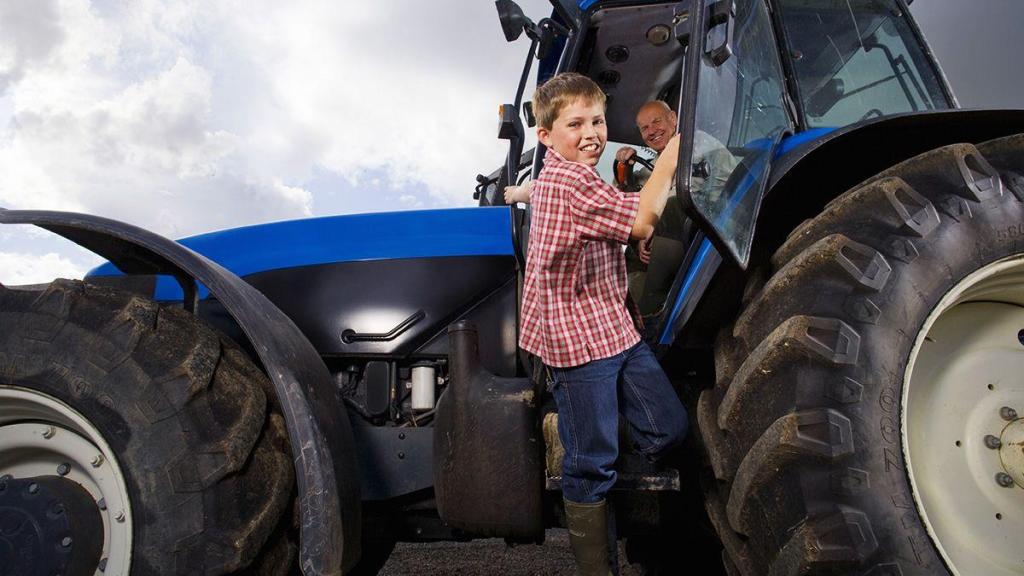
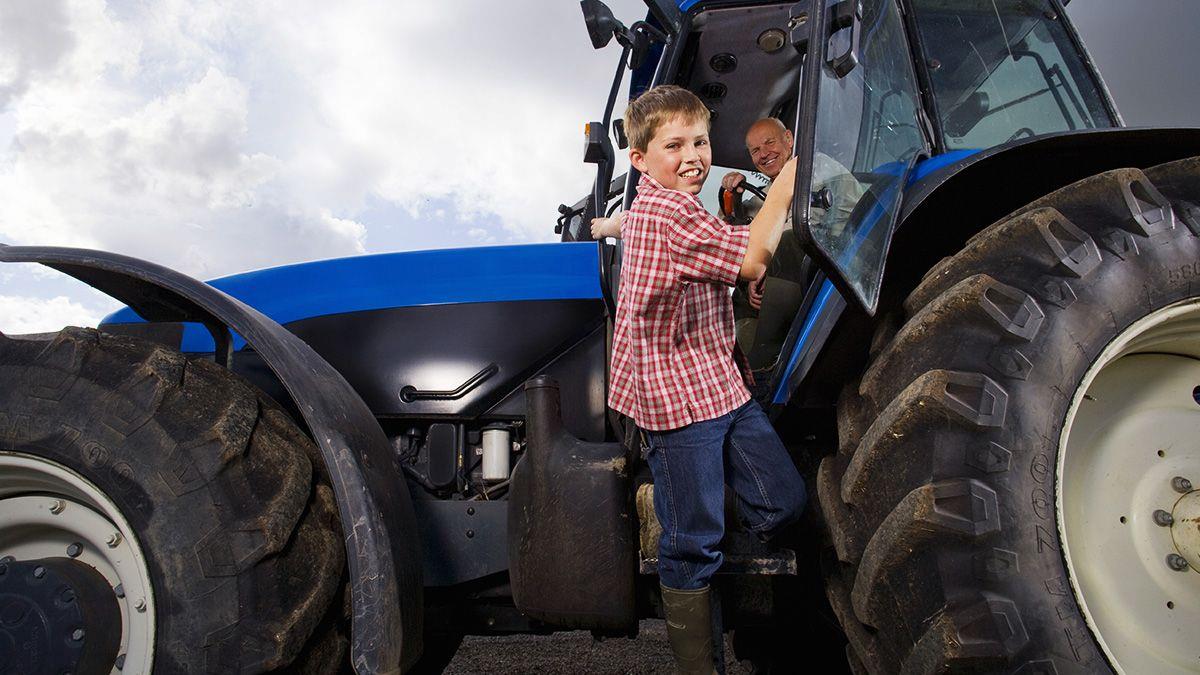
I gave my 14-year-old son an old tractor to take apart and rebuild. I wanted him to have something to use his wrenches on. Before he started, I gave him one piece of advice: label the electrical cables before you rip them out, or you'll regret it later.
He did the opposite. Of course he did. He was fourteen.
A few days later, he came running to say he'd gotten it working again. He hadn't used a wiring diagram or asked me for help. He'd used an AI tool to find a YouTube video that walked him through exactly what he needed to know.
I've spent 25 years in predictive maintenance, and that moment has stuck with me more than almost anything I've seen on a plant floor. It wasn't really about the tractor. It was about how a new generation solves problems, and what that means for the industries my generation built.
I talk to a lot of organizations that treat digital transformation primarily as a technology decision: which sensors to install, which platform to buy, which dashboard to build. The technology matters, but it's rarely the hard part. The hard part is what happens after the switch flips: the cultural and mindset shift required to actually work differently once the tools are in place.
I see this play out constantly in maintenance and reliability. Teams add condition monitoring technology or predictive analytics, expecting the tools alone to solve the problem. But a sensor doesn't fix anything on its own. It changes how and how often people need to communicate, make decisions, and collaborate with departments they've never worked closely with before, including IT, procurement, and the C-suite. That expansion of who's involved is often more disruptive than the technology itself, because it asks people to change habits that in some cases have been solidifying for decades.
That disruption shows up as fear as much as friction. People become hesitant to make decisions once data starts flowing outside the plant, outside their own heads, and into systems managed by people who aren't skilled in vibration analysis or lubrication chemistry. That hesitation, more than any legacy equipment or outdated software, is usually what slows implementation down.
One pattern I've noticed, especially among engineers, is the pull toward a 100% solution. Engineers are trained to solve the whole problem, account for every edge case, and treat "good enough" as a compromise.
But in digital transformation, chasing 100% is often what stalls progress entirely. A tool that does 80% of what an organization eventually wants is often still worth deploying today, especially if it frees people from manual, repetitive tasks so they can focus on judgment calls that actually require a person. Waiting for the perfect system means staying stuck in development while the underlying problem (whether that's aging assets, shrinking teams, or mounting inefficiency) keeps getting worse. A solution will never meet every need an organization can imagine, and holding out for one that does just means it never leaves the drawing board.
This doesn't mean lowering standards. It means being honest about which requirements are truly necessary and which have simply accumulated over years of doing things one way. That's an uncomfortable conversation, particularly for the people who've been in the field longest and have built up the most detailed, most demanding checklist of what "acceptable" looks like. Their expertise is genuinely valuable and their voice deserves to be heard. But successful adoption sometimes requires them to revisit requirements that made sense under old constraints and don't anymore.
This isn't a problem unique to engineers, either. IT teams bring their own version of it, often around cybersecurity, where the instinct is also to demand a fully locked-down standard before anything moves forward. Every function brings a legitimate but incomplete view of what "done" should mean. In my experience, the organizations that move fastest are the ones that can get those different functions rowing toward a shared, realistic definition of success instead of each one holding out for its own version of perfect.
There's a part of this conversation I think gets discussed the least: the industry is not going to have enough people to do tomorrow's maintenance work the way it's always been done. Technical talent in this field is scarce, and the workforce is aging out faster than new people are coming in.
There's a signal for this that a lot of organizations misread. When people start hopping between jobs more frequently, it's tempting to treat that as a sign of poor management at any single company. Sometimes it is. But when that pattern shows up across an entire market, it usually means something different: people finally have options, and they're using them. That shift in leverage is going to keep shaping this industry, and it rewards employers who've made the work itself worth staying for.
That scarcity changes the calculation. The goal of digitalization isn't to replace workers. It's to make sure the people an organization does have can accomplish more, and to make the work itself attractive enough that skilled people want to stay in it. If a technician is spending hours on manual, repetitive monitoring that a connected sensor could handle continuously and automatically, that's not a technology upgrade that can be put off. It's hours of scarce expertise being spent somewhere it doesn't need to be, while more valuable work like root cause analysis and chasing down recurring failures goes unaddressed.
Attraction matters as much as retention. Younger technicians walk into a facility and expect to scan a QR code on a machine and pull up the manual instantly. Some of the most experienced people I work with still don't know that option exists. That gap isn't a knowledge failure on either side. It's a signal. If a facility hasn't made the leap toward digital, data-driven operations, it's telling the next generation of technical talent exactly what kind of workplace it is. And that generation has choices most of their predecessors didn't.
Let's revisit my son’s story to make the point concrete. Fast-forward a few years and he's an engineer graduating into the job market. If he's choosing between an employer that's digitized its operations and made data central to the work, and one that hasn't, which one wins? If we don't make that leap now, we won't be the employer of choice for people like him, and that's a sustainability problem as much as a technology one. An organization can't sustain its operations, its knowledge base, or its competitiveness with a workforce it can't retain.
There's a mindset shift I had to make myself with my son, and I believe it applies directly to the plant floor. I could have insisted he do things my way: label the wires, follow the manual, avoid the mistakes I already knew about. Instead I let him figure it out on his own terms, using the tools available to him.
That's a harder thing to do than it sounds, in a garage or on a plant floor. If an organization gives people new tools and new data but doesn't give them the trust and the space to act on what they learn, it hasn't actually driven change. It's just added a layer of technology on top of an unchanged culture. People lose interest fast when their insights don't lead anywhere, when they surface an idea worth acting on and it goes nowhere because no one gave them the authority or the resources to follow through. Once an organization's most capable people disengage that way, no software fixes it.
Sustainability conversations in industrial settings tend to focus on energy consumption and carbon footprint, and I think they should. The connection is more direct than most people realize. Picture two identical pumps side by side, one running on properly lubricated bearings and one running on bearings that are poorly lubricated. The poorly lubricated one will draw noticeably more energy just to keep turning. Multiply that across every asset in a facility running in a degraded but undetected state, and the result is a meaningful, largely invisible energy cost. Every maintenance task an organization has to perform, planned or unplanned, consumes resources and adds to that footprint. The less intervention an asset needs, the smaller that footprint becomes.
Unplanned downtime raises the stakes further. Consider a refinery that loses an asset unexpectedly and has to start flaring as a result. That single event can have an outsized impact on emissions compared to the routine operation it interrupted. Predictive approaches help precisely because they let organizations catch degradation before it forces an emergency response like that. I haven't yet seen anyone calculate these environmental costs in a way that makes them fully visible and comparable across an operation, and I consider that an area where the industry still has real work to do
But there's a second sustainability question that gets far less attention, in my view: can an organization sustain itself with the people it has and the people it's able to attract? Technology can extend the life of a facility's assets. It can't do the same for its workforce if the culture around it hasn't changed to match. A facility can hit every emissions target on paper and still be hollowing itself out from the inside if it can't hold on to the people who understand how the equipment actually behaves.
The tractor eventually ran again. My son's confidence in solving problems his own way took hold, too. The lesson I took from it wasn't really about tractor wiring. It was about what happens when someone is given the tools, the trust, and the room to work things out. That's the lesson I believe the industry needs to learn, and I think the clock on it is shorter than most people realize.
Read More
source
This is a newsfeed from leading technology publications. No additional editorial review has been performed before posting.