
A government agency placed monitoring devices in their homes. These N.H. residents say it violates their privacy. – Boston.com
By Brendan Nordstrom
Send this article to your social connections.
Send this article to your social connections.
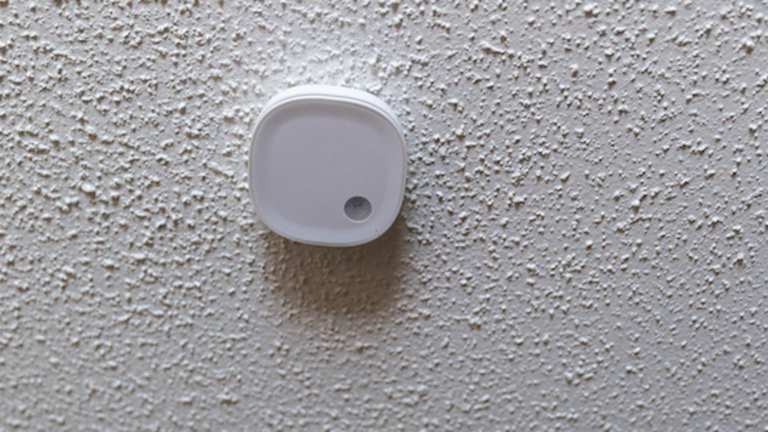
The first time a white hockey puck-like object fell from a resident’s ceiling in a New Hampshire government-subsidized building, maintenance was at their door within 15 minutes. The second time it fell, the resident looked up the serial number.
The Mînut monitor, which they say management installed over the bed of their studio apartment while they weren’t home, has the ability to track noise, smoke, crowds, and more, collecting thousands of data points about a person’s daily life.
“I instantly threw up,” the resident, who asked to remain anonymous, told Boston.com. “It’s Big Brother, like ‘1984’ was not meant to be an instruction manual.”
Two residents of the New Hampshire housing developments, in collaboration with New Hampshire Legal Assistance and the American Civil Liberties Union, are now asking a court to order the removal of these “intrusive” government-funded monitoring devices.
The class-action lawsuit alleges the Concord Housing and Redevelopment Authority (CHRA) violated their right to privacy by purchasing and installing roughly 300 Mînut monitors in residential units.
“We’re suing because everyone deserves privacy in their own home,” Maria Savarese, a staff attorney at the ACLU of New Hampshire, wrote in a statement online. “The government shouldn’t get to know if you are getting up in the middle of the night to use the bathroom or when your morning alarm goes off just because you live in public housing.”
The lawsuit alleges that the monitors, which were installed beginning in 2024, have recorded over 134 million sound readings and 19 million motion readings across the residential units from October 2024 to June 2026.
CHRA, a government agency that oversees subsidized housing funded through the U.S. Department of Housing and Urban Development in New Hampshire’s capital city, purchased the Swedish devices to enforce lease provisions banning smoking and noise disturbances, according to the lawsuit.
If a device detects repeated smoking or noise violations, it could lead to eviction, the lawsuit says.
Julie Palmeri, CHRA’s executive director, wrote in a statement to Boston.com that while she hasn’t fully reviewed the lawsuit, the agency “categorically dispute[s]” allegations of surveilling its tenants.
“We deeply respect the privacy of our residents, and our use of these sensors is strictly limited to protecting health, safety, and property compliance,” she wrote.
When the anonymous resident discovered the device, they wrapped it in aluminum foil and a plastic bag before placing it in their freezer in an attempt to stop its monitoring.
CHRA attempted to sue the tenant for refusing the re-installation of the device, but the housing authority eventually withdrew its petition. The lawsuit was then filed Sept. 2. For this reason, the resident, who is not part of the class-action suit, jokingly referred to themselves as “Tenant Zero.”
“There’s a real transparency issue here,” Tenant Zero said. “It is incredibly violating.”
The suit centers on two provisions of the New Hampshire Constitution that involve the right to privacy and the right to be secure from unreasonable search and seizures, like the Fourth Amendment.
Aliza Hochman Bloom, an associate professor of law at Northeastern University who specializes in the Fourth Amendment, told Boston.com she has heard of monitoring in communal spaces or multi-family living, but never inside of a home.
“Inside of a residential space, government-installed sound meters and motion sensors that retain information about the intricacies and privacies of everyday life is something that’s … to only be done with a warrant,” she said.
In light of recent instances of police misuse of Flock cameras, CHRA residents have expressed similar fears about the government’s access to data painting pictures of their everyday lives. These concerns come after a June Supreme Court decision that expanded a right to privacy to newer technology, Hochman Bloom said.
“When this data is generated and retained, there should certainly be a concern about what it can be used for, even in the non-criminal setting,” she said. “Will it be used as evidence in a family welfare question, a question of custody, in an immigration proceeding?”
Aislinn Kalob, a Concord city councilor in Ward 6, told Boston.com her first thought was “concern.”
“If there is anyone that is living there in a little bit of a state of fear, that feels very bad,” she said. “I don’t want to know that a vulnerable resident in my ward is feeling unsafe or overly monitored in their housing.”
Mînut, founded in Malmö, Sweden, in 2014, began as a way to help short-term rental hosts monitor their properties for parties or smoking, CEO and co-founder Nils Mattisson wrote in an email to Boston.com. He noted the expectation of privacy in one’s home is “rightly higher than a holiday rental.”
“There’s a real balance to strike between a neighbour disturbed by cigarette smoke or excessive noise and the privacy of the tenant next door, and we take both seriously,” he wrote.
Mattisson said the company turned off the feature to detect motion on May 21 in Concord following resident concerns. He also said the devices do not have a camera and do not record audio.
In 2024, CHRA allocated over $46,000 for the purchase and service of 329 monitors, according to the lawsuit.
After the installation process had begun, CHRA allegedly drafted a lease addendum, threatening eviction if residents failed to adhere, according to the lawsuit. For many residents, this meant choosing between their privacy and homelessness, according to an ACLU news release.
“It’s straight-up coercion,” Tenant Zero said. “I don’t have anywhere to go. It’s not free will.”
Tenant Zero said CHRA may have enforcement issues in regards to smoking, but it “overstepped.”
The lawsuit is asking the court to declare the monitors a violation of constitutional rights, enter an injunction removing all monitors, and delete all data collected by the monitors.
“Whoever was involved in making the decision to install these monitors exercised pretty poor judgment,” Kalob said. “I wish [CHRA] nothing but success because their success equals success for residents of Concord, but I think this was a mistake, and I’m concerned.”
Get everything you need to know to start your day, delivered right to your inbox every morning.
SIGN UP
Be civil. Be kind.
©2026 Boston Globe Media Partners, LLC
Stay up to date with everything Boston. Receive the latest news and breaking updates, straight from our newsroom to your inbox.
source
This article was autogenerated from a news feed from CDO TIMES selected high quality news and research sources. There was no editorial review conducted beyond that by CDO TIMES staff. Need help with any of the topics in our articles? Schedule your free CDO TIMES Tech Navigator call today to stay ahead of the curve and gain insider advantages to propel your business!
Send this article to your social connections.
Send this article to your social connections.
The first time a white hockey puck-like object fell from a resident’s ceiling in a New Hampshire government-subsidized building, maintenance was at their door within 15 minutes. The second time it fell, the resident looked up the serial number.
The Mînut monitor, which they say management installed over the bed of their studio apartment while they weren’t home, has the ability to track noise, smoke, crowds, and more, collecting thousands of data points about a person’s daily life.
“I instantly threw up,” the resident, who asked to remain anonymous, told Boston.com. “It’s Big Brother, like ‘1984’ was not meant to be an instruction manual.”
Two residents of the New Hampshire housing developments, in collaboration with New Hampshire Legal Assistance and the American Civil Liberties Union, are now asking a court to order the removal of these “intrusive” government-funded monitoring devices.
The class-action lawsuit alleges the Concord Housing and Redevelopment Authority (CHRA) violated their right to privacy by purchasing and installing roughly 300 Mînut monitors in residential units.
“We’re suing because everyone deserves privacy in their own home,” Maria Savarese, a staff attorney at the ACLU of New Hampshire, wrote in a statement online. “The government shouldn’t get to know if you are getting up in the middle of the night to use the bathroom or when your morning alarm goes off just because you live in public housing.”
The lawsuit alleges that the monitors, which were installed beginning in 2024, have recorded over 134 million sound readings and 19 million motion readings across the residential units from October 2024 to June 2026.
CHRA, a government agency that oversees subsidized housing funded through the U.S. Department of Housing and Urban Development in New Hampshire’s capital city, purchased the Swedish devices to enforce lease provisions banning smoking and noise disturbances, according to the lawsuit.
If a device detects repeated smoking or noise violations, it could lead to eviction, the lawsuit says.
Julie Palmeri, CHRA’s executive director, wrote in a statement to Boston.com that while she hasn’t fully reviewed the lawsuit, the agency “categorically dispute[s]” allegations of surveilling its tenants.
“We deeply respect the privacy of our residents, and our use of these sensors is strictly limited to protecting health, safety, and property compliance,” she wrote.
When the anonymous resident discovered the device, they wrapped it in aluminum foil and a plastic bag before placing it in their freezer in an attempt to stop its monitoring.
CHRA attempted to sue the tenant for refusing the re-installation of the device, but the housing authority eventually withdrew its petition. The lawsuit was then filed Sept. 2. For this reason, the resident, who is not part of the class-action suit, jokingly referred to themselves as “Tenant Zero.”
“There’s a real transparency issue here,” Tenant Zero said. “It is incredibly violating.”
The suit centers on two provisions of the New Hampshire Constitution that involve the right to privacy and the right to be secure from unreasonable search and seizures, like the Fourth Amendment.
Aliza Hochman Bloom, an associate professor of law at Northeastern University who specializes in the Fourth Amendment, told Boston.com she has heard of monitoring in communal spaces or multi-family living, but never inside of a home.
“Inside of a residential space, government-installed sound meters and motion sensors that retain information about the intricacies and privacies of everyday life is something that’s … to only be done with a warrant,” she said.
In light of recent instances of police misuse of Flock cameras, CHRA residents have expressed similar fears about the government’s access to data painting pictures of their everyday lives. These concerns come after a June Supreme Court decision that expanded a right to privacy to newer technology, Hochman Bloom said.
“When this data is generated and retained, there should certainly be a concern about what it can be used for, even in the non-criminal setting,” she said. “Will it be used as evidence in a family welfare question, a question of custody, in an immigration proceeding?”
Aislinn Kalob, a Concord city councilor in Ward 6, told Boston.com her first thought was “concern.”
“If there is anyone that is living there in a little bit of a state of fear, that feels very bad,” she said. “I don’t want to know that a vulnerable resident in my ward is feeling unsafe or overly monitored in their housing.”
Mînut, founded in Malmö, Sweden, in 2014, began as a way to help short-term rental hosts monitor their properties for parties or smoking, CEO and co-founder Nils Mattisson wrote in an email to Boston.com. He noted the expectation of privacy in one’s home is “rightly higher than a holiday rental.”
“There’s a real balance to strike between a neighbour disturbed by cigarette smoke or excessive noise and the privacy of the tenant next door, and we take both seriously,” he wrote.
Mattisson said the company turned off the feature to detect motion on May 21 in Concord following resident concerns. He also said the devices do not have a camera and do not record audio.
In 2024, CHRA allocated over $46,000 for the purchase and service of 329 monitors, according to the lawsuit.
After the installation process had begun, CHRA allegedly drafted a lease addendum, threatening eviction if residents failed to adhere, according to the lawsuit. For many residents, this meant choosing between their privacy and homelessness, according to an ACLU news release.
“It’s straight-up coercion,” Tenant Zero said. “I don’t have anywhere to go. It’s not free will.”
Tenant Zero said CHRA may have enforcement issues in regards to smoking, but it “overstepped.”
The lawsuit is asking the court to declare the monitors a violation of constitutional rights, enter an injunction removing all monitors, and delete all data collected by the monitors.
“Whoever was involved in making the decision to install these monitors exercised pretty poor judgment,” Kalob said. “I wish [CHRA] nothing but success because their success equals success for residents of Concord, but I think this was a mistake, and I’m concerned.”
Get everything you need to know to start your day, delivered right to your inbox every morning.
SIGN UP
Be civil. Be kind.
©2026 Boston Globe Media Partners, LLC
Stay up to date with everything Boston. Receive the latest news and breaking updates, straight from our newsroom to your inbox.
source
This article was autogenerated from a news feed from CDO TIMES selected high quality news and research sources. There was no editorial review conducted beyond that by CDO TIMES staff. Need help with any of the topics in our articles? Schedule your free CDO TIMES Tech Navigator call today to stay ahead of the curve and gain insider advantages to propel your business!


