How AI Image Editing Is Reshaping Modern Content Marketing – The AI Journal
Content marketing runs on volume. A single campaign might need a hero image, five social variants, three ad sizes, a blog header, and a thumbnail, all before lunch. For years, that volume was the bottleneck: every format meant another round with a designer, another export, another wait. AI image editing has quietly removed much of that friction, and it’s changing how content teams plan, produce, and publish visual content every day.
This article looks at the specific ways AI image editing is showing up in content marketing workflows, and addresses a question that comes up constantly among marketers testing the waters: AI image editor free no sign up are actually worth using when you just need a quick edit without creating another account.
Content marketing teams are uniquely exposed to the pain AI image editing solves, for a few structural reasons.
A single piece of content rarely lives in one place anymore. The same core visual needs to work as a square Instagram post, a vertical Story, a wide LinkedIn banner, and a blog thumbnail, each with different cropping, text space, and aspect ratios. AI editors handle this reformatting almost instantly, compared to the manual resizing and recomposition this used to require.
Social and campaign content often has a shelf life measured in days, which makes heavy production investment per asset hard to justify. AI image editing lowers the cost of producing each individual piece, which fits naturally with content that’s meant to be timely rather than permanent.
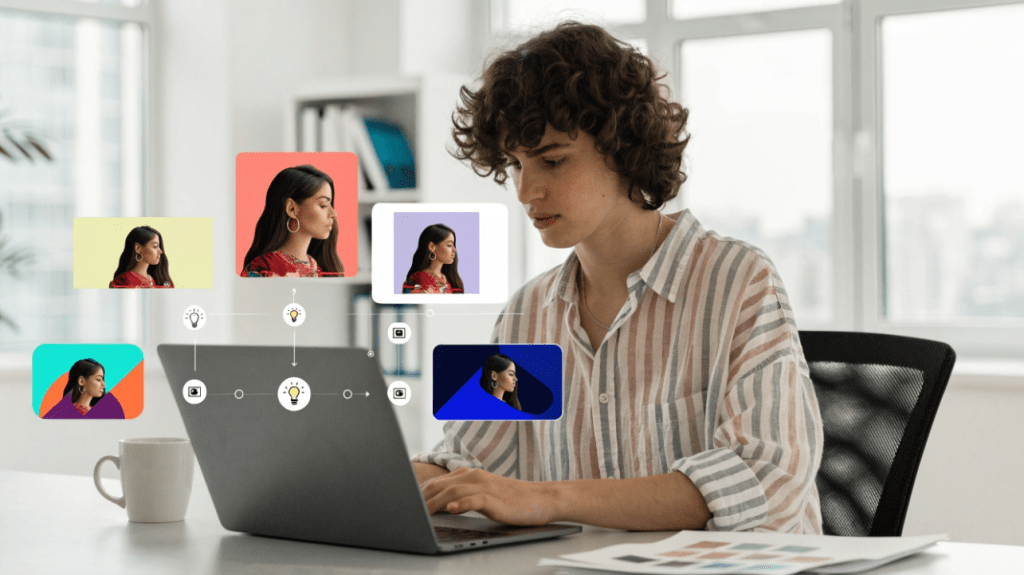
Performance marketers routinely test multiple creative variants to see what resonates: different colors, different backgrounds, different visual styles. AI image editing turns what used to be a slow, expensive testing process into something that can be done the same day.
Instead of commissioning new photography for every campaign, marketing teams are increasingly taking existing product shots or brand photography and using AI editing to generate seasonal variants, alternate color schemes, or new backgrounds. A summer campaign photo can become a winter one without a new shoot.
Generic stock photography has long been a weak point in content marketing, instantly recognizable and rarely a perfect brand fit. AI image editing lets teams take a stock image closer to what they need and adjust it toward their brand’s specific color palette, mood, or style, producing something that feels more original.
Blog and video thumbnails are a place where small visual changes can meaningfully affect click-through rates. AI editors make it fast to test different thumbnail treatments, such as brighter colors, added focal elements, or different croppings, without a full design cycle for each variant.
A huge share of AI image editing in content marketing isn’t dramatic transformation at all. It’s small, fast fixes: removing a background distraction, brightening a dim product photo, or cleaning up a screenshot before it goes into a blog post or social caption.
Not every task in a content marketing workflow justifies a subscription or even an account. A marketer who needs to quickly remove a background or brighten a photo before a 2pm posting deadline usually doesn’t want to create a login, verify an email, and learn a new interface. 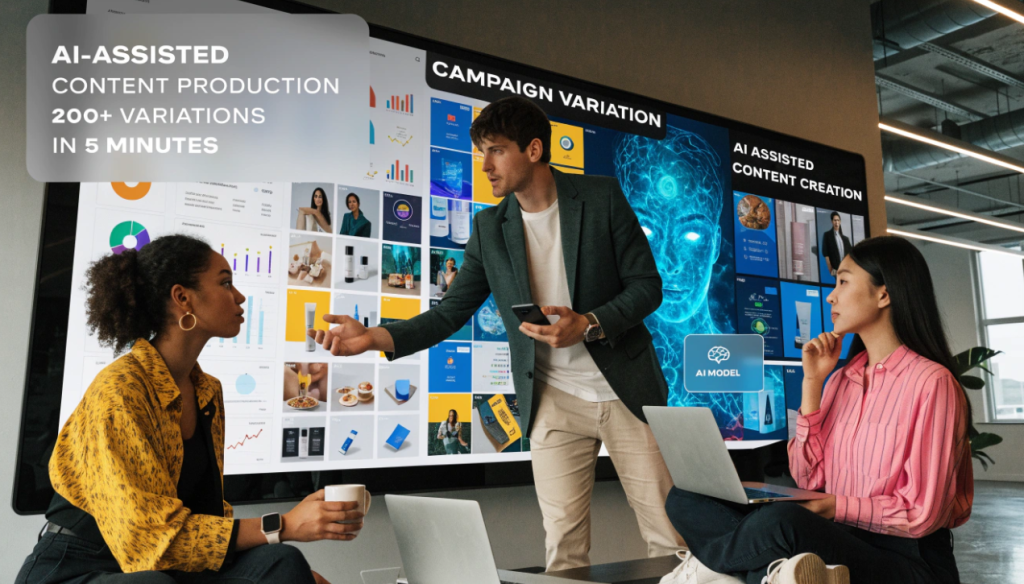
This has driven real demand for an AI image editor free no sign up that works entirely in the browser with no signup required.
No-signup tools generally trade advanced features for immediacy. They’re built for single, quick tasks rather than ongoing project management, which fits the reality of a lot of day-to-day content marketing work.
For a marketer who only needs AI image editing occasionally, avoiding an account also avoids another subscription to track, another password, and another tool cluttering the team’s software stack.
A number of free, no-signup tools have become popular specifically because they let users upload an image and get a result immediately. Photopea offers a full browser-based editor with AI-assisted features and no account requirement. Remove.bg provides instant background removal directly in the browser. Pixlr’s quick-edit mode allows fast AI touch-ups without registration for basic use. Tools like these won’t replace a full creative suite, but they cover a meaningful share of the small, repetitive edits that eat up a content marketer’s day.
These tools typically come with real trade-offs: lower resolution exports, limited batch processing, and fewer advanced controls like style strength or fine-grained masking. They’re best suited to quick, single-image tasks rather than large campaign production, where a paid or account-based tool will usually offer more control and consistency.
Content teams getting real value from AI image editing tend to draw a clear line between two categories of work. Quick, one-off edits, such as touch-ups, background swaps, and simple resizing, are well suited to free, no-signup tools that anyone on the team can use without friction. Larger, recurring production needs, such as generating dozens of on-brand variants for a major campaign, tend to benefit more from a dedicated account-based platform with batch capabilities and saved style presets.
Trying to force every task into one category or the other tends to create friction, either paying for capability that goes unused on simple tasks, or hitting a wall of limitations when trying to scale free tools beyond what they’re built for.
As AI image editing lowers the cost and time required for visual content, the bottleneck in content marketing is shifting. It’s less about production capacity and more about creative direction: knowing which variations are worth testing, which visual treatments actually align with brand identity, and which content deserves deeper investment versus a quick AI-assisted turnaround.
Teams that treat AI image editing purely as a cost-cutting shortcut tend to see their content start to look interchangeable with everyone else using the same tools. Teams that treat it as a way to produce more variations of genuinely considered creative direction tend to see it become a real strategic advantage.
AI image editing, including free, no-signup tools for quick tasks and more robust platforms for scaled production, has become a practical part of how modern content marketing gets made. It hasn’t replaced the need for strategy, brand judgment, or genuine creative thinking. What it has done is remove much of the friction between having an idea and getting a usable visual in front of an audience, which, for content marketing teams operating on tight timelines and tighter budgets, may be the more important shift of all.
source
This is a newsfeed from leading technology publications. No additional editorial review has been performed before posting.