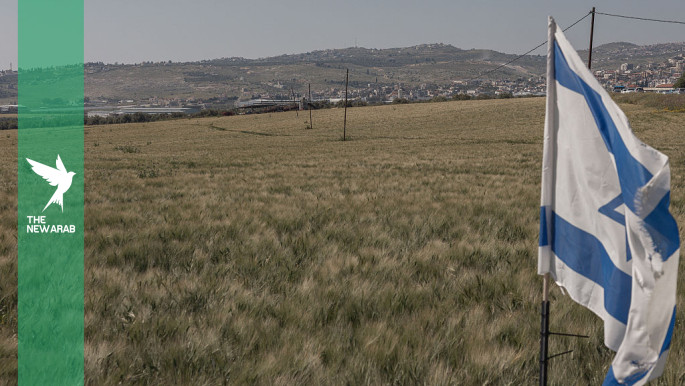
Israeli settlers reoccupy West Bank settlement after 21 years – The New Arab
Morocco's lower-cadmium fertiliser bound for Europe
Israeli settlers reoccupy West Bank settlement after 21 years
US economic isolation tactic pushes Iran-Oman talks into crisis
What is Egypt's role in the new regional security order?
The US-Iran war is entering a dangerous new phase
Uri Tzafon: The Israeli settlers mapping a future in Lebanon
Trump’s threat to Oman signals more than the end of US diplomacy
Mecca Defence Pact marks the start of a post-American Arab Gulf
David Miller ruling puts anti-Zionism in antifascist tradition
Pakistan's rape crisis: Why justice remains out of reach
Ancient Egyptian tomb reveals 2,700 years of changing burials
When the Haboob Sings: A novel about censorship and freedom
K2, firm tied to US-Israel, likely spying on PMF in Iraq
Israeli firms trading with EU are poisoning Palestinian farmland
UK sanctions Israeli settler orgs following TNA investigation
Breadcrumb
Dozens of Israeli settler families have moved into the illegal Kadim settlement east of Jenin, more than two decades after it was evacuated as part of Israel’s 2005 unilateral disengagement plan.
The settler-led Samaria Regional Council, which governs Israeli settlements in the northern occupied West Bank, said that around 30 “pioneer families” had returned to the site on Thursday. Footage from the area showed settlers entering under military escort and arriving in vehicle convoys carrying Israeli flags, furniture, and building materials.
The return to Kadim is the final stage in the re-establishment of four northern West Bank settlements dismantled during the 2005 plan: Homesh, Sanur, Ganim and Kadim. The plan also saw Israel withdraw its settlers and ground forces from Gaza, although it retained control over the besieged enclave’s borders, airspace and maritime access.
Israel’s parliament repealed provisions of the disengagement law barring Israelis from entering the area around the former settlements in 2023. The government later cleared the way for their formal restoration, a step Palestinian groups and rights organisations say is part of an accelerating drive to annex Palestinian land and fragment the West Bank.
Kadim’s opening ceremony on Thursday was attended by Finance Minister Bezalel Smotrich, a far-right settler leader who holds extensive authority over civilian affairs in the occupied West Bank through his additional role in the defence ministry.
“Twenty-one years after the crime of expulsion from northern Samaria, today we completed the correction,” Smotrich said, using the biblical term Israeli officials use for the northern West Bank. He described Kadim’s return as completing the revival of the four settlements dismantled in 2005.
Justice Minister Yariv Levin, Knesset Speaker Amir Ohana, minister Zeev Elkin and Samaria Regional Council head Yossi Dagan also attended the event, underscoring the level of state backing behind what was presented as a settler-led return.
Dagan said the reopening of Kadim was not the end of the movement’s ambitions. “We fixed the expulsion from northern Samaria,” he said, adding that settlers would also “return to Gush Katif” — the bloc of Israeli settlements in Gaza that was evacuated under the 2005 plan.
The 30 families are expected to form the basis of a much larger settlement. Israeli media reported that plans envisage a religious community from Tel Aviv and central Israel joining the new settlement, while Dagan said Kadim would “stay and grow twentyfold”.
Qusra families fear permanent displacement as siege drags on
The return to Kadim comes amid a dramatic acceleration of Israeli settlement expansion under Prime Minister Benjamin Netanyahu’s coalition, the most right-wing government in Israel’s history.
Israeli officials have said the government approved 104 new settlements across the occupied West Bank after taking office in late 2022, including 19 in the northern West Bank.
According to Peace Now, settlers have established 248 new outposts since the current government came to power, including 65 between January and the start of August this year. Human Rights Watch said this expansion has been accompanied by Israel-backed settler violence that is driving Palestinians from communities across the West Bank.
The reopening of Kadim also follows Israel’s military operations in Jenin, where Israeli forces have repeatedly raided the city and refugee camp, causing widespread destruction and the displacement of tens of thousands of Palestinians. Israel is also constructing a military outpost near Jenin refugee camp, deepening Palestinian concerns that military operations and settlement expansion form part of a single effort to cement Israeli control over the area.
Human rights organisations have warned that the Netanyahu government is pressing ahead with settlement projects before Israel’s scheduled 27 October election, seeking to make any future reversal politically and practically difficult.
The timing has drawn particular attention because Israel this week opened tenders for 1,234 settlement units in the E1 area east of occupied East Jerusalem. Bidding is due to close on 19 October, days before the election.
E1 is a strategically significant area between occupied East Jerusalem and the illegal Maale Adumim settlement. Construction there would further sever Palestinian territorial contiguity between the northern and southern West Bank, undermining the prospect of a viable Palestinian state.
Canada, Britain, France, Germany, Italy, the Netherlands and Norway jointly urged Israel to withdraw the E1 tenders and halt settlement expansion, warning firms that participating could carry legal and reputational consequences linked to serious breaches of international law.
Israeli settlements in the occupied West Bank, including East Jerusalem, are illegal under international law. In its July 2024 advisory opinion, the International Court of Justice found Israel’s continued presence in the occupied Palestinian territory unlawful and said Israel must halt all new settlement activity, evacuate settlers, and end its presence as rapidly as possible.
Loading recommendations…
source
This article was autogenerated from a news feed from CDO TIMES selected high quality news and research sources. There was no editorial review conducted beyond that by CDO TIMES staff. Need help with any of the topics in our articles? Schedule your free CDO TIMES Tech Navigator call today to stay ahead of the curve and gain insider advantages to propel your business!
Israeli settlers reoccupy West Bank settlement after 21 years
US economic isolation tactic pushes Iran-Oman talks into crisis
What is Egypt's role in the new regional security order?
The US-Iran war is entering a dangerous new phase
Uri Tzafon: The Israeli settlers mapping a future in Lebanon
Trump’s threat to Oman signals more than the end of US diplomacy
Mecca Defence Pact marks the start of a post-American Arab Gulf
David Miller ruling puts anti-Zionism in antifascist tradition
Pakistan's rape crisis: Why justice remains out of reach
Ancient Egyptian tomb reveals 2,700 years of changing burials
When the Haboob Sings: A novel about censorship and freedom
K2, firm tied to US-Israel, likely spying on PMF in Iraq
Israeli firms trading with EU are poisoning Palestinian farmland
UK sanctions Israeli settler orgs following TNA investigation
Breadcrumb
Dozens of Israeli settler families have moved into the illegal Kadim settlement east of Jenin, more than two decades after it was evacuated as part of Israel’s 2005 unilateral disengagement plan.
The settler-led Samaria Regional Council, which governs Israeli settlements in the northern occupied West Bank, said that around 30 “pioneer families” had returned to the site on Thursday. Footage from the area showed settlers entering under military escort and arriving in vehicle convoys carrying Israeli flags, furniture, and building materials.
The return to Kadim is the final stage in the re-establishment of four northern West Bank settlements dismantled during the 2005 plan: Homesh, Sanur, Ganim and Kadim. The plan also saw Israel withdraw its settlers and ground forces from Gaza, although it retained control over the besieged enclave’s borders, airspace and maritime access.
Israel’s parliament repealed provisions of the disengagement law barring Israelis from entering the area around the former settlements in 2023. The government later cleared the way for their formal restoration, a step Palestinian groups and rights organisations say is part of an accelerating drive to annex Palestinian land and fragment the West Bank.
Kadim’s opening ceremony on Thursday was attended by Finance Minister Bezalel Smotrich, a far-right settler leader who holds extensive authority over civilian affairs in the occupied West Bank through his additional role in the defence ministry.
“Twenty-one years after the crime of expulsion from northern Samaria, today we completed the correction,” Smotrich said, using the biblical term Israeli officials use for the northern West Bank. He described Kadim’s return as completing the revival of the four settlements dismantled in 2005.
Justice Minister Yariv Levin, Knesset Speaker Amir Ohana, minister Zeev Elkin and Samaria Regional Council head Yossi Dagan also attended the event, underscoring the level of state backing behind what was presented as a settler-led return.
Dagan said the reopening of Kadim was not the end of the movement’s ambitions. “We fixed the expulsion from northern Samaria,” he said, adding that settlers would also “return to Gush Katif” — the bloc of Israeli settlements in Gaza that was evacuated under the 2005 plan.
The 30 families are expected to form the basis of a much larger settlement. Israeli media reported that plans envisage a religious community from Tel Aviv and central Israel joining the new settlement, while Dagan said Kadim would “stay and grow twentyfold”.
Qusra families fear permanent displacement as siege drags on
The return to Kadim comes amid a dramatic acceleration of Israeli settlement expansion under Prime Minister Benjamin Netanyahu’s coalition, the most right-wing government in Israel’s history.
Israeli officials have said the government approved 104 new settlements across the occupied West Bank after taking office in late 2022, including 19 in the northern West Bank.
According to Peace Now, settlers have established 248 new outposts since the current government came to power, including 65 between January and the start of August this year. Human Rights Watch said this expansion has been accompanied by Israel-backed settler violence that is driving Palestinians from communities across the West Bank.
The reopening of Kadim also follows Israel’s military operations in Jenin, where Israeli forces have repeatedly raided the city and refugee camp, causing widespread destruction and the displacement of tens of thousands of Palestinians. Israel is also constructing a military outpost near Jenin refugee camp, deepening Palestinian concerns that military operations and settlement expansion form part of a single effort to cement Israeli control over the area.
Human rights organisations have warned that the Netanyahu government is pressing ahead with settlement projects before Israel’s scheduled 27 October election, seeking to make any future reversal politically and practically difficult.
The timing has drawn particular attention because Israel this week opened tenders for 1,234 settlement units in the E1 area east of occupied East Jerusalem. Bidding is due to close on 19 October, days before the election.
E1 is a strategically significant area between occupied East Jerusalem and the illegal Maale Adumim settlement. Construction there would further sever Palestinian territorial contiguity between the northern and southern West Bank, undermining the prospect of a viable Palestinian state.
Canada, Britain, France, Germany, Italy, the Netherlands and Norway jointly urged Israel to withdraw the E1 tenders and halt settlement expansion, warning firms that participating could carry legal and reputational consequences linked to serious breaches of international law.
Israeli settlements in the occupied West Bank, including East Jerusalem, are illegal under international law. In its July 2024 advisory opinion, the International Court of Justice found Israel’s continued presence in the occupied Palestinian territory unlawful and said Israel must halt all new settlement activity, evacuate settlers, and end its presence as rapidly as possible.
Loading recommendations…
source
This article was autogenerated from a news feed from CDO TIMES selected high quality news and research sources. There was no editorial review conducted beyond that by CDO TIMES staff. Need help with any of the topics in our articles? Schedule your free CDO TIMES Tech Navigator call today to stay ahead of the curve and gain insider advantages to propel your business!