Naver Bets on AI Infrastructure, Kakao on AI Services: South Korea's Two Platform Giants Diverge on AI Strategy – finance.biggo.com
Naver and Kakao both posted record quarterly revenue in Q2 as they accelerate AI monetization efforts, but their mid-to-long-term AI strategies reveal a stark divergence. Naver is concentrating strategic investments on AI infrastructure through its “AI Factory” initiative in partnership with Nvidia and Brookfield, while Kakao is opting out of the large-scale infrastructure race to go all-in on popularizing lifestyle-integrated AI services built on KakaoTalk.
Both companies share the broad goal of AI-driven monetization, but their execution paths are distinctly different. Naver is positioning itself more like a wholesaler, building and selling AI computing infrastructure targeting the B2B and sovereign AI markets. Kakao, on the other hand, is aiming to build an “intention economy” platform in the B2C space, where AI agents mediate all of a user’s daily transactions.
Naver reported consolidated Q2 revenue of 3.39 trillion won (approximately $2.4 billion) and operating profit of 520.3 billion won (approximately $367.5 million) on August 7. Revenue rose 16.2% year-over-year to a new quarterly record, but operating profit slipped 0.2% year-over-year due to AI infrastructure investments, missing market expectations of 566 billion won (approximately $399.8 million). Naver’s stock closed at 210,000 won (approximately $148.34) on August 8, down 7.08% from the previous session.
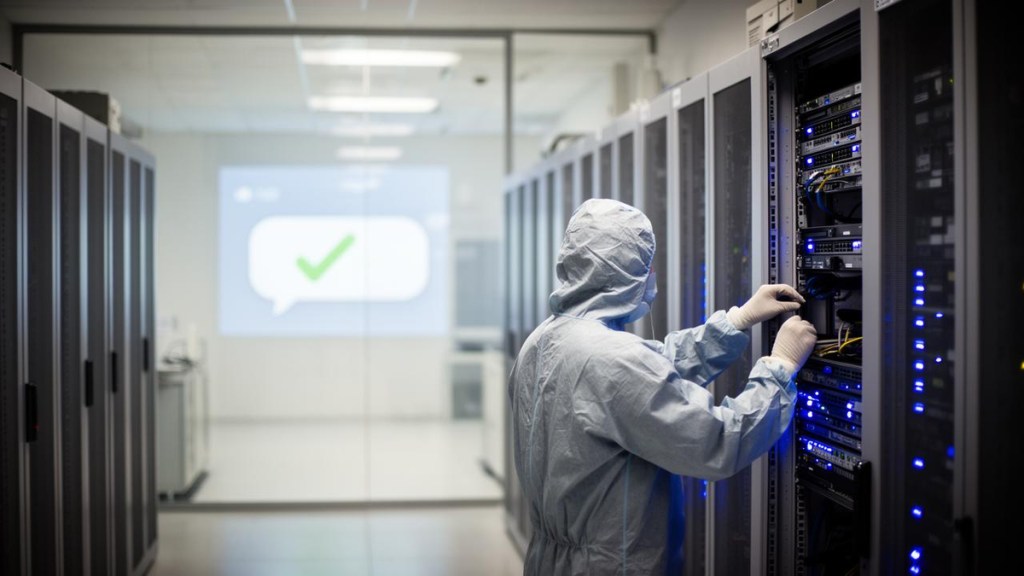
Prioritizing future growth engines over short-term earnings, Naver is accelerating its AI Factory business through alliances with Nvidia and alternative investment firm Brookfield. Naver recently secured a $1 billion (~1.4 trillion won) strategic equity investment from Nvidia and is pursuing up to $9 billion (~12.7 trillion won) in infrastructure investment with Brookfield. Through these partnerships, Naver plans to begin operating a 55-megawatt (MW) AI data center in the first half of 2027, scaling to 100MW by end-2027, 200MW in 2028, and ultimately building gigawatt (GW)-scale infrastructure in the long term.
Naver CEO Choi Soo-yeon emphasized during the Q2 earnings conference call that “AI Factory is a high-value-add business that goes beyond simple compute leasing by combining GPU computing with cloud model operation services,” adding that it represents “an investment in a structurally growing market, not a one-off opportunity.” Naver set a long-term operating margin target of 20% for AI Factory. Addressing concerns that low-cost, high-efficiency AI models could reduce compute demand, Choi forecast that “as unit compute costs decline, AI transformation and AI agents will actually proliferate, driving overall compute demand higher.”
While expanding domestic infrastructure, Naver is also exploring overseas markets such as the Middle East and South America, targeting sovereign AI demand from entities seeking to secure AI infrastructure while maintaining data sovereignty.
Kakao reported consolidated Q2 revenue of 2.1 trillion won (approximately $1.5 billion) and operating profit of 277 billion won (approximately $195.7 million) on August 6. Revenue grew 9% year-over-year, while operating profit surged 36%, with both metrics reaching all-time quarterly highs. Kakao assessed that this strong performance signals entry into a structural growth phase rather than a temporary peak.
Kakao’s strategy is one of “selection and focus.” Judging that the rapid generational turnover of hardware like GPUs and AI servers creates significant uncertainty around long-term returns relative to the massive upfront investment required, Kakao has decided not to join the large-scale AI infrastructure race. Kakao CEO Chung Shin-a stated during the conference call that “we determined that the infrastructure layer is not where Kakao can build the highest competitiveness in the AI era,” adding that the company will “concentrate capabilities on developing AI services that the entire nation uses in daily life.”
Instead, Kakao is pouring all its resources into upgrading AI agent services leveraging its nearly 50 million KakaoTalk users. The core concept is realizing an “intention economy” where AI discerns user intent and connects it to actual transactions. For example, if a food ordering intent is detected in a KakaoTalk chat, the AI would analyze user preferences, recommend a menu, and handle ordering and payment entirely within KakaoTalk in a one-stop process.
As a first step, Kakao announced a gateway partnership with food delivery app Coupang Eats. It plans to expand the AI agent ecosystem into lifestyle-adjacent areas such as commerce, reservations, travel, and payments. Following its collaboration with OpenAI to integrate ChatGPT into KakaoTalk, Kakao has also introduced its proprietary AI “Kanana,” rapidly expanding AI service touchpoints within the platform. Kakao aims to begin full-scale AI monetization starting in 2027.
Meanwhile, in the telecom sector, AI data centers (AIDC) have emerged as a key growth driver, boosting earnings. SK Telecom posted consolidated Q2 operating profit of 566 billion won (approximately $399.8 million), up 67.34% year-over-year, on revenue of 4.36 trillion won (approximately $3.1 billion), up 0.47%. Notably, AIDC business revenue reached 136.2 billion won (approximately $96.2 million), surging 92.5% year-over-year. SK Telecom established a dedicated AIDC business development subsidiary, SK Hyper, last month and set a goal to gradually open 5GW of AIDC capacity starting in 2029.
LG Uplus recorded consolidated Q2 revenue of 3.7 trillion won (approximately $2.6 billion) and operating profit of 344.5 billion won (approximately $243.3 million). Operating profit rose 13.1% year-over-year, beating market forecasts of 310.3 billion won by approximately 11%. Corporate infrastructure revenue reached 464.4 billion won (approximately $328.0 million), up 8.6% year-over-year, with AIDC revenue specifically growing 28.9% driven by colocation business expansion.
The strategic divergence between the two companies is also reflected in their R&D spending. In Q1, Naver’s R&D expenditure totaled 602 billion won (approximately $425.2 million), compared to 331.6 billion won (approximately $234.2 million) for Kakao. While official Q2 R&D figures have not yet been compiled, industry estimates suggest the combined first-half total for both companies will approach 2 trillion won (approximately $1.4 billion), given the increasing trend in AI service and infrastructure investment. Naver’s annual R&D spending surpassed 2 trillion won for the first time last year (2.22 trillion won), while Kakao’s reached 1.3 trillion won (approximately $917.7 million) last year, roughly a sixfold increase over the past decade.
An industry observer commented that Naver appears to be “securing future growth engines based on core profit sources like search and commerce,” noting that “the key will be proving the returns while enduring margin pressure from investment.” Regarding Kakao’s strategy, the observer forecast that “success will hinge on how naturally users embrace and continue using AI services embedded within KakaoTalk.”
Once added, BigGo Finance appears first in Google Search Top Stories, so you get the broadest, most up-to-the-minute, and most comprehensive global financial news first.
The news and data on this website are for reference only and do not constitute investment advice or an offer to buy or sell. Information is sourced from exchanges and public sources, and may be delayed, interrupted, or updated. While we strive for accuracy, we do not guarantee timeliness, correctness, or completeness. Content may include external links for which we are not responsible. By using this site, you agree that we and our partners are not liable for any losses. Investment carries full responsibility; please carefully assess risks and consult professionals. If there are errors in the content, please contact us for correction.
source
This is a newsfeed from leading technology publications. No additional editorial review has been performed before posting.