Consumers cling to cash – Payments Dive
Let Payments Dive’s free newsletter keep you informed, straight from your inbox.
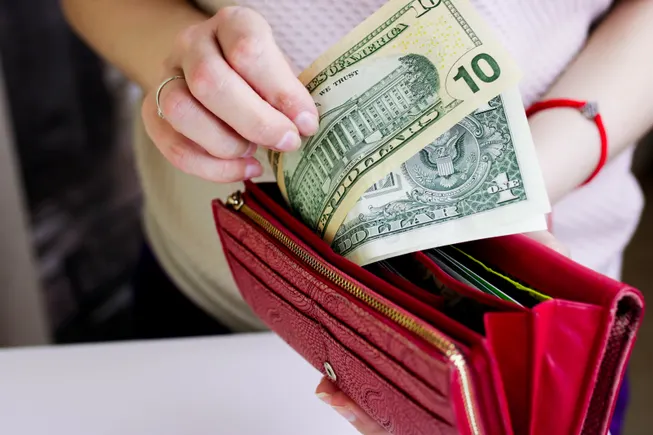
Debit and credit cards have surpassed cash as the most common payment method, but consumers still rely on legal tender, a Fed report found.
The Federal Reserve’s survey offers insights with respect to consumer cash use, even as other payment types gain greater usage. Cash use is particularly popular among older consumers, low-income households and rural residents, the report showed.
Survey respondents aged 55 or older made 10 cash payments per month on average, surpassing consumers aged 18 to 24 who only made two cash payments per month. Meanwhile, households with incomes below $25,000 were more likely to use cash than those with incomes exceeding $150,000, the survey found.
While urban and suburban dwellers paid for their purchases with cash six times a month on average, rural residents did so nine times monthly, the Fed survey found.
Though the Fed’s findings suggest that some consumers are carrying cash, other reports indicate that many consumers are veering away from the classic payment method.
In 2024, the share of consumers who had recently made a purchase with cash in October 2024 dipped to 83% from 87% the previous year, according to a 2025 report from the Federal Reserve Bank of Atlanta. The share of consumers who paid with checks also declined to 35%, down from 40% the year prior, according to the survey.
As some consumers rely more on cash than others, regulators are compelling companies in certain regions to accept the payment method as some businesses go cashless.
In March, New York Attorney General Letitia James reminded the public and local businesses of a new state law barring retailers from declining cash payments for goods and services. Though there are some exceptions, violators could be fined $1,000 for the first infraction and $1,500 for each subsequent violation.
Along with the inequality issues arising from declining cash usage, some argue that the decline in cash could pose problems for climate and natural disaster survivors.
Jay Zagorsky, clinical associate professor of markets, public policy and law at Boston University, noted that electronic payments are vulnerable to such disasters, because they rely on computers, electricity and telecommunications systems.
Get the free daily newsletter read by industry experts
“Adding on-chain rails to our network will support speed and programmability for virtually every type of transaction,” a Mastercard executive said.
It’s a $40-billion bite, with only a handful of payments players that could swallow it. But is a financial buyer more likely?
Subscribe to Payments Dive for top news, trends & analysis
Sign up for the free newsletter.
Interested? Explore more of what has to offer.
Thanks for signing up! Please keep an eye out for a confirmation email from [email protected] To ensure we make it into your inbox regularly, add us to your allow list, mark us as a safe sender, or add us to your address book. Check out more from
Get the free daily newsletter read by industry experts
Want to share a company announcement with your peers?
Get started ➔
“Adding on-chain rails to our network will support speed and programmability for virtually every type of transaction,” a Mastercard executive said.
It’s a $40-billion bite, with only a handful of payments players that could swallow it. But is a financial buyer more likely?
The free newsletter covering the top industry headlines
source
This article was autogenerated from a news feed from CDO TIMES selected high quality news and research sources. There was no editorial review conducted beyond that by CDO TIMES staff. Need help with any of the topics in our articles? Schedule your free CDO TIMES Tech Navigator call today to stay ahead of the curve and gain insider advantages to propel your business!
Debit and credit cards have surpassed cash as the most common payment method, but consumers still rely on legal tender, a Fed report found.
The Federal Reserve’s survey offers insights with respect to consumer cash use, even as other payment types gain greater usage. Cash use is particularly popular among older consumers, low-income households and rural residents, the report showed.
Survey respondents aged 55 or older made 10 cash payments per month on average, surpassing consumers aged 18 to 24 who only made two cash payments per month. Meanwhile, households with incomes below $25,000 were more likely to use cash than those with incomes exceeding $150,000, the survey found.
While urban and suburban dwellers paid for their purchases with cash six times a month on average, rural residents did so nine times monthly, the Fed survey found.
Though the Fed’s findings suggest that some consumers are carrying cash, other reports indicate that many consumers are veering away from the classic payment method.
In 2024, the share of consumers who had recently made a purchase with cash in October 2024 dipped to 83% from 87% the previous year, according to a 2025 report from the Federal Reserve Bank of Atlanta. The share of consumers who paid with checks also declined to 35%, down from 40% the year prior, according to the survey.
As some consumers rely more on cash than others, regulators are compelling companies in certain regions to accept the payment method as some businesses go cashless.
In March, New York Attorney General Letitia James reminded the public and local businesses of a new state law barring retailers from declining cash payments for goods and services. Though there are some exceptions, violators could be fined $1,000 for the first infraction and $1,500 for each subsequent violation.
Along with the inequality issues arising from declining cash usage, some argue that the decline in cash could pose problems for climate and natural disaster survivors.
Jay Zagorsky, clinical associate professor of markets, public policy and law at Boston University, noted that electronic payments are vulnerable to such disasters, because they rely on computers, electricity and telecommunications systems.
Get the free daily newsletter read by industry experts
“Adding on-chain rails to our network will support speed and programmability for virtually every type of transaction,” a Mastercard executive said.
It’s a $40-billion bite, with only a handful of payments players that could swallow it. But is a financial buyer more likely?
Subscribe to Payments Dive for top news, trends & analysis
Sign up for the free newsletter.
Interested? Explore more of what has to offer.
Thanks for signing up! Please keep an eye out for a confirmation email from [email protected] To ensure we make it into your inbox regularly, add us to your allow list, mark us as a safe sender, or add us to your address book. Check out more from
Get the free daily newsletter read by industry experts
Want to share a company announcement with your peers?
Get started ➔
“Adding on-chain rails to our network will support speed and programmability for virtually every type of transaction,” a Mastercard executive said.
It’s a $40-billion bite, with only a handful of payments players that could swallow it. But is a financial buyer more likely?
The free newsletter covering the top industry headlines
source
This article was autogenerated from a news feed from CDO TIMES selected high quality news and research sources. There was no editorial review conducted beyond that by CDO TIMES staff. Need help with any of the topics in our articles? Schedule your free CDO TIMES Tech Navigator call today to stay ahead of the curve and gain insider advantages to propel your business!