Prediction: This Quantum Computing Stock Will Be Up More Than 20% by the End of 2026 – The Motley Fool
Last month, Nvidia (NVDA 4.39%) unveiled a family of open-source artificial intelligence (AI) models designed to address calibration and error-correction challenges in quantum computing. Known as Ising, Nvidia's new toolkit helps make fragile qubits more usable by pairing them with the power of graphics processing units (GPUs).
The question smart investors are asking is not whether quantum computing matters, but how Nvidia's expanding ecosystem positions the company to capture more value as investment in AI infrastructure accelerates.
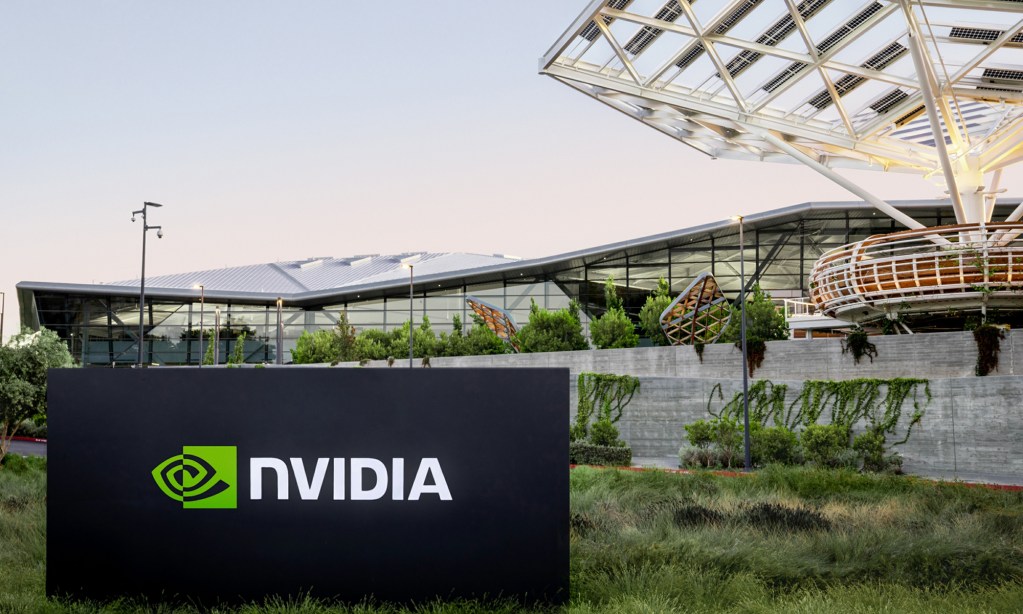
Image source: Nvidia.
Today's generative AI models devour vast amounts of computing power. However, some quantum enthusiasts believe that certain applications — molecular simulation in drug discovery or complex optimization in logistics and financial modeling — can scale better on quantum hardware.
In essence, quantum systems are not a replacement for traditional AI platforms, but rather an accelerator. Nvidia's vision is to create a hybrid future in which quantum processors handle complex tasks while GPUs handle the heavy workload of training and inference.
Nvidia found that Ising's calibration model can automate processor tuning, reducing a task that once took days down to hours. Moreover, its decoding models deliver real-time error correction up to 2.5 times faster and 3 times more accurately than legacy methods such as PyMatching.
Ising's tools run on Nvidia GPUs, integrate natively with the company's CUDA-Q software, and are stitched together via the NVQLink interconnect. By anchoring Ising to its hardware and software stack, Nvidia ensures that advances in quantum capabilities fuel further demand for its GPU architectures and data center services. This strategy helps Nvidia turn yet another AI opportunity, quantum machines, into a natural tailwind for its existing infrastructure.
Realistically, quantum computing is not a near-term catalyst for Nvidia. The addressable market remains modest, as quantum hardware remains experimental. Nevertheless, the Ising launch highlights something meaningful: Quantum technology is becoming another growth vector extending Nvidia's multifaceted AI infrastructure engine.
Demand for Blackwell and Rubin GPUs shows no signs of slowing as hyperscalers and sovereign governments accelerate AI factory build-outs. Meanwhile, CUDA's software helps lock developers into Nvidia's ecosystem.
Expansions into areas such as robotics, connectivity networks, autonomous systems, and enterprise workflows broaden Nvidia's addressable market. These forces, in combination with the long-term optionality of hybrid quantum-GPU systems, support sustained growth for Nvidia in the AI infrastructure age.
I predict that by year's end, Nvidia shares will reach $280. At current levels, my forecast represents roughly 20% upside to Nvidia stock. My outlook bakes in AI infrastructure as Nvidia's primary driver while treating quantum AI as a high-conviction call option that keeps the company ahead of competitors.
I think Nvidia is in a position to continue generating data center revenue growth between 70% and 80% year over year, while maintaining a steady gross margin around 75%. Reasonable multiple expansion should be in store as investors price in new catalysts.
Adam Spatacco has positions in Nvidia. The Motley Fool has positions in and recommends Nvidia. The Motley Fool has a disclosure policy.
*Average returns of all recommendations since inception. Cost basis and return based on previous market day close.
Invest better with The Motley Fool. Get stock recommendations, portfolio guidance, and more from The Motley Fool's premium services.
Making the world smarter, happier, and richer.
© 1995 – 2026 The Motley Fool. All rights reserved.
Market data powered by Xignite and Polygon.io.
About The Motley Fool
Our Services
Around the Globe
Free Tools
Affiliates & Friends
Nvidia recently launched a new quantum computing model, called Ising.
source
This is a newsfeed from leading technology publications. No additional editorial review has been performed before posting.