How decades-old frozen embryos are changing the shape of families – MIT Technology Review
The “world’s oldest baby” has been born from an "adopted" embryo created in 1994.
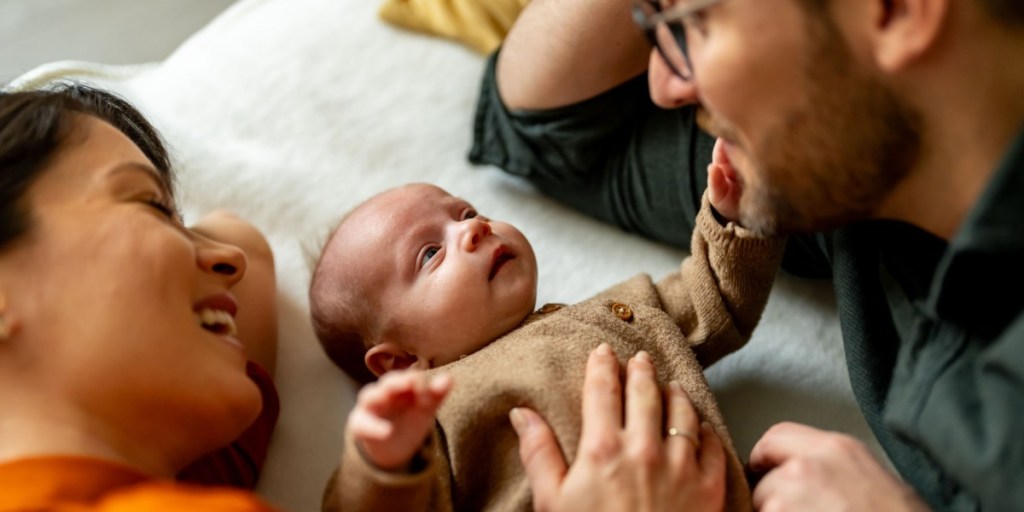
This week we welcomed a record-breaking baby to the world. Thaddeus Daniel Pierce, who arrived over the weekend, developed from an embryo that was frozen in storage for 30 and a half years. You could call him the world’s oldest baby.
His parents, Lindsey and Tim Pierce, were themselves only young children when that embryo was created, all the way back in 1994. Linda Archerd, who donated the embryo, described the experience as “surreal.”
The embryos were created in 1994, while the expectant father was still a toddler, and donated via a Christian “embryo adoption” agency.
Stories like this also highlight how reproductive technologies are shaping families. Thaddeus already has a 30-year-old sister and a 10-year-old niece. Lindsey and Tim are his birth parents, but his genes came from two other people who divorced decades ago.
And while baby Thaddeus is a record-breaker, plenty of other babies have been born from embryos that have been frozen for significant spells of time.
Thaddeus has taken the title of “world’s oldest baby” from the previous record-holders: twins Lydia Ann and Timothy Ronald Ridgeway, born in 2022, who developed from embryos that were created 30 years earlier, in 1992. Before that, the title was held by Molly Gibson, who developed from an embryo that was in storage for 27 years.
These remarkable stories suggest there may be no limit to how long embryos can be stored. Even after more than 30 years of being frozen at -196 °C (-321 °F), these tiny cells can be reanimated and develop into healthy babies. (Proponents of cryogenics can only dream of achieving anything like this with grown people.)
These stories also serve as a reminder that thanks to advances in cryopreservation and the ever-increasing popularity of IVF, a growing number of embryos are being stored in tanks. No one knows for sure how many there are, but there are millions of them.
Not all of them will be used in IVF. There are plenty of reasons why someone who created embryos might never use them. Archerd says that while she had always planned to use all four of the embryos she created with her then husband, he didn’t want a bigger family. Some couples create embryos and then separate. Some people “age out” of being able to use their embryos themselves—many clinics refuse to transfer an embryo to people in their late 40s or older.
Frozen embryos are filling storage banks around the world. It's a struggle to know what to do with them.
What then? In most cases, people who have embryos they won’t use can choose to donate them, either to potential parents or for research, or discard them. Donation to other parents tends to be the least popular option. (In some countries, none of those options are available, and unused embryos end up in a strange limbo—you can read more about that here.)
But some people, like Archerd, do donate their embryos. The recipients of those embryos will be the legal parents of the resulting children, but they won’t share a genetic link. The children might not ever meet their genetic “parents.” (Archerd is, however, very keen to meet Thaddeus.)
Some people might have donated their embryos anonymously. But anonymity can never be guaranteed. Nowadays, consumer genetic tests allow anyone to search for family members—even if the people they track down thought they were making an anonymous donation 20 years ago, before these tests even existed.
These kinds of tests have already resulted in surprise revelations that have disrupted families. People who discover that they were conceived using a donated egg or sperm can find multiple long-lost siblings. One man who spoke at a major reproduction conference in 2024 said that since taking a DNA test, he had found he had 50 of them.
The general advice now is for parents to let their children know how they were conceived relatively early on.
When I shared the story of baby Thaddeus on social media, a couple of people commented that they had concerns for the child. One person mentioned the age gap between Thaddeus and his 30-year-old sister. That person added that being donor conceived “isn’t easy.”
For the record, that is not what researchers find when they evaluate donor-conceived children and their families. Studies find that embryo donation doesn’t affect parents’ attachment to a child or their parenting style. And donor-conceived children tend to be psychosocially well adjusted.
Families come in all shapes and sizes. Reproductive technologies are extending the range of those shapes and sizes.
This article first appeared in The Checkup, MIT Technology Review’s weekly biotech newsletter. To receive it in your inbox every Thursday, and read articles like this first, sign up here.
GLP-1 agonists like Wegovy, Ozempic, and Mounjaro might benefit heart and brain health—but research suggests they might also cause pregnancy complications and harm some users.
The embryos were created in 1994, while the expectant father was still a toddler, and donated via a Christian “embryo adoption” agency.
The stigmatized idea could get a massive boost from “tech bros”—and some scientists are cheering them on.
First came AlphaFold. Now comes AlphaGenome for DNA.
Discover special offers, top stories, upcoming events, and more.
Thank you for submitting your email!
It looks like something went wrong.
We’re having trouble saving your preferences. Try refreshing this page and updating them one more time. If you continue to get this message, reach out to us at customer-service@technologyreview.com with a list of newsletters you’d like to receive.
© 2025 MIT Technology Review
source
This is a newsfeed from leading technology publications. No additional editorial review has been performed before posting.