AI for Analytics: Breaking Free from Legacy Dashboards
By Carsten Krause, July 29th, 2024
The Bygone Era of Legacy BI
If you’ve ever felt like you’re stuck in a time loop every time you open a dashboard, you’re not alone. Dashboards, those flashy displays of KPIs and metrics, were supposed to be the knight in shining armor for data-driven decisions. Yet, here we are, years later, still shackled by their limitations. A stagnant adoption rate of 30%, an average report turnaround time of 4.5 days, and poor data experiences reported by 84% of frontline business workers make it painfully clear: dashboards are dead.
In their prime, dashboards were the epitome of innovation—just like the Nokia 3310. But today’s fast-paced, data-driven world needs more than static visuals and siloed data views. GenAI is here, and it’s not just knocking on the door; it’s kicking it wide open.
Unpacking the Hidden Costs of Legacy BI
Let’s get real for a moment. When was the last time your data team celebrated a dashboard? More likely, they’re cursing the operational nightmare it has become. Reports show that 92% of data workers spend their time on tasks outside their roles, while 68% of data teams lack time to implement profit-driving ideas (source: https://profundcom.net/wp-content/uploads/2020/06/Dimensional-Research-Data-Analyst-Survey-Report-6.5.20.pdf). Your team isn’t just buried in data—they’re drowning in it.
Consider this: 50% of your data team’s headcount budget is wasted on remedial tasks instead of actual data analysis (source: https://profundcom.net/wp-content/uploads/2020/06/Dimensional-Research-Data-Analyst-Survey-Report-6.5.20.pdf). Imagine hiring a Michelin-star chef only to have them spend their days peeling potatoes. The hidden costs of maintaining these dashboards extend far beyond just financials—they’re a productivity black hole.
Dashboards Dismiss Individuality
One size fits all? Not in today’s business world. No two finance managers, marketers, or support reps will use data the same way because they don’t see the business the same way. Dashboards, with their rigid structures, fail to acknowledge the unique needs of individual users.
Think about it. You wouldn’t buy everyone in your office the same size shoes, would you? So why force them to use the same dashboard? It’s time to personalize data experiences. Whether pushing updated visualizations into slide decks or sending critical KPIs to mobile devices, the era of static dashboards is over.
Bid Farewell to the BI Backlog
Every time a business user asks for insight, they trigger a chain reaction. Analysts scramble, data pipelines stretch, and before you know it, there’s a backlog of outdated requests. The average wait time for a new dashboard report is 4.5 business days—longer than the world’s longest flight from NYC to Singapore (source: https://www.travelandleisure.com/airlines-airports/longest-flights-in-the-world#:~:text=Lufthansa%20repatriated%20German%20citizens%20from,Papeete%2C%20Tahiti%2C%20to%20Paris). By the time your report is ready, it’s often irrelevant.
The solution isn’t hiring more analysts; it’s breaking free from the infinite loop of dashboard insanity. With GenAI, your team can focus on real-time decision-making, not mundane report building. Empower your analysts to become trusted advisors, not glorified report builders.
A Paradigm Shift in BI: AI-Powered Analytics
Welcome to the Data Renaissance, where AI-powered analytics turn data into a living, breathing ecosystem of insights. Imagine asking a chatbot for sales trends and getting a detailed, contextual answer in seconds. This isn’t the future; it’s the now.
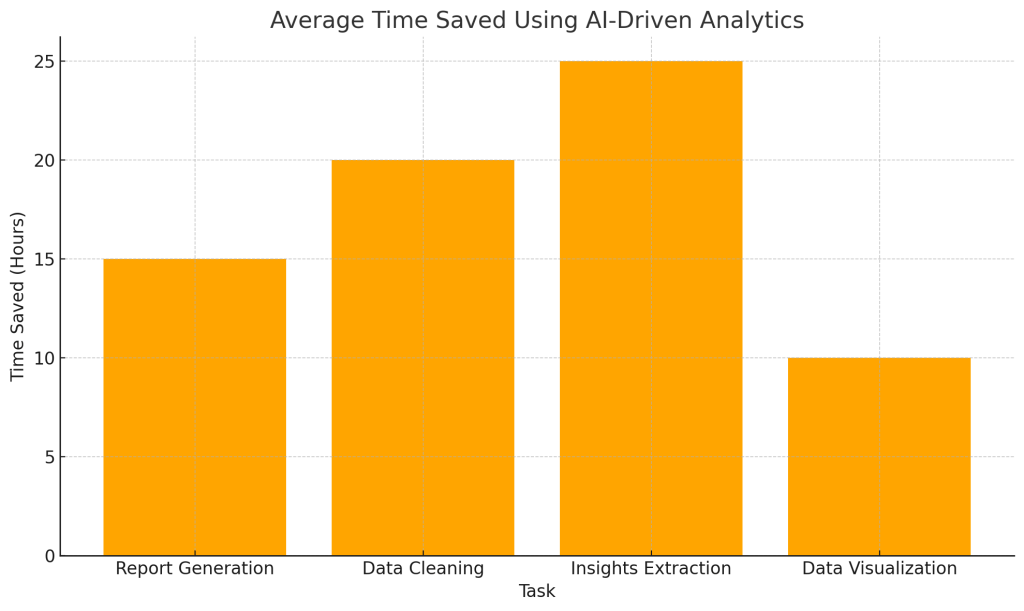
GenAI enables natural language queries, AI-augmented analysis, and multi-modal data experiences. It’s not just about having a search bar; it’s about conversational BI that engages with contextual data. Companies leveraging AI-powered analytics see rapid adoption rates of 70% or higher within six months (source: https://www2.deloitte.com/us/en/insights/topics/analytics/insight-driven-organization.html). This isn’t just evolution; it’s revolution.
Real-World Success Stories
Capital One
Capital One has democratized access to data-driven insights with their innovative approach to business intelligence. By streamlining access to data, teams swiftly obtain historical and real-time insights, reducing reliance on one-off dashboard requests. This empowers VPs, directors, and analysts to make informed decisions efficiently. The adoption of AI-powered analytics has allowed Capital One to integrate seamlessly with ServiceNow data, providing immediate access to key metrics through self-service. This not only reduces the backlog of requests but also enables leadership to react swiftly to market changes, improving decision-making and operational efficiency.
Cox 2M
Cox 2M’s data team sought faster insights from their vast data streams. Their AI-driven analytics platform slashed ad-hoc response times from 5 hours to 1.5 hours, saving over $70,000 annually. Integration with advanced data technologies reduced data structuring time by 75%, enhancing decision-making velocity. This transformation has empowered their IoT solutions team to leverage real-time data, driving innovation and customer satisfaction. The significant reduction in time spent on data structuring has enabled the team to focus on more strategic initiatives, fostering a culture of agility and innovation within the organization.
Cigna
Cigna is revolutionizing its approach to healthcare analytics, creating more affordable accessibility and healthcare for its members and patients. By leveraging AI for exploration and self-service, Cigna gains access to larger and broader datasets, streamlining query responses and creating efficiencies, allowing them to focus on patient well-being. The implementation of AI-driven analytics has also enhanced Cigna’s ability to predict patient needs and improve service delivery, leading to higher patient satisfaction and better health outcomes.
Guidewire
Guidewire unlocked new revenue streams with their embedded AI-powered analytics. Their analytics platform allows users to engage with self-service analytics, maximizing developer productivity and accelerating time-to-market when launching new data experiences. By integrating AI into their analytics framework, Guidewire has been able to offer more personalized and actionable insights to their clients, resulting in increased customer loyalty and new business opportunities. The platform’s ability to provide real-time insights has also improved operational efficiency and decision-making across the organization.
Expert Insights on AI-Driven BI
Sam Altman, CEO of OpenAI
“Artificial Intelligence is transforming the way we interact with data, making it more intuitive and actionable. The ability to ask natural language questions and get precise, context-aware answers is a game-changer for businesses looking to stay competitive.” (source: https://www.openai.com)
Andrew Ng, Co-founder of Coursera and Landing AI
“AI-powered analytics is not just about speed and efficiency; it’s about unlocking the potential of data to drive strategic decision-making. By moving beyond static dashboards, companies can gain deeper insights and foster innovation at every level.” (source: https://www.coursera.org/andrew-ng)
Ginni Rometty, Former CEO of IBM
“The future of business intelligence lies in AI’s ability to personalize insights and automate complex data analysis. This shift will empower organizations to be more agile, responsive, and data-driven than ever before.” (source: https://www.ibm.com/press/ginni-rometty)
Comparison of AI-Driven BI Solution Providers
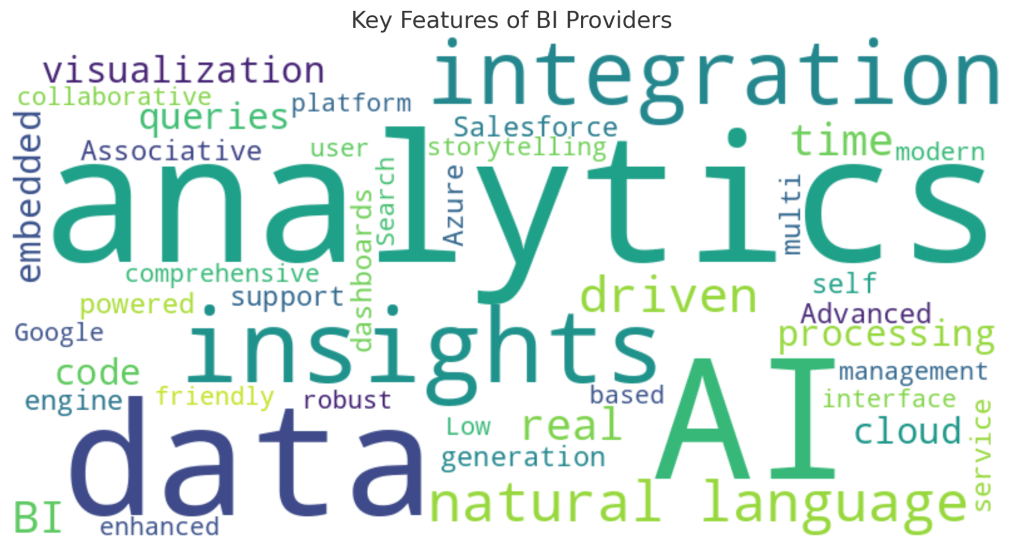
| Provider | Key Features | Notable Clients | Adoption Rate | Cost Range | URL |
|---|---|---|---|---|---|
| Microsoft Power BI | Natural language queries, real-time dashboards, integration with Azure, AI-driven insights | Coca-Cola, HP | High | $$ | Microsoft Power BI |
| Tableau | Data visualization, AI-powered analytics, natural language processing, Salesforce integration | LinkedIn, Verizon | High | $$ | Tableau |
| Qlik Sense | Associative engine, AI insights, self-service analytics, multi-cloud support | PayPal, Cisco | Moderate | $$$ | Qlik Sense |
| SAS Visual Analytics | Advanced analytics, AI integration, natural language generation, comprehensive data management | Honda, Barclays | Moderate | $$$$ | SAS Visual Analytics |
| Looker | Google integration, modern BI platform, real-time data insights, embedded analytics | BuzzFeed, Sony | High | $$ | Looker |
| Domo | Cloud-based, real-time data, AI-driven analytics, customizable dashboards | National Geographic, eBay | Moderate | $ | Domo |
| Sisense | Embedded analytics, AI-driven insights, scalability, cloud and on-premise support | Airbnb, Philips | Moderate | $ | Sisense |
| Zoho Analytics | Self-service BI, AI-powered insights, easy integration, customizable reports | Maruti Suzuki, Hotstar | Low | $ | Zoho Analytics |
| ThoughtSpot | Search-driven analytics, AI-powered insights, cloud-native, scalable | Walmart, Hulu | Low | $$ | ThoughtSpot |
| Mode Analytics | Collaborative data science, AI integration, real-time insights, data visualization | Shopify, 23andMe | Low | $ | Mode Analytics |
Potential Downfalls of Relying Solely on AI
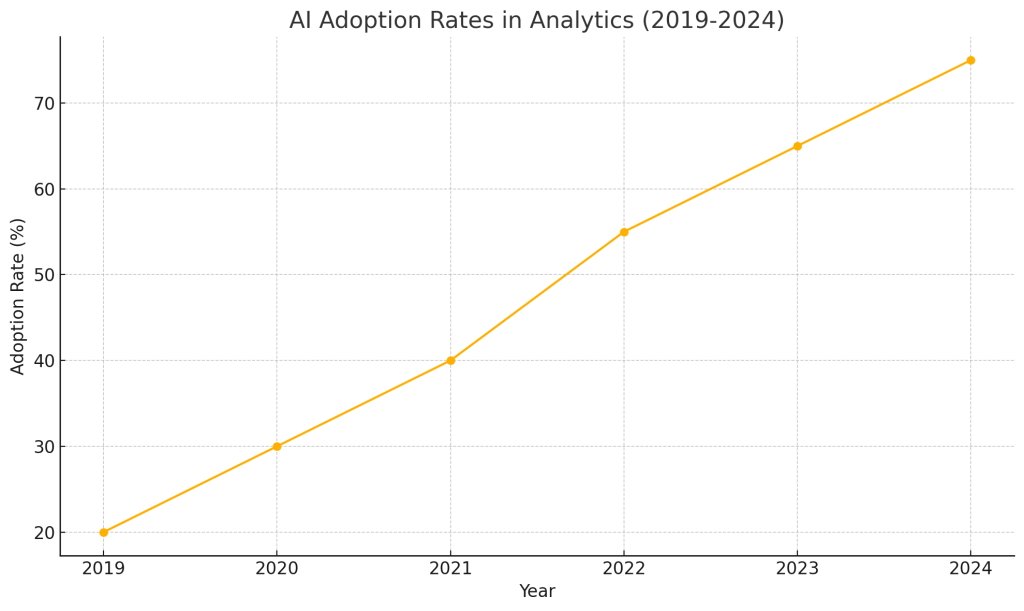
While the benefits of AI-driven analytics are profound, it’s essential to acknowledge the potential downfalls of relying solely on AI. AI systems can be prone to several issues, including data bias, hallucination, and lack of transparency.
Data Bias
Data bias occurs when AI models reflect and propagate existing biases in the data they are trained on. This can lead to unfair or inaccurate outcomes. For example, if a training dataset contains biases against certain groups, the AI system might make decisions that unfairly disadvantage those groups. This is a significant concern in areas like hiring, lending, and law enforcement. Addressing data bias requires ongoing vigilance, careful data selection, and often, human oversight to ensure that AI decisions are fair and equitable.
Hallucination
Hallucination refers to a phenomenon where AI generates incorrect or nonsensical results. This can happen if the AI model interprets data in a way that doesn’t align with real-world contexts or if it fills in gaps with plausible-sounding but incorrect information. Hallucination can lead to significant errors, particularly in critical applications like healthcare or financial forecasting. Ensuring the accuracy of AI outputs often requires human review and validation, especially in high-stakes scenarios.
Lack of Transparency
AI systems, especially those using complex algorithms like deep learning, can operate as “black boxes” where the decision-making process is not easily understood by humans. This lack of transparency can make it difficult to trust and verify AI outputs. In regulated industries, this opacity can be a major hurdle, as it’s essential to understand how decisions are made. Developing explainable AI models and ensuring that there is a clear understanding of how AI reaches its conclusions is crucial for maintaining trust and compliance.
Over-Reliance on AI
Over-reliance on AI can lead to a reduction in critical thinking and human oversight. While AI can handle vast amounts of data and identify patterns that humans might miss, it doesn’t replace the need for human intuition and judgment. AI systems can sometimes overlook nuances or context that are obvious to human experts. Maintaining a balance between AI automation and human expertise is essential to avoid critical oversights and errors.
Security Risks
AI systems can also be targets for cyber attacks. Adversaries might try to manipulate the training data (data poisoning) or input data (adversarial attacks) to cause the AI to make incorrect decisions. Ensuring robust security measures and regular audits of AI systems are necessary to protect against such vulnerabilities.
Evolution of AI Frameworks
AI frameworks are continuously evolving, which means that today’s state-of-the-art models might become obsolete tomorrow. Organizations need to stay updated with the latest advancements and be prepared to adapt their AI strategies accordingly. This requires ongoing investment in research, development, and training to ensure that AI tools remain effective and secure.
The Need for Human-in-the-Loop Systems
Given these challenges, it’s clear that human oversight is crucial. Human-in-the-loop systems combine the strengths of AI with human judgment, ensuring that AI outputs are accurate, fair, and reliable. These systems allow humans to intervene when AI makes uncertain decisions, providing a safety net that enhances the overall reliability and effectiveness of AI-driven analytics.
In conclusion, while AI-driven analytics offer significant advantages, it’s essential to approach them with a clear understanding of their limitations and potential pitfalls. Balancing AI automation with human oversight will ensure that organizations can harness the full power of AI while mitigating risks.
Action Plan for CDO TIMES Readers
Transitioning from traditional BI to AI-driven BI requires a strategic and structured approach. Here’s an expanded action plan to help C-level leaders navigate this transformation effectively:
1. Assess Your Current BI Infrastructure
- Conduct a Thorough Audit: Evaluate the current state of your BI tools and processes. Identify the strengths and weaknesses of your existing BI infrastructure.
- Identify Pain Points: Determine areas where traditional BI tools are falling short, such as inefficiency, inaccuracy, or low user satisfaction.
2. Educate and Train Your Team
- Invest in AI Literacy Programs: Ensure your team understands the capabilities and limitations of AI-driven analytics. This includes understanding concepts such as machine learning, data bias, and AI ethics.
- Provide Hands-On Training: Offer practical training sessions on new AI-powered BI tools to facilitate a smooth transition. Use real-world scenarios to demonstrate how AI can enhance data analysis and decision-making.
3. Implement Human-in-the-Loop Systems
- Establish Oversight Protocols: Develop protocols for human oversight to validate AI-generated insights. This includes setting up review processes where humans can intervene if AI outputs are uncertain.
- Create a Feedback Loop: Implement a system for continuous feedback to improve AI models. Regularly update your AI systems based on human feedback to enhance their accuracy and reliability.
4. Pilot AI-Powered BI Solutions
- Start with a Pilot Project: Select a specific department or use case to test the effectiveness of AI-driven analytics. Ensure the pilot project has clear objectives and measurable outcomes.
- Measure Impact: Track the impact of the pilot project on decision-making speed, accuracy, and business outcomes. Use these metrics to assess the ROI of AI-driven analytics.
5. Scale and Integrate AI Solutions
- Gradually Scale Implementation: Once the pilot project proves successful, gradually extend the implementation of AI-powered BI tools across the organization. Prioritize departments that will benefit the most from enhanced data analytics.
- Ensure Seamless Integration: Integrate AI solutions with existing data systems and workflows. Ensure that data flows smoothly between AI tools and other enterprise systems.
6. Monitor and Evaluate
- Continuous Monitoring: Regularly monitor the performance of AI-powered BI tools. Use key performance indicators (KPIs) to track their effectiveness.
- Regular Evaluation: Periodically evaluate the impact of AI-driven analytics on business goals. Make necessary adjustments to improve performance and address any emerging issues.
7. Foster a Culture of Innovation
- Encourage Data-Driven Decision Making: Promote a culture where employees are empowered to leverage AI insights for decision-making. Encourage them to use data in their daily operations.
- Promote Collaboration and Knowledge Sharing: Create platforms for collaboration and knowledge sharing. This will help maximize the benefits of AI-driven analytics by ensuring that insights are shared across the organization.
- Reward Innovation: Recognize and reward employees who use AI-driven insights to drive innovation and achieve business goals.
8. Address Ethical and Security Concerns
- Implement Ethical AI Practices: Develop guidelines for ethical AI use. Ensure that your AI systems are designed and used in a way that respects privacy and avoids discrimination.
- Enhance AI Security: Implement robust security measures to protect AI systems from cyber threats. Regularly audit AI systems to identify and address vulnerabilities.
9. Stay Updated with AI Advancements
- Continuous Learning: Encourage your team to stay updated with the latest advancements in AI and data analytics. This includes attending conferences, participating in webinars, and reading industry publications.
- Invest in R&D: Allocate resources for research and development to explore new AI technologies and methodologies. This will ensure that your organization remains at the forefront of AI innovation.
10. Develop a Long-Term AI Strategy
- Align AI Initiatives with Business Goals: Ensure that your AI strategy aligns with your overall business objectives. Define clear goals and metrics to measure the success of AI initiatives.
- Adapt and Evolve: Be prepared to adapt your AI strategy as new technologies and business needs emerge. Continuously evaluate and refine your approach to stay competitive in a rapidly changing landscape.
The CDO TIMES Bottom Line
The age of dashboards is over. Embrace GenAI to unlock the true potential of your data. With AI-powered analytics, you can bid farewell to the constraints of static dashboards and welcome a new era of personalized, real-time insights. Don’t let your data team be bogged down by legacy systems—let them thrive as the strategic advisors they were meant to be. The Data Renaissance is here, and it’s time to join the revolution.
This article not only unpacks the limitations of traditional dashboards but also highlights the transformative potential of GenAI in the world of data and analytics. By incorporating real-world case studies, actionable insights, and a touch of humor, it aims to engage C-level executives and drive home the message that the future of BI is here—and it’s anything but static.
Love this article? Embrace the full potential and become an esteemed full access member, experiencing the exhilaration of unlimited access to captivating articles, exclusive non-public content, empowering hands-on guides, and transformative training material. Unleash your true potential today!
Order the AI + HI = ECI book by Carsten Krause today! at cdotimes.com/book

Subscribe on LinkedIn: Digital Insider
Become a paid subscriber for unlimited access, exclusive course content, no ads: CDO TIMES
Do You Need Help?
Consider bringing on a fractional CIO, CISO, CDO or CAIO from CDO TIMES Leadership as a Business Consulting Service. The expertise of CDO TIMES becomes indispensable for organizations striving to stay ahead in the digital transformation journey. Here are some compelling reasons to engage their experts:
- Deep Expertise: CDO TIMES has a team of experts with deep expertise in the field of Cybersecurity, Digital, Data and AI and its integration into business processes. This knowledge ensures that your organization can leverage digital and AI in the most optimal and innovative ways.
- Training, developing, arranging, and conducting educational conferences and programs and providing courses of instruction.
- Strategic Insight: Not only can the CDO TIMES team help develop a Digital & AI strategy, but they can also provide insights into how this strategy fits into your overall business model and objectives. They understand that every business is unique, and so should be its Digital & AI strategy.
- Future-Proofing: With CDO TIMES, organizations can ensure they are future-proofed against rapid technological changes. Our experts stay abreast of the latest AI, Data and digital advancements and can guide your organization to adapt and evolve as the technology does.
- Risk Management: Implementing a Digital & AI strategy is not without its risks. The CDO TIMES can help identify potential pitfalls and develop mitigation strategies, helping you avoid costly mistakes and ensuring a smooth transition with fractional CISO services.
- Competitive Advantage: Finally, by hiring CDO TIMES experts, you are investing in a competitive advantage. Their expertise can help you speed up your innovation processes, bring products to market faster, and stay ahead of your competitors.
By employing the expertise of CDO TIMES, organizations can navigate the complexities of digital innovation with greater confidence and foresight, setting themselves up for success in the rapidly evolving digital economy. The future is digital, and with CDO TIMES, you’ll be well-equipped to lead in this new frontier.
Do you need help with your digital transformation initiatives? We provide fractional CAIO, CDO, CISO and CIO services, do a Preliminary ECI and Tech Navigator Assessment and we will help you drive results and deliver winning digital and AI strategies for you!
Subscribe now for free and never miss out on digital insights delivered right to your inbox!
Turn insight into action with CDO TIMES.
CDO TIMES helps executives move from AI awareness to AI execution through practical frameworks, tools, executive research, and advisory support.
Explore the Frameworks
Continue with Enterprise AI 2030, HI + AI = ECI, AI Governance, and executive playbooks.
Explore Enterprise AI 2030 →Use the Free Tools
Assess readiness, estimate AI ROI, model AI costs, and prioritize AI initiatives.
Open Executive Tools →Read the Book
Explore the HI + AI = ECI leadership model in The AI-Ready Leader.
Order The AI-Ready Leader →Go deeper with CDO TIMES Pro.
Unlock premium research, executive playbooks, templates, advanced tools, and member-only briefings.
Need executive help?
Explore advisory, workshops, fractional CIO/CDO/CISO/CAIO support, and AI operating model design.
Explore Advisory →Attend executive events
Join leadership forums, executive dinners, webinars, and strategic AI briefings.
View Events →Build AI capability
Use CDO TIMES Academy for executive learning, AI leadership development, and implementation training.
Explore Academy →