Artificial intelligence can speed-sort satellite photos – The Economist
Try our new AI-powered searchbeta
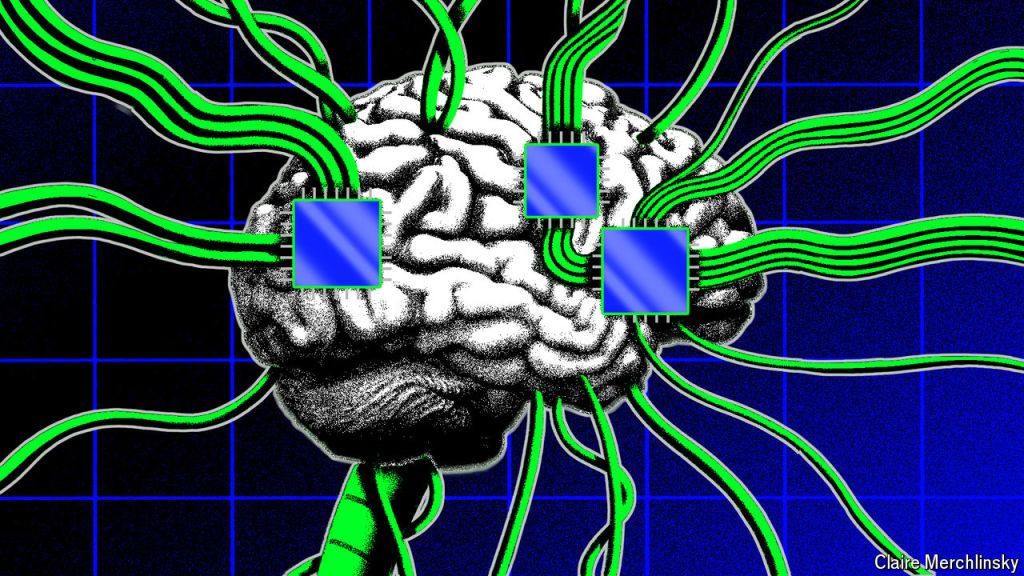
In 1957 Frank Rosenblatt, a psychologist, built a machine called the Perceptron. Modelled on the human brain, its neural networks were a forerunner of today’s artificial intelligence (ai). It intrigued the cia which was drowning in photos from spy planes and satellites. It funded the Perceptron in the hope of automatically identifying objects of interest. The experiment failed. There was not enough computing power, storage or training data available. But it was a start.
Spy agencies used machine learning to sift through images and text in the cold war, and then to identify patterns in billions of phone records after 9/11. Although advances in algorithms and computing power over the past decade have made those models faster and better, most agencies still believe ai will assist humans rather than replace them. However, the Perceptron’s successors, large language models (llms) like gpt-4, are beginning to challenge that assumption.
This article appeared in the Technology Quarterly section of the print edition under the headline “SpookGPT”
Discover stories from this section and more in the list of contents
Published since September 1843 to take part in “a severe contest between intelligence, which presses forward, and an unworthy, timid ignorance obstructing our progress.”
To enhance your experience and ensure our website runs smoothly, we use cookies and similar technologies.
Copyright © The Economist Newspaper Limited 2024. All rights reserved.
This article was autogenerated from a news feed from CDO TIMES selected high quality news and research sources. There was no editorial review conducted beyond that by CDO TIMES staff. Need help with any of the topics in our articles? Schedule your free CDO TIMES Tech Navigator call today to stay ahead of the curve and gain insider advantages to propel your business!
In 1957 Frank Rosenblatt, a psychologist, built a machine called the Perceptron. Modelled on the human brain, its neural networks were a forerunner of today’s artificial intelligence (ai). It intrigued the cia which was drowning in photos from spy planes and satellites. It funded the Perceptron in the hope of automatically identifying objects of interest. The experiment failed. There was not enough computing power, storage or training data available. But it was a start.
Spy agencies used machine learning to sift through images and text in the cold war, and then to identify patterns in billions of phone records after 9/11. Although advances in algorithms and computing power over the past decade have made those models faster and better, most agencies still believe ai will assist humans rather than replace them. However, the Perceptron’s successors, large language models (llms) like gpt-4, are beginning to challenge that assumption.
This article appeared in the Technology Quarterly section of the print edition under the headline “SpookGPT”
Discover stories from this section and more in the list of contents
Published since September 1843 to take part in “a severe contest between intelligence, which presses forward, and an unworthy, timid ignorance obstructing our progress.”
To enhance your experience and ensure our website runs smoothly, we use cookies and similar technologies.
Copyright © The Economist Newspaper Limited 2024. All rights reserved.
This article was autogenerated from a news feed from CDO TIMES selected high quality news and research sources. There was no editorial review conducted beyond that by CDO TIMES staff. Need help with any of the topics in our articles? Schedule your free CDO TIMES Tech Navigator call today to stay ahead of the curve and gain insider advantages to propel your business!