

9 steps to building an L&D strategy for digital skills – Econsultancy
Econsultancy
EMEA/USA: +44 (0)20 7970 4322 | email: subs.support@econsultancy.com
Amidst rapid change in marketing and ecommerce, this checklist of recommendations offers a practical approach to digital skills development.
How do businesses keep up with customers, technologies and events that are perpetually in flux?
Just as they always have: by learning. The only difference today is the velocity of change, which only accelerates for professionals in the fields of marketing, ecommerce and customer experience management.
Most of our attention is drawn to the customer behaviour, data and technologies transforming every sector, but the key success factor in thriving through this chaos is straightforward: our ability to identify, onboard and use knowledge.
Indeed, 92% of executives say their strategic plans require skills that are new to the organisation, according to Econsultancy’s Race to Digital Skills report, with 6 in 10 executives saying digital skills need updating at least monthly.
The following checklist of recommendations, based on insight from a variety of contributors, offer a practical approach to digital skills development that could be adopted by business and learning and development (L&D) leaders seeking a balanced approach to training, hiring and outsourcing.
Jump to:
Macro trends are decreasing the shelf life of specialist skills and are challenging individuals and organisations to play catch-up. Learning leaders therefore need to commence L&D initiatives with a thorough assessment of digital skills.
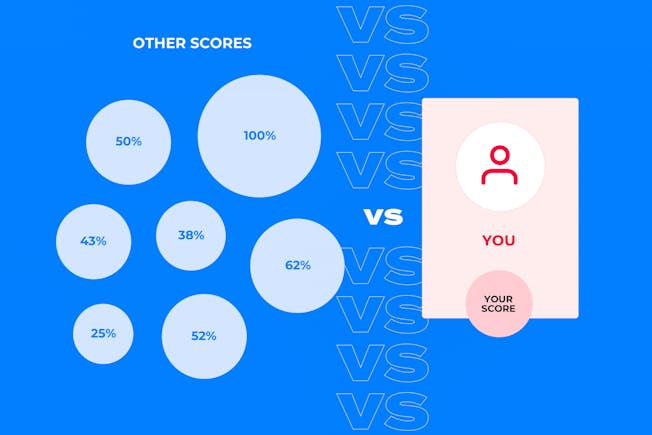
Skills can be audited via assessments that provide a measurable baseline and a shared awareness of the need for learning.
Learning can be assessed in several ways:
External Assessment: A variety of solutions exist to score and evaluate digital skills (see Econsultancy’s Digital Skills Index). Some are offered as a third-party service while others can be deployed internally.
Self-Assessment: Workers can self-score as part of their personal development plans. These assessments can be reviewed with their line manager. Leaders acknowledge the importance of (a) a growth mindset and (b) a healthy corporate culture to do this effectively.
Discipline review: Review digital disciplines and trends affecting them. Identify new skills required based on the discipline or activity before addressing individual roles. This provides learning leaders a chance to see departmental or team skills gaps and assign learning activities more efficiently.
Peer evaluation: Employees or their managers can nominate two to four people to review their skills. This requires care in terms of who provides the feedback and, most likely, advance training in how to assess skills gaps and how to communicate them to peers. Since peers are best positioned to recognise skill gaps, they can be useful for exposing areas that need to be addressed.
Once learning gaps have been identified, these can be categorised by priority and how they can best be addressed.

To be most effective, L&D strategy needs to be aligned with business objectives. This requires L&D professionals to address current skills gaps as well as forecast potential areas to address in the short to medium term.
L&D professionals need to work closely with senior leadership and subject matter experts to bridge the gap between what leaders need and what the learning programme can support.
It is also important to understand whether or not employees have time to engage with learning activities. If they point out that they do not have time to learn, there may be bigger issues to address such as poor procedures, poorly-designed learning activities, or workload.
Employees more likely to find time for workplace learning when it matches career goals
Employee career goals and personal development plans should be taken into account so that L&D activities can help support these.
L&D should have a process for acknowledging the attainment of learning objectives, as well as formal or accredited qualifications and awards.
Learners should likewise be encouraged to evaluate the impact and value of L&D activities on their own careers.

Employees must have some agency over their own learning journey, which may necessitate blending multiple approaches (almost two thirds of employees want more variety in their learning programs). Distributed self-directed learning opportunities, accessible in the flow of work, complement more traditional solutions such as executive education and subsidised education.
Line managers can facilitate learning by pointing colleagues in the right direction to start building the skills they need the most.
L&D may consider:

Managers should understand their role in facilitating skills acquisition. L&D can encourage management to inspire a learning mindset and help people cope with the fear of failure or other inhibitors to learning. Executives can share their own learning journeys and highlight how they pursue learning.
The number of participants, hours and completions achieved should be celebrated, as should any business outcomes, following the implementation of learning programmes. The rest of the business can also learn from these outcomes. This can be done via sharing successes and case studies at “lunch and learns”, internal memos, and town hall meetings. Capture and share ‘small’ learnings as well as showcasing bigger ones.
It’s important to respectfully challenge conventional thinking in order to uncover new ways of doing things.
Encouraging a culture of candour can enable staff to identify failure as an opportunity for learning. It’s important to respectfully challenge conventional thinking in order to uncover new ways of doing things. Accepted best practices may sometimes be the enemies of innovation.
Acknowledge that not all learning activities need to be functional and aligned to a specific domain. Look to include motivational elements and endorsements, and support learners to expand their knowledge and leadership capabilities.
Recruitment and progression processes should encourage diversity of thinking and multiple perspectives. Think about wider working practices that could encourage learning and creative thinking, such as allotted times for self-directed learning or innovation activities.
Create processes to revisit formal learning activities at set points post-course to examine whether learnings have been embedded and most importantly, applied. If learnings have not been applied, it is important to understand what the blockers are.
Debrief after campaigns and projects, with input from all stakeholders. Encourage graduates of learning programmes to become internal subject matter experts.
Further reading:
In the past, L&D was focused on curriculum building. Now, L&D professionals must also act as ambassadors for learning, promoting programmes to increase engagement. That means being familiar with and utilising marketing tactics to reach their audience.
L&D must take the time to understand its audience and their specific learning requirements. Effective promotion may require taking a multichannel approach, using email, video, events, and internal influencer campaigns.
In the past, L&D was focused on curriculum building. Now, L&D professionals must also act as ambassadors for learning.
In terms of curriculum building, elearning objects need to be on brand, using the organisation’s language and branding colours. New learners need to be welcomed, with their intended learning path clearly illustrated.

L&D professionals point out that the only way to measure the impact of learning programmes is through measuring changes in behaviour. Sponsors need to understand this from the outset.
KPIs might include longer-term business metrics such as increases in revenue or decreases in cost. Alternatively, learning could be measured based on improved campaign metrics. On an individual level, learners can self-evaluate and seek evaluations from peers.
This may include:
Remember, form is not the same as content. It is important to scrutinise the role of approaches like AI-powered personalisation, gamification and microlearning. The approach should be relevant to the team and the specific learning challenge.
For example, gamification might be useful to increase motivation to complete compliance training, while a lack of opportunity to take significant time out to focus on learning might be addressed by experiential learning approaches.
There is the temptation to reach for single-idea approaches when commissioning L&D services. Those involved in setting the L&D agenda need to exercise caution when considering the trending approaches. Resist the temptation to reach for silver bullets when new L&D services come to market.
This article was adapted from Econsultancy’s report, The Race to Digital Skills: New Best Practices in Effective Learning – download the report here.
Econsultancy’s Multi-Touch Learning™ methodology has been created to deliver on-demand learning content, digital skills assessment and team training in a contextual, connected and continuous experience for the most up to date and practical learning.
Stratton spoke at the Festival of Marketing about the impact of Sky’s marketing training program on happiness, engagement and effectiveness.
Non-endemic retail media will be one way in which the channel continues to grow. But can it undermine the shopper experience?
Data from Econsultancy’s Digital Skills Index shows sectors such as Pharma and Manufacturing score lower on digital marketing and ecommerce proficiency, with investment in learning remaining a key element in transformation.
The UK is facing a “major digital skills gap” with the advent of generative AI, according to Paul O’Sullivan, UK & Ireland Chief Technology Officer at Salesforce and Head of the Salesforce UK AI Centre.
Julia Paulsen, Director of Ecommerce Nordics at Elkjøp, discusses testing and optimisation, including encouraging shoppers to log in, getting cross-sell right, and iterating search, ‘merch’ and personalisation.
You must be logged in to post a comment.
Xeim Limited, Registered in England and Wales with number 05243851
Registered office at Econsultancy, Floor 14, 10 York Road, London, SE1 7ND
This article was autogenerated from a news feed from CDO TIMES selected high quality news and research sources. There was no editorial review conducted beyond that by CDO TIMES staff. Need help with any of the topics in our articles? Schedule your free CDO TIMES Tech Navigator call today to stay ahead of the curve and gain insider advantages to propel your business!
EMEA/USA: +44 (0)20 7970 4322 | email: subs.support@econsultancy.com
Amidst rapid change in marketing and ecommerce, this checklist of recommendations offers a practical approach to digital skills development.
How do businesses keep up with customers, technologies and events that are perpetually in flux?
Just as they always have: by learning. The only difference today is the velocity of change, which only accelerates for professionals in the fields of marketing, ecommerce and customer experience management.
Most of our attention is drawn to the customer behaviour, data and technologies transforming every sector, but the key success factor in thriving through this chaos is straightforward: our ability to identify, onboard and use knowledge.
Indeed, 92% of executives say their strategic plans require skills that are new to the organisation, according to Econsultancy’s Race to Digital Skills report, with 6 in 10 executives saying digital skills need updating at least monthly.
The following checklist of recommendations, based on insight from a variety of contributors, offer a practical approach to digital skills development that could be adopted by business and learning and development (L&D) leaders seeking a balanced approach to training, hiring and outsourcing.
Jump to:
Macro trends are decreasing the shelf life of specialist skills and are challenging individuals and organisations to play catch-up. Learning leaders therefore need to commence L&D initiatives with a thorough assessment of digital skills.
Skills can be audited via assessments that provide a measurable baseline and a shared awareness of the need for learning.
Learning can be assessed in several ways:
External Assessment: A variety of solutions exist to score and evaluate digital skills (see Econsultancy’s Digital Skills Index). Some are offered as a third-party service while others can be deployed internally.
Self-Assessment: Workers can self-score as part of their personal development plans. These assessments can be reviewed with their line manager. Leaders acknowledge the importance of (a) a growth mindset and (b) a healthy corporate culture to do this effectively.
Discipline review: Review digital disciplines and trends affecting them. Identify new skills required based on the discipline or activity before addressing individual roles. This provides learning leaders a chance to see departmental or team skills gaps and assign learning activities more efficiently.
Peer evaluation: Employees or their managers can nominate two to four people to review their skills. This requires care in terms of who provides the feedback and, most likely, advance training in how to assess skills gaps and how to communicate them to peers. Since peers are best positioned to recognise skill gaps, they can be useful for exposing areas that need to be addressed.
Once learning gaps have been identified, these can be categorised by priority and how they can best be addressed.
To be most effective, L&D strategy needs to be aligned with business objectives. This requires L&D professionals to address current skills gaps as well as forecast potential areas to address in the short to medium term.
L&D professionals need to work closely with senior leadership and subject matter experts to bridge the gap between what leaders need and what the learning programme can support.
It is also important to understand whether or not employees have time to engage with learning activities. If they point out that they do not have time to learn, there may be bigger issues to address such as poor procedures, poorly-designed learning activities, or workload.
Employees more likely to find time for workplace learning when it matches career goals
Employee career goals and personal development plans should be taken into account so that L&D activities can help support these.
L&D should have a process for acknowledging the attainment of learning objectives, as well as formal or accredited qualifications and awards.
Learners should likewise be encouraged to evaluate the impact and value of L&D activities on their own careers.

Employees must have some agency over their own learning journey, which may necessitate blending multiple approaches (almost two thirds of employees want more variety in their learning programs). Distributed self-directed learning opportunities, accessible in the flow of work, complement more traditional solutions such as executive education and subsidised education.
Line managers can facilitate learning by pointing colleagues in the right direction to start building the skills they need the most.
L&D may consider:

Managers should understand their role in facilitating skills acquisition. L&D can encourage management to inspire a learning mindset and help people cope with the fear of failure or other inhibitors to learning. Executives can share their own learning journeys and highlight how they pursue learning.
The number of participants, hours and completions achieved should be celebrated, as should any business outcomes, following the implementation of learning programmes. The rest of the business can also learn from these outcomes. This can be done via sharing successes and case studies at “lunch and learns”, internal memos, and town hall meetings. Capture and share ‘small’ learnings as well as showcasing bigger ones.
It’s important to respectfully challenge conventional thinking in order to uncover new ways of doing things.
Encouraging a culture of candour can enable staff to identify failure as an opportunity for learning. It’s important to respectfully challenge conventional thinking in order to uncover new ways of doing things. Accepted best practices may sometimes be the enemies of innovation.
Acknowledge that not all learning activities need to be functional and aligned to a specific domain. Look to include motivational elements and endorsements, and support learners to expand their knowledge and leadership capabilities.
Recruitment and progression processes should encourage diversity of thinking and multiple perspectives. Think about wider working practices that could encourage learning and creative thinking, such as allotted times for self-directed learning or innovation activities.
Create processes to revisit formal learning activities at set points post-course to examine whether learnings have been embedded and most importantly, applied. If learnings have not been applied, it is important to understand what the blockers are.
Debrief after campaigns and projects, with input from all stakeholders. Encourage graduates of learning programmes to become internal subject matter experts.
Further reading:
In the past, L&D was focused on curriculum building. Now, L&D professionals must also act as ambassadors for learning, promoting programmes to increase engagement. That means being familiar with and utilising marketing tactics to reach their audience.
L&D must take the time to understand its audience and their specific learning requirements. Effective promotion may require taking a multichannel approach, using email, video, events, and internal influencer campaigns.
In the past, L&D was focused on curriculum building. Now, L&D professionals must also act as ambassadors for learning.
In terms of curriculum building, elearning objects need to be on brand, using the organisation’s language and branding colours. New learners need to be welcomed, with their intended learning path clearly illustrated.
L&D professionals point out that the only way to measure the impact of learning programmes is through measuring changes in behaviour. Sponsors need to understand this from the outset.
KPIs might include longer-term business metrics such as increases in revenue or decreases in cost. Alternatively, learning could be measured based on improved campaign metrics. On an individual level, learners can self-evaluate and seek evaluations from peers.
This may include:
Remember, form is not the same as content. It is important to scrutinise the role of approaches like AI-powered personalisation, gamification and microlearning. The approach should be relevant to the team and the specific learning challenge.
For example, gamification might be useful to increase motivation to complete compliance training, while a lack of opportunity to take significant time out to focus on learning might be addressed by experiential learning approaches.
There is the temptation to reach for single-idea approaches when commissioning L&D services. Those involved in setting the L&D agenda need to exercise caution when considering the trending approaches. Resist the temptation to reach for silver bullets when new L&D services come to market.
This article was adapted from Econsultancy’s report, The Race to Digital Skills: New Best Practices in Effective Learning – download the report here.
Econsultancy’s Multi-Touch Learning™ methodology has been created to deliver on-demand learning content, digital skills assessment and team training in a contextual, connected and continuous experience for the most up to date and practical learning.
Stratton spoke at the Festival of Marketing about the impact of Sky’s marketing training program on happiness, engagement and effectiveness.
Non-endemic retail media will be one way in which the channel continues to grow. But can it undermine the shopper experience?
Data from Econsultancy’s Digital Skills Index shows sectors such as Pharma and Manufacturing score lower on digital marketing and ecommerce proficiency, with investment in learning remaining a key element in transformation.
The UK is facing a “major digital skills gap” with the advent of generative AI, according to Paul O’Sullivan, UK & Ireland Chief Technology Officer at Salesforce and Head of the Salesforce UK AI Centre.
Julia Paulsen, Director of Ecommerce Nordics at Elkjøp, discusses testing and optimisation, including encouraging shoppers to log in, getting cross-sell right, and iterating search, ‘merch’ and personalisation.
You must be logged in to post a comment.
Xeim Limited, Registered in England and Wales with number 05243851
Registered office at Econsultancy, Floor 14, 10 York Road, London, SE1 7ND
This article was autogenerated from a news feed from CDO TIMES selected high quality news and research sources. There was no editorial review conducted beyond that by CDO TIMES staff. Need help with any of the topics in our articles? Schedule your free CDO TIMES Tech Navigator call today to stay ahead of the curve and gain insider advantages to propel your business!
